 Indietro
Essential Chemistry for Biology: Chapter 2 Study Notes
Guida di studio - Note intelligenti
 Appunti personalizzati basati sui tuoi materiali, ampliati con definizioni chiave, esempi e contesto.
Biology and Society: The Importance of Water
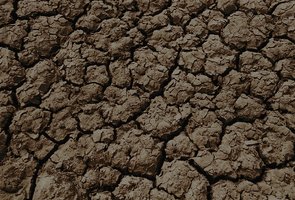
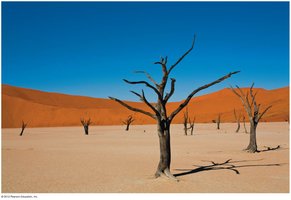
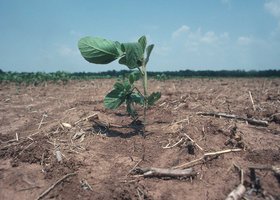
Drought and Its Biological Impact
Drought is a period of abnormally dry weather that significantly alters the environment and is one of the most devastating natural disasters. Life cannot exist without water, making droughts catastrophic for societies and ecosystems.
Key Point 1: Droughts can cause severe crop damage, shortages of drinking water, dust storms, famine, habitat loss, and mass migration.
Key Point 2: Throughout history, droughts have contributed to the collapse of societies and civilizations.
Example: The loss of water resources leads to environmental degradation and threatens human survival.
Some Basic Chemistry
Matter: Elements and Compounds
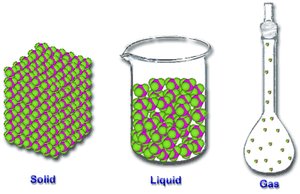
All biological systems are composed of matter, which is anything that occupies space and has mass. Matter exists in three physical states: solid, liquid, and gas. Matter is made up of chemical elements, which are substances that cannot be broken down by chemical reactions.
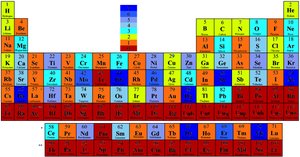
Key Point 1: There are 92 naturally occurring elements on Earth, all listed in the periodic table.
Key Point 2: Elements combine to form compounds, substances containing two or more elements in a fixed ratio.
Example: Water (H2O) and table salt (NaCl) are common compounds.
Elements Essential to Life
Major and Trace Elements
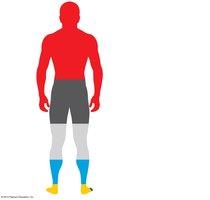
Twenty-five elements are essential for human life. Four elements—oxygen (O), carbon (C), hydrogen (H), and nitrogen (N)—make up about 96% of the weight of most cells. Trace elements are required in very small amounts but are vital for life.
Key Point 1: Major elements include O, C, H, and N.
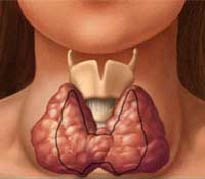
Key Point 2: Trace elements such as iron (Fe), iodine (I), and fluorine (F) are crucial for health.
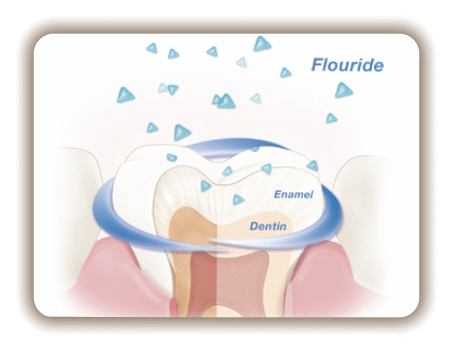
Example: Iodine deficiency can cause goiter; fluorine helps maintain healthy teeth.

Atoms and Their Structure
Subatomic Particles
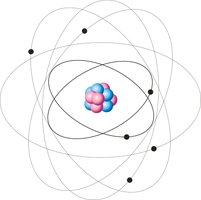
An atom is the smallest unit of matter that retains the properties of an element. Atoms are composed of protons (positive charge), neutrons (neutral), and electrons (negative charge). Protons and neutrons are located in the nucleus, while electrons orbit the nucleus.
Key Point 1: The atomic number is the number of protons and determines the element.
Key Point 2: The mass number is the sum of protons and neutrons.
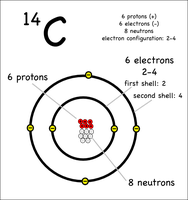
Example: Carbon has 6 protons; its isotopes differ in neutron number.
Isotopes and Radioactivity
Isotopes and Their Uses
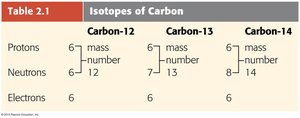
Isotopes are alternate mass forms of an element, having the same number of protons but different numbers of neutrons. Some isotopes are radioactive and decay spontaneously, emitting particles and energy.
Key Point 1: Radioactive isotopes are used in research, medicine, and dating fossils.
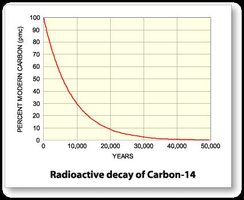
Key Point 2: The half-life is the time required for half of the unstable isotope to decay.
Example: Carbon-14 is used in radiometric dating with a half-life of about 5,730 years.
Isotope | Protons | Neutrons | Electrons | Mass Number |
|---|---|---|---|---|
Carbon-12 | 6 | 6 | 6 | 12 |
Carbon-13 | 6 | 7 | 6 | 13 |
Carbon-14 | 6 | 8 | 6 | 14 |
Radioactive Isotope | Half-life |
|---|---|
Uranium-238 | years |
Carbon-14 | years |
Radium-226 | years |
Strontium-90 | 28 years |
Iodine-131 | 8.1 days |
Bismuth-214 | 19.7 minutes |
Polonium-214 | seconds |
Electron Arrangement and Chemical Properties
Electron Shells and Reactivity
Electrons orbit the nucleus in specific shells. The number of electrons in the outermost shell determines the chemical properties and reactivity of an atom. Atoms seek to fill their outer shells through chemical bonding.
Key Point 1: Atoms with incomplete outer shells are reactive.
Key Point 2: The arrangement of electrons influences how atoms interact.
Example: Hydrogen and carbon have different electron shell configurations.
Chemical Bonding and Molecules
Ionic, Covalent, and Hydrogen Bonds
Chemical bonds form when atoms give up, acquire, or share electrons to complete their outer shells. The main types of bonds are ionic, covalent, and hydrogen bonds.
Key Point 1: Ionic bonds form between oppositely charged ions.
Key Point 2: Covalent bonds involve sharing pairs of electrons and are the strongest type.
Key Point 3: Hydrogen bonds are weak attractions between polar molecules, such as water.
Example: Sodium chloride (NaCl) forms via ionic bonding; water (H2O) exhibits hydrogen bonding.
Chemical Reactions
Reactants and Products
Chemical reactions involve breaking and forming bonds, rearranging molecules. Reactants are the starting materials, and products are the end materials. Matter is rearranged but not created or destroyed.
Key Point 1: Chemical reactions are fundamental to cellular processes.
Key Point 2: Example reaction:
Water and Life
Properties of Water
Water is essential for life, making up 70–95% of cell composition. Its polarity and hydrogen bonding give rise to unique properties: cohesion, resistance to temperature change, floating ice, and its role as a solvent.
Key Point 1: Water molecules stick together (cohesion), vital for plant water transport.
Key Point 2: Water moderates temperature, supporting life on Earth.
Key Point 3: Ice floats because it is less dense than liquid water.
Key Point 4: Water is a universal solvent, dissolving many substances.
Acids, Bases, and pH
pH Scale and Buffers
An acid releases H+ ions, while a base accepts H+ ions. The pH scale measures the acidity or basicity of a solution. Buffers help maintain stable pH in biological systems.
Key Point 1: pH ranges from 0 (acidic) to 14 (basic), with 7 being neutral.
Key Point 2: Buffers resist changes in pH by accepting or donating H+ ions.
Example: Human blood is buffered to maintain a stable pH.
Biology and Society: Trace Elements and Environmental Chemistry
Trace Elements in Health and Policy
Trace elements are added to foods and water to prevent deficiencies and associated diseases. For example, iodine is added to salt to prevent goiter, and fluorine is added to water for dental health.
Key Point 1: Public health policies often involve supplementing trace elements.
Key Point 2: Environmental contamination by chemical wastes can have biological consequences.
Example: Goiter is rare in countries with iodized salt.
Evolution Connection: Radioactivity as an Evolutionary Clock
Radiometric Dating and Fossil Record
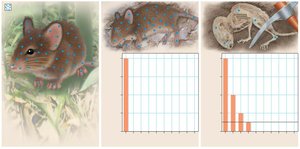
Radioactive decay provides a method for dating fossils and understanding evolutionary history. The ratio of isotopes in a fossil reveals its age, helping to construct the fossil record.
Key Point 1: Carbon-14 dating is used for fossils up to about 50,000 years old.
Key Point 2: The fossil record is an ordered sequence of life on Earth.
Additional info:
Some content was expanded for clarity and completeness, including definitions and examples.
Tables were recreated for isotopes and radioactive half-lives based on provided data.
