 Indietro
Essential Chemistry for Biology: Foundations for Life
Guida di studio - Note intelligenti
 Appunti personalizzati basati sui tuoi materiali, ampliati con definizioni chiave, esempi e contesto.
Essential Chemistry for Biology
Introduction: Why Chemistry in Biology?
Understanding chemistry is fundamental to biology because all living organisms are composed of chemical elements and depend on chemical reactions for survival. Biological processes, from cellular respiration to genetic inheritance, are governed by chemical principles.
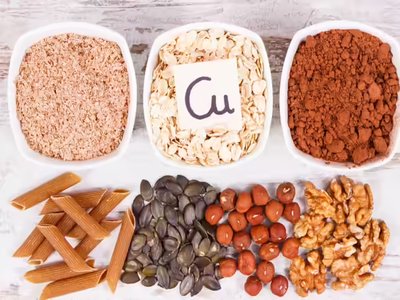
Example: The element copper is essential in our diet for proper physiological function.
Example: Table salt (NaCl) is a common compound crucial for nerve function and fluid balance.
Application: Human activities, such as car emissions, can impact distant ecosystems like coral reefs through chemical changes in the environment.

Matter: Elements and Compounds
Definitions and Biological Relevance
All biological systems are ultimately composed of matter, which consists of elements and compounds. Understanding these basic units is essential for grasping how life operates at the molecular level.
Matter: Anything that occupies space and has mass.
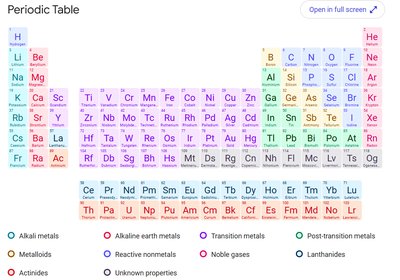
Element: A substance that cannot be broken down into other substances by chemical reactions; the simplest form of matter.
Compound: A substance containing two or more elements in a fixed ratio.
Of the 92 naturally occurring elements, 25 are essential for human life. Four elements—oxygen, carbon, hydrogen, and nitrogen—make up about 96% of the human body’s mass.
Trace elements: Required in very small amounts but are vital for health (e.g., copper, iron, iodine).
Atoms: Structure and Properties
Atomic Structure
Atoms are the smallest units of matter that retain the properties of an element. They are composed of subatomic particles: protons, neutrons, and electrons.
Proton: Positively charged particle found in the nucleus.
Neutron: Electrically neutral particle found in the nucleus.
Electron: Negatively charged particle orbiting the nucleus.
Atomic number: Number of protons in an atom, unique to each element.
Mass number: Sum of protons and neutrons in the nucleus.
Isotopes: Atoms of the same element with different numbers of neutrons; some are radioactive.
Chemical Bonding and Molecules
Ionic Bonds
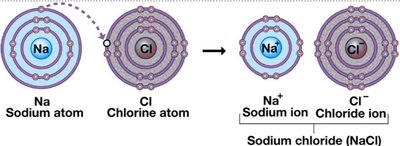
Chemical bonds form when atoms transfer or share electrons. Ionic bonds occur when one atom donates electrons to another, resulting in oppositely charged ions that attract each other.
Ion: An atom or molecule with an electrical charge due to the loss or gain of electrons.
Ionic bond: The attraction between oppositely charged ions (e.g., sodium chloride, NaCl).
Covalent Bonds
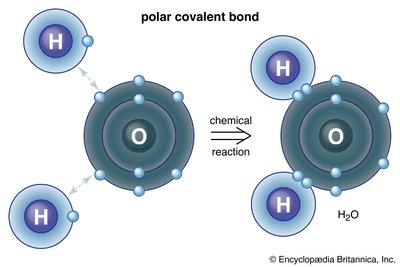
Covalent bonds form when two atoms share one or more pairs of electrons. These are the strongest chemical bonds and are responsible for holding atoms together in molecules.
Covalent bond: Shared pair(s) of electrons between atoms.
Polar covalent bond: Electrons are shared unequally, resulting in partial charges (e.g., water molecule).
Hydrogen Bonds
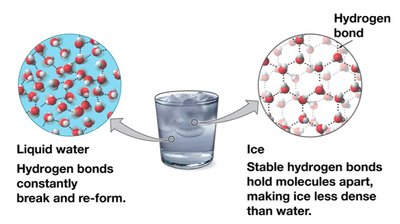
Hydrogen bonds are weak electrical attractions between neighboring polar molecules, such as water. They are crucial for many of water’s unique properties and for the structure of biological macromolecules.
Hydrogen bond: Weak attraction between a hydrogen atom (partially positive) and an electronegative atom (often oxygen or nitrogen).
Responsible for water’s cohesion, surface tension, and temperature moderation.
Chemical Reactions in Biology
Reactants and Products
Chemical reactions involve the rearrangement of atoms by breaking and forming chemical bonds. In biological systems, these reactions are essential for metabolism and energy transformation.
Reactants: Starting materials in a chemical reaction.
Products: Substances formed as a result of the reaction.
Chemical reactions do not create or destroy matter; they only rearrange it.
Example: Cellular respiration and photosynthesis are key biological reactions involving the transformation of energy and matter.
Water and Life
Importance of Water
Water is essential for life, making up 70–95% of living cells. Its unique chemical properties, due to polarity and hydrogen bonding, support life on Earth.
Water’s abundance is a major reason Earth is habitable.
Hydrogen bonding explains water’s cohesion, surface tension, and temperature moderation.
Cohesion and Surface Tension
Water molecules stick together due to hydrogen bonding, resulting in high cohesion and surface tension. These properties are vital for processes such as water transport in plants.
Cohesion: Tendency of molecules of the same kind to stick together.
Surface tension: Measure of how difficult it is to stretch or break the surface of a liquid.
Example: Trees rely on cohesion to transport water from roots to leaves.
Water Moderates Temperature
Water resists temperature changes due to hydrogen bonding. It absorbs and stores heat, moderating environmental and organismal temperatures.
Heat is used to break hydrogen bonds, so water warms up slowly.
When water cools, hydrogen bonds form and release heat.
Evaporative cooling: As water evaporates, the surface cools, helping organisms regulate temperature.

Ice: Floating Solid
When water freezes, its molecules form stable hydrogen bonds that hold them apart, making ice less dense than liquid water. This property allows ice to float, insulating aquatic life in cold climates.
If ice sank, bodies of water would freeze solid, threatening aquatic ecosystems.

Water as the Solvent of Life
Solutions, Solvents, and Solutes
Water is known as the "universal solvent" because it dissolves more substances than any other liquid. This property is crucial for biological processes, as it allows for the transport of nutrients and waste in organisms.
Solution: Homogeneous mixture of two or more substances.
Solvent: The dissolving agent (e.g., water).
Solute: The substance that is dissolved.
Aqueous solution: A solution in which water is the solvent.
Acids, Bases, and pH
pH Scale and Biological Importance
The pH scale measures the concentration of hydrogen ions (H+) in a solution, indicating its acidity or basicity. Maintaining proper pH is vital for biological systems.
Acid: Compound that releases H+ ions into a solution (pH 0–6).
Base: Compound that accepts H+ ions or releases OH- (pH 8–14).
Neutral: pH 7 (pure water).
pH scale: Ranges from 0 (most acidic) to 14 (most basic).
Equation:
Ocean Acidification by Atmospheric CO2
Environmental Impact
Human activities, such as the release of CO2 from factories, increase atmospheric CO2 levels. This gas dissolves in oceans, forming carbonic acid and lowering the pH of seawater—a process known as ocean acidification. This threatens marine life, especially coral reefs.
Example: CO2 emissions in one region can cause acidification and damage coral reefs in distant regions.
Major Themes in Biology Illustrated:
Pathways that transform energy and matter
Interactions within biological systems
Evolution (as environmental changes drive adaptation)
