 Indietro
Eukaryotes: Origin, Synapomorphies, and Evolutionary Innovations
Guida di studio - Note intelligenti
 Appunti personalizzati basati sui tuoi materiali, ampliati con definizioni chiave, esempi e contesto.
Eukaryotes and Domain Eukarya
Introduction to Eukaryotes
Eukaryotes are one of the three domains of life, characterized by complex cellular structures and significant evolutionary innovations. The study of eukaryotes encompasses their origin, distinguishing traits, phylogeny, and diversity in nutrition, reproduction, ecology, and movement.
Eukaryotes possess a nucleus and membrane-bound organelles.
They exhibit extensive cellular compartmentalization and cytoskeletal structures.
Major evolutionary innovations include multicellularity, sexual reproduction, and new feeding modes.
Phylogeny and Diversity of Eukarya
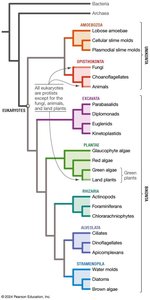
The domain Eukarya includes a wide range of organisms, from protists to animals and plants. Phylogenetic studies reveal the relationships among major eukaryotic groups and their evolutionary origins.
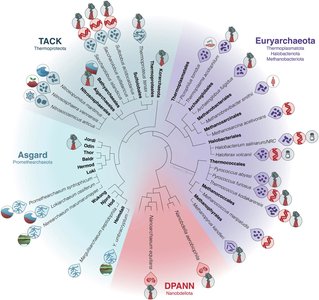
Phylogenetic trees illustrate the evolutionary relationships among eukaryotes and their connection to Bacteria and Archaea.
Diversity within Eukarya is taxonomic and functional, including differences in nutrition, reproduction, and movement.
Synapomorphies of Eukaryotes
Key Distinguishing Traits
Eukaryotes are defined by several synapomorphies—shared derived traits that distinguish them from prokaryotes.
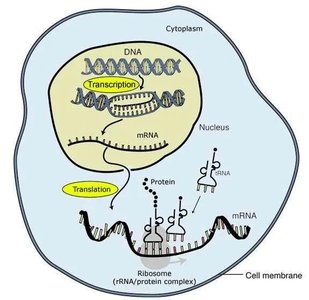
Nucleus: Stores DNA and separates transcription from translation.
Mitochondrial respiration: Specialized organelle for energy production.
Membrane-bound organelles: Compartmentalization of cellular functions.
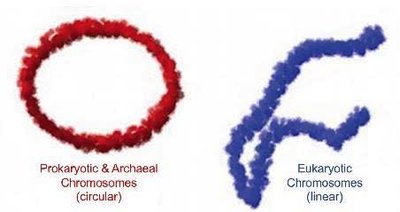
Linear chromosomes: DNA organized in multiple linear chromosomes.
Extensive cytoskeleton: Network of protein fibers for support and movement.
The Nucleus
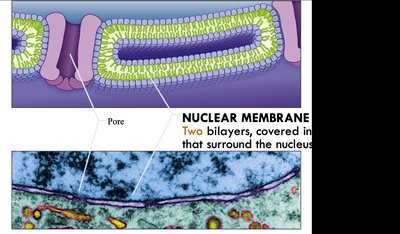
The nucleus is a defining feature of eukaryotic cells, providing a compartment for genetic material and ribosome assembly.
Double-membrane structure with nuclear pores.
Separates DNA transcription from translation, allowing for greater control of gene expression.
Site of ribosome subunit assembly.
Diversification of the Nucleus
The nucleus has diversified across eukaryotic lineages, serving as a distinguishing feature among groups.
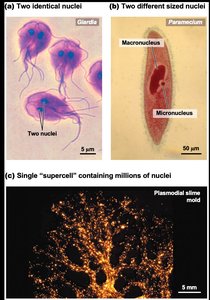
Some organisms have multiple nuclei or nuclei of different sizes.
Examples include Giardia (two identical nuclei), Paramecium (macronucleus and micronucleus), and slime molds (supercells with millions of nuclei).
Evolution of the Nucleus
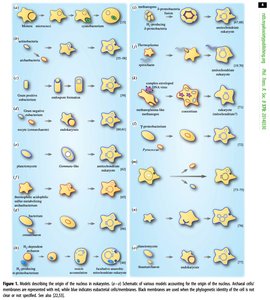
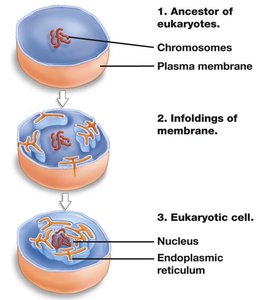
The origin of the nucleus is hypothesized to involve membrane infolding, creating a double-membrane envelope and connecting to the endoplasmic reticulum.
Eukaryotic genomes contain both bacterial and archaeal genes.
The nuclear membrane is continuous with the endoplasmic reticulum.
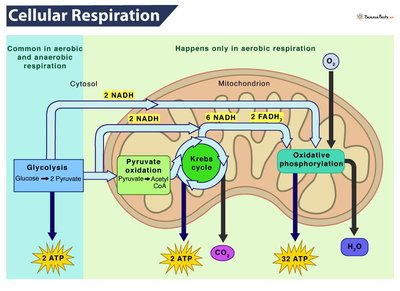
Mitochondrial Cellular Respiration
Mitochondria are organelles responsible for cellular respiration, converting energy from nutrients into ATP.
Originated from endosymbiosis of a bacterium by an archaeal host.
Contain their own DNA and replicate independently.
Membrane-Bound Organelles
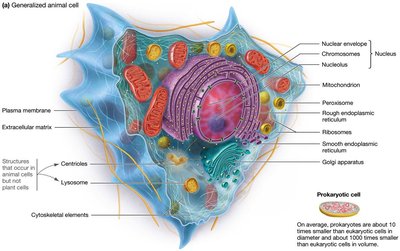
Eukaryotic cells contain various organelles, each specialized for distinct functions.
Organelles are wrapped in membranes, allowing compartmentalization.
Examples include mitochondria, chloroplasts, endoplasmic reticulum, Golgi apparatus, and lysosomes.
Linear Chromosomes
Eukaryotic chromosomes are linear and condensed around histone proteins, differing from the circular chromosomes of prokaryotes.
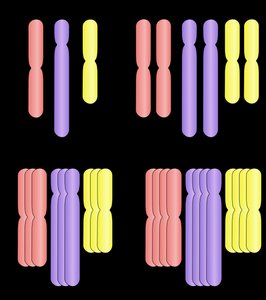
Multiple copies of each chromosome are inherited from both parents.
Chromosome number varies across species.
Cytoskeleton
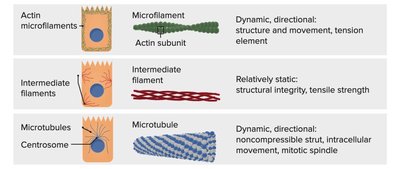
The cytoskeleton is a network of protein fibers that supports the cell, facilitates movement, and transports organelles.
Includes actin microfilaments, intermediate filaments, and microtubules.
Dynamic and essential for cell structure and function.
Origin of Eukarya
Three-Domain Hypothesis and New Evidence
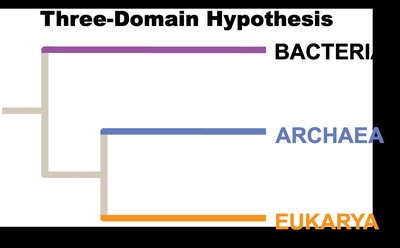
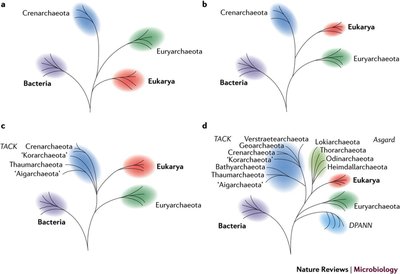
The Three-Domain Hypothesis posits Bacteria, Archaea, and Eukarya as distinct domains. Recent metagenomic data suggest new relationships, particularly involving Asgard archaea.
Asgard archaea possess genes and proteins similar to eukaryotes.
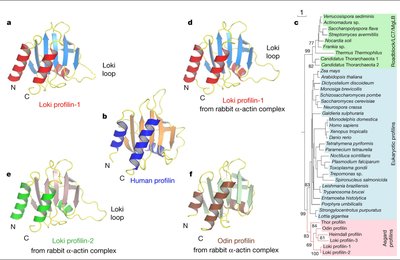
Profilin, an actin-binding protein, is found in both Asgard archaea and eukaryotes.
Endosymbiosis and Evolutionary Innovations
Eukaryotic organelles, such as mitochondria and chloroplasts, originated through endosymbiosis—engulfment of one cell by another.
Mitochondria originated from an α-proteobacterium engulfed by an Asgard archaeon.
Chloroplasts originated from cyanobacteria engulfed by early plant lineages.
Both organelles have double membranes, their own DNA, and replicate by fission.
Origin of Chloroplasts and Photosynthesis
Chloroplasts are double-membrane organelles in plants, responsible for photosynthesis.
Replicate independently and contain circular DNA.
Secondary endosymbiosis involves engulfing a eukaryote that already contains a prokaryotic endosymbiont.
Photosynthetic eukaryotes may have chloroplasts with multiple membranes.
Evolutionary Innovations in Eukarya
Major Innovations
Eukaryotes have evolved several key innovations that contributed to their diversity and complexity.
Organelles: Specialized compartments for cellular functions.
Sexual reproduction: Increases genetic diversity.
New feeding modes: Includes phagocytosis and photosynthesis.
New methods of locomotion: Flagella, cilia, and cytoskeletal rearrangements.
Multicellularity: Allows for specialization and complex body structures.
Summary Table: Synapomorphies of Eukaryotes
Trait | Description | Example |
|---|---|---|
Nucleus | Membrane-bound compartment for DNA | Animal, plant, fungal cells |
Mitochondria | Organelle for cellular respiration | All eukaryotes |
Membrane-bound organelles | Compartmentalization of cell functions | Golgi, ER, lysosomes |
Linear chromosomes | DNA organized in linear structures | Human chromosomes |
Cytoskeleton | Protein fiber network for support and movement | Actin, microtubules |
Conclusion
Eukaryotes are defined by their complex cellular structures, evolutionary innovations, and diverse lineages. Their origin is closely tied to endosymbiotic events and the integration of archaeal and bacterial genes and traits. Understanding eukaryotic diversity and evolution is fundamental to general biology.
