 Indietro
Eukaryotic Cell Genetic Control: Nucleus and Ribosomes
Guida di studio - Note intelligenti
 Appunti personalizzati basati sui tuoi materiali, ampliati con definizioni chiave, esempi e contesto.
The Eukaryotic Cell’s Genetic Instructions
Nucleus: Information Central
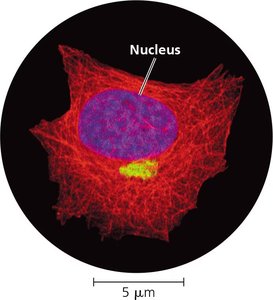
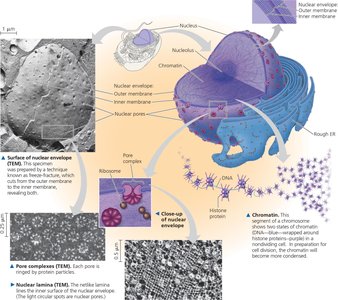
The nucleus is the most prominent organelle in a eukaryotic cell and serves as the repository for most of the cell’s genetic material. It is surrounded by a double membrane called the nuclear envelope, which separates nuclear contents from the cytoplasm and regulates molecular traffic via nuclear pores.
Nuclear Envelope: Consists of two lipid bilayer membranes separated by a 20–40 nm space. The envelope is perforated by nuclear pores (~100 nm diameter), lined by a pore complex that controls entry and exit of proteins, RNAs, and macromolecular complexes.
Nuclear Lamina: A netlike array of protein filaments (intermediate filaments in animal cells) that supports the nuclear envelope and maintains nuclear shape.
Nuclear Matrix: A protein framework extending throughout the nuclear interior, possibly organizing genetic material for efficient function.
Chromosomes: Discrete units of DNA and associated proteins (including histones) that carry genetic information. The DNA-protein complex is called chromatin.
Chromatin: Appears as a diffuse mass when the cell is not dividing; condenses into visible chromosomes during cell division.
Nucleolus: A dense region within the nucleus where ribosomal RNA (rRNA) is synthesized and ribosome subunits are assembled.
Example: Human cells typically have 46 chromosomes in the nucleus, except gametes (egg and sperm), which have 23.
Genetic Information Flow: DNA to Protein
The nucleus directs protein synthesis by transcribing DNA into messenger RNA (mRNA), which exits the nucleus through nuclear pores. In the cytoplasm, ribosomes translate the mRNA into polypeptides, forming proteins.
Transcription: DNA is used as a template to synthesize mRNA in the nucleus.
Translation: Ribosomes in the cytoplasm read mRNA and assemble amino acids into proteins.
Additional info: This process is central to gene expression and is covered in detail in molecular biology chapters.
Ribosomes: Protein Factories
Ribosomes are complexes of rRNA and proteins responsible for protein synthesis. They are not membrane-bound and exist in two forms: free in the cytosol or bound to the endoplasmic reticulum (ER) or nuclear envelope.
Free Ribosomes: Suspended in the cytosol; synthesize proteins that function within the cytosol (e.g., metabolic enzymes).
Bound Ribosomes: Attached to the ER or nuclear envelope; synthesize proteins destined for membranes, organelles, or secretion.
Structure: Each ribosome consists of a large and a small subunit, assembled in the nucleolus and exported to the cytoplasm.
Cells with High Protein Synthesis: Have numerous ribosomes and prominent nucleoli (e.g., pancreas cells producing digestive enzymes).
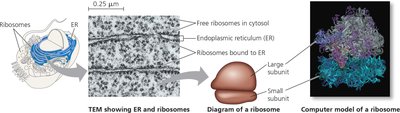
Table: Comparison of Free and Bound Ribosomes
Type | Location | Protein Destination |
|---|---|---|
Free Ribosomes | Cytosol | Cytosolic proteins |
Bound Ribosomes | ER or nuclear envelope | Membrane, organelle, or secreted proteins |
Chromosome Condensation During Cell Division
As a cell prepares to divide, chromatin condenses into visible chromosomes. This involves coiling and folding of DNA, facilitated by histone proteins, making chromosomes shorter, thicker, and individually distinguishable under a light microscope.
Condensation: Chromatin fibers loop and coil, increasing density and visibility.
Importance: Ensures accurate segregation of genetic material during cell division.
Additional info: Chromosome condensation is a key event in mitosis and meiosis, covered in cell division chapters.
