 Indietro
Eukaryotic Cells: Internal Membranes and Compartmentalization
Guida di studio - Note intelligenti
 Appunti personalizzati basati sui tuoi materiali, ampliati con definizioni chiave, esempi e contesto.
Cell Components
Comparing Prokaryotic and Eukaryotic Cells
Cells are the fundamental structural and functional units of all living organisms. They are classified into two main types: prokaryotic and eukaryotic cells. Prokaryotic cells are found in Bacteria and Archaea, while eukaryotic cells are present in protists, fungi, animals, and plants.
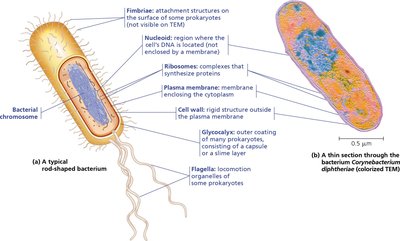
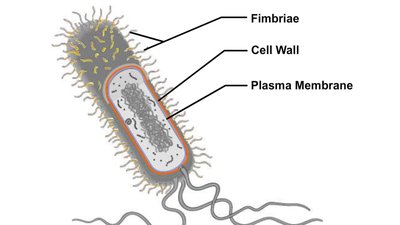
Prokaryotic cells lack a membrane-bound nucleus; their DNA is located in a region called the nucleoid.
Eukaryotic cells have their DNA enclosed within a double-membrane-bound organelle called the nucleus.
Both cell types possess a plasma membrane, cytosol, chromosomes (DNA), and ribosomes (protein synthesis).
Cell Size and Surface Area-to-Volume Ratio
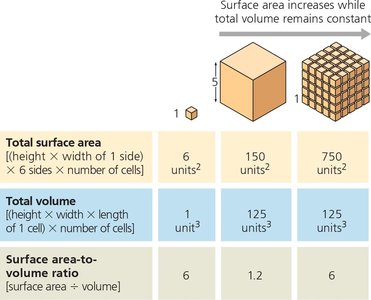
Cell size is constrained by metabolic requirements. The surface area-to-volume ratio is critical for efficient exchange of materials between the cell and its environment. As cells increase in size, their volume grows faster than their surface area, limiting the rate of exchange.
Smaller cells have a higher surface area-to-volume ratio, facilitating efficient transport of nutrients and waste.
Larger organisms have more cells, not larger cells.
Cells with high exchange rates (e.g., intestinal cells) often have adaptations like microvilli to increase surface area.
Plasma Membrane Structure
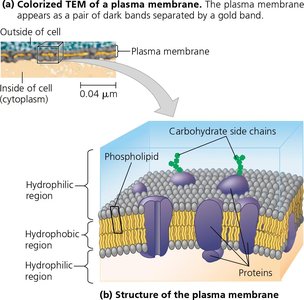
The plasma membrane is a selective barrier composed of a phospholipid bilayer with embedded proteins. It regulates the passage of substances into and out of the cell.
Hydrophobic regions of phospholipids and proteins are oriented inward, while hydrophilic regions face the aqueous environment.
Carbohydrate side chains may be attached to proteins or lipids on the membrane's outer surface.
Membranes are fundamental to cell organization and metabolism.
Eukaryotic Cell Organization
Internal Membranes and Compartmentalization
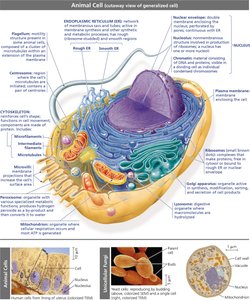
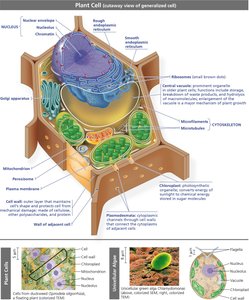
Eukaryotic cells contain extensive internal membranes that divide the cell into compartments, known as organelles. These compartments allow for specialized metabolic functions and simultaneous occurrence of incompatible processes.
Each organelle has a unique composition of lipids and proteins suited to its function.
Examples of organelles include the nucleus, mitochondria, chloroplasts (in plants), and endoplasmic reticulum.
Membranes also contain enzymes essential for cellular metabolism.
Animal and Plant Cell Structure
Animal and plant cells share many organelles but also have distinct features. Plant cells possess a cell wall, chloroplasts, and central vacuole, while animal cells have lysosomes and centrioles.
Scientific Skills Exercise: Yeast Cell Growth
Calculating Volume and Surface Area
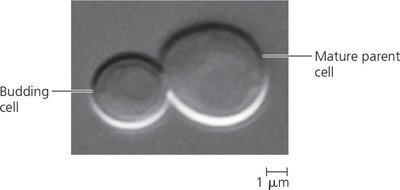
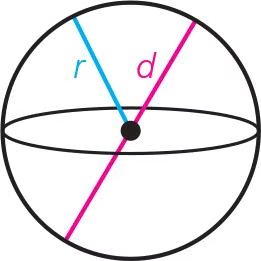
Yeast cells divide by budding, producing a new cell that grows to full size. The shape of a yeast cell can be approximated as a sphere. Calculating the volume and surface area helps understand the synthesis requirements for cytoplasm and plasma membrane during growth.
Volume of a sphere:
Surface area of a sphere:
Measure the diameter using a scale bar, convert to micrometers, and calculate the required new cytoplasm and membrane.
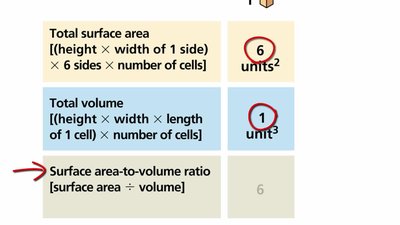
Summary Table: Surface Area and Volume Relationships
Total surface area | Total volume | Surface area-to-volume ratio |
|---|---|---|
6 units2 | 1 unit3 | 6 |
Key Organelles in Eukaryotic Cells
Nucleus
The nucleus is the control center of the cell, containing most of the cell's DNA. It is surrounded by a double membrane called the nuclear envelope.
Mitochondrion
The mitochondrion is the site of cellular respiration, generating ATP from nutrients.
Chloroplast
The chloroplast is found in plant cells and is responsible for photosynthesis, converting light energy into chemical energy.
Endoplasmic Reticulum (ER)
The endoplasmic reticulum is involved in protein and lipid synthesis. It exists in two forms: rough ER (with ribosomes) and smooth ER (without ribosomes).
Conclusion
Eukaryotic cells are characterized by internal membranes that compartmentalize their functions, allowing for complex and efficient cellular processes. Understanding the structural differences between prokaryotic and eukaryotic cells, the importance of surface area-to-volume ratio, and the roles of key organelles is fundamental to the study of cell biology.
