 Indietro
Eukaryotic Cellular Internal Structure and Function: Mini-Textbook Study Notes
Guida di studio - Note intelligenti
 Appunti personalizzati basati sui tuoi materiali, ampliati con definizioni chiave, esempi e contesto.
Eukaryotic Cellular Internal Structure and Function
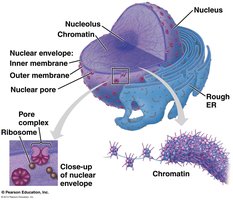
Nucleus
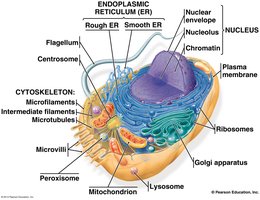
The nucleus is the central organelle in eukaryotic cells, containing most of the cell’s genetic material and serving as the site for DNA storage and RNA synthesis.
Nuclear Envelope: A double membrane structure that surrounds the nucleus, providing selective permeability via nuclear pores.
Nuclear Pores: Protein complexes that regulate the transport of molecules (such as RNA and proteins) between the nucleus and cytoplasm.
Nucleolus: A dense region within the nucleus responsible for ribosome assembly.
Chromosomes and Chromatin
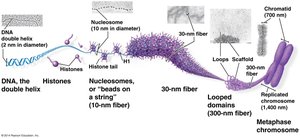
Chromosomes are linear structures composed of DNA and associated proteins (histones), organized into chromatin. Chromatin allows efficient packaging and regulation of genetic material.
Chromatin: DNA-protein complex that forms chromosomes; exists as euchromatin (active) and heterochromatin (inactive).
Genes: Linear sequences of DNA that code for specific polypeptides.
Chromosome Number: Eukaryotic cells typically have multiple chromosomes (e.g., 46 in humans).
Genetic Code and Gene Expression
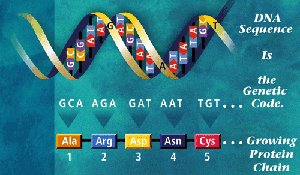
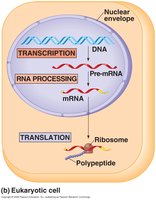
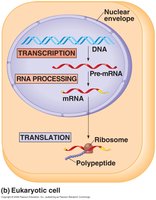
The nucleotide sequence within genes determines the amino acid sequence of polypeptides, using a specific DNA alphabet (codons). Gene expression involves transcription and translation.
Codons: Triplets of nucleotides in DNA or RNA that specify amino acids.
Transcription: The process of copying a gene’s DNA sequence into messenger RNA (mRNA).
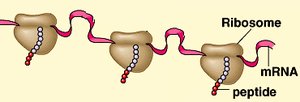
Translation: The process by which ribosomes synthesize proteins using the mRNA code.
Cytoplasm and Cytosol
The cytoplasm is the region inside the plasma membrane but outside the nucleus, containing cytosol and various organelles.
Cytosol: The fluid component of the cytoplasm, rich in proteins, ions, and other molecules.
Organelles: Specialized structures within the cytoplasm, each with distinct functions.
Ribosomes
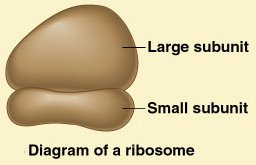
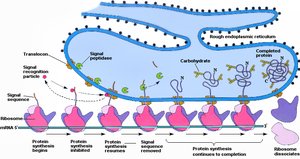
Ribosomes are the cellular structures responsible for protein synthesis. They consist of two subunits and are composed of ribosomal RNA (rRNA) and proteins.
Structure: Large and small subunits; the mRNA fits into a channel between them.
Function: Translate mRNA into polypeptide chains.
Location: Free in cytosol or attached to the rough endoplasmic reticulum (RER).
Endoplasmic Reticulum (ER)
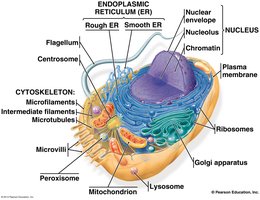
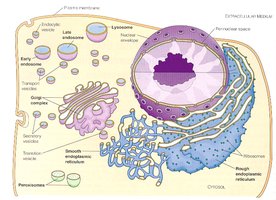
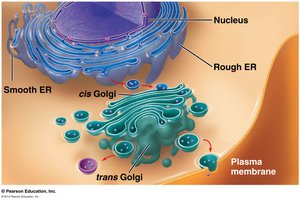
The endoplasmic reticulum is a network of membranes involved in protein and lipid synthesis. It exists in two forms: rough (RER) and smooth (SER).
Rough ER: Studded with ribosomes; synthesizes and processes proteins.
Smooth ER: Lacks ribosomes; synthesizes lipids, stores calcium, and detoxifies chemicals.
Golgi Apparatus
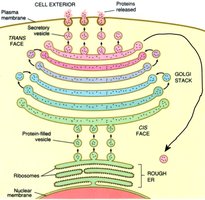
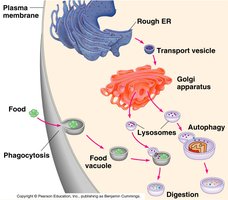
The Golgi apparatus is a stack of flattened membranous sacs that modifies, sorts, and packages proteins and lipids for delivery to their final destinations.
Function: Completes protein folding, glycosylation, and addresses material for transport.
Structure: Cis and trans faces for receiving and shipping vesicles.
Lysosomes
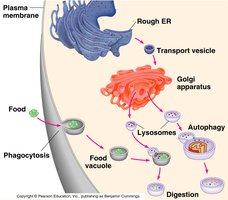
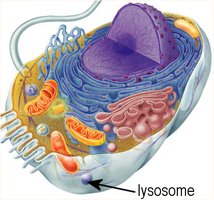
Lysosomes are membrane-bound organelles containing hydrolytic enzymes for digestion and recycling of cellular material.
Function: Breakdown of endocytosed material and damaged organelles (autophagy).
Structure: Acidic interior with lysing enzymes.
Vacuoles
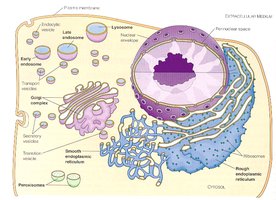
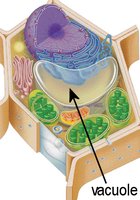
Vacuoles are large, permanent vesicles found in plant and fungal cells, used for storage and maintaining cell turgor.
Function: Store water, pigments, proteins, wastes, and defensive compounds.
Turgor Pressure: Maintains structural integrity in plant cells.
Peroxisomes
Peroxisomes are small organelles that detoxify harmful substances and break down hydrogen peroxide.
Function: Detoxification, especially in liver and kidney cells.
Enzymes: Peroxidase breaks down H2O2 into water and oxygen.
Mitochondria
Mitochondria are the energy-producing organelles, often called the "cellular powerhouses." They generate ATP through cellular respiration.
Structure: Double membrane, inner membrane folded into cristae.
Function: ATP production, contains its own DNA and ribosomes.
Plastids
Plastids are organelles found in plant and algal cells, with several types specialized for storage and photosynthesis.
Leucoplasts: Store starch or lipids.
Chromoplasts: Contain pigments.
Chloroplasts: Carry out photosynthesis.
Cytoskeleton
The cytoskeleton is a dynamic network of fibrous proteins that provides structural support, enables cell movement, and organizes organelles.
Static Function: Internal scaffolding for cell strength and shape.
Dynamic Function: Cell movement and shape changes.
Components: Microtubules, microfilaments, intermediate filaments.
Microtubules
Microtubules are hollow tubes made of tubulin proteins, serving as intracellular highways for transport and cell movement.
Structure: Composed of alpha and beta tubulin subunits.
Function: Vesicle transport, cell division, flagella and cilia movement.
Microfilaments
Microfilaments are thin, solid rods made of actin, abundant near cell margins and involved in cell shape and movement.
Function: Muscle contraction, cell shape, pseudopodia formation.
Example: Strengthening microvilli in intestinal cells.
Intermediate Filaments
Intermediate filaments are diverse, twisted protein filaments providing permanent structural support in some animal cells.
Example: Keratin in skin and hair.
Intercellular Junctions
Intercellular junctions are specialized structures that connect cells, enabling communication, adhesion, and impermeability.
Gap Junctions: Tunnels for communication in animal cells.
Plasmodesmata: Communication channels in plant cells.
Tight Junctions: Sealing for impermeability.
Desmosomes: Spot welds for strength.
Extracellular Matrix (ECM)
The extracellular matrix is a network of glycoproteins outside animal cells, providing support, adhesion, communication, and wound repair.
Components: Collagen, proteoglycans, fibronectin, elastin.
Functions: Cell support, cell-cell adhesion, communication, wound repair.
Summary Table: Major Eukaryotic Organelles and Functions
Organelle | Main Function | Key Features |
|---|---|---|
Nucleus | DNA storage, RNA synthesis | Double membrane, nucleolus |
Ribosome | Protein synthesis | No membrane, two subunits |
Rough ER | Protein processing | Ribosomes attached |
Smooth ER | Lipid synthesis, detoxification | No ribosomes |
Golgi Apparatus | Protein modification, packaging | Stacked cisternae |
Lysosome | Digestion, recycling | Acidic, hydrolytic enzymes |
Vacuole | Storage, turgor | Large, permanent in plants |
Peroxisome | Detoxification | Peroxidase enzymes |
Mitochondrion | ATP production | Double membrane, cristae |
Plastid | Photosynthesis, storage | Chloroplast, chromoplast, leucoplast |
Cytoskeleton | Structure, movement | Microtubules, microfilaments, intermediate filaments |
