 Indietro
Eukaryotic Microorganisms: Fungi, Algae, Protozoa, and Helminths
Guida di studio - Note intelligenti
 Appunti personalizzati basati sui tuoi materiali, ampliati con definizioni chiave, esempi e contesto.
Eukaryotic Diversity and Classification
Overview of Eukaryotic Supergroups
Eukaryotes are classified into several supergroups based on evolutionary relationships. These supergroups include diverse organisms such as fungi, algae, protozoa, and helminths, many of which are medically and ecologically important. - Supergroups: Excavata, Chromalveolata, Rhizaria, Archaeplastida, Amoebozoa, Opisthokonta - Phylogenetic relationships: Classification is based on genetic and morphological evidence, though some relationships remain under debate. 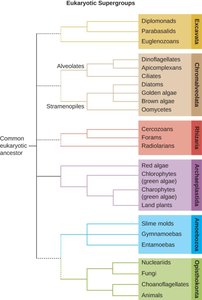
Protozoa
General Characteristics
Protozoa are unicellular, chemoheterotrophic eukaryotes, often motile and capable of forming cysts. They are historically grouped as "animal-like" protists, though this is not a phylogenetic classification. - Nutritional Type: Chemoheterotroph - Cellular Arrangement: Unicellular - Motility: Many are motile via flagella, cilia, or pseudopodia - Life Stages: Trophozoite (active, feeding stage), cyst (dormant stage) - Reproduction: Asexual (binary fission, schizogony), some sexual processes
Amoebozoa
Amoebozoa includes protozoans that move using amoeboid movement. Medically important genera include Entamoeba histolytica (causes amoebic dysentery) and Acanthamoeba (can cause keratitis and blindness).
Slime Molds
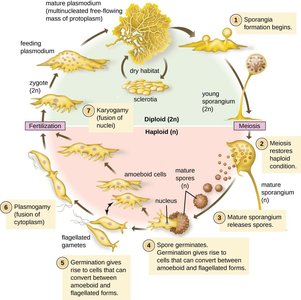
Slime molds are unusual amoebozoans with complex life cycles. - Cellular slime molds: Exist as individual amoeboid cells, aggregate to form a mobile slug, and produce spores via fruiting bodies. - Plasmodial slime molds: Large, multinucleate cells that form reproductive stalks and spores. 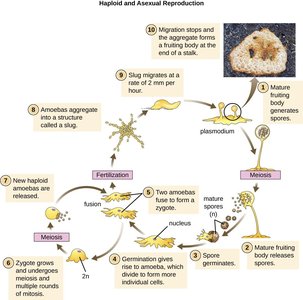
Chromalveolata
Apicomplexans
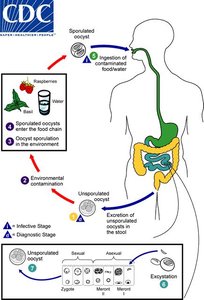
Apicomplexans are intracellular parasites with a complex life cycle, including an apical complex for host cell invasion. - Medically important genera: Plasmodium (malaria), Cryptosporidium (epidemic diarrhea), Theileria (Babesia), Toxoplasma gondii (toxoplasmosis) - Life cycle: Includes infective sporozoite, schizogony, and merozoite stages. 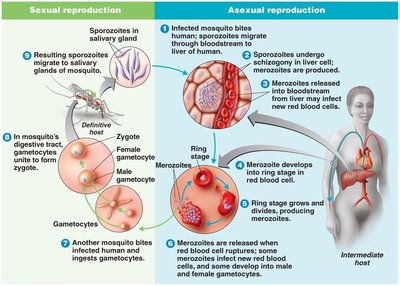
Ciliates
Ciliates are characterized by cilia covering their cell surface. - Medically important species: Balantidium coli (intestinal illness)
Oomycotes (Water Molds)
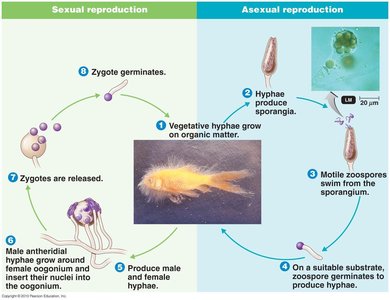
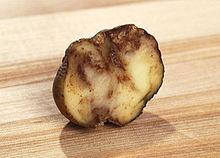
Oomycotes are multicellular, chemoheterotrophic organisms once classified as fungi. - Cell wall: Cellulose - Life cycle: Diploid, produce zoospores - Medically and agriculturally important genera: Phytophthora (plant parasites, e.g., potato blight) 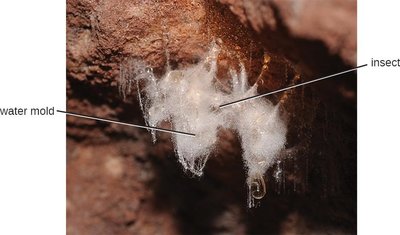
Excavata
General Characteristics
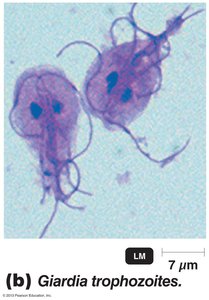
Excavata are named for a depression (excavate) on the cell surface. - Fornicata: Lack mitochondria, have flagella. Giardia lamblia causes diarrheal illness. 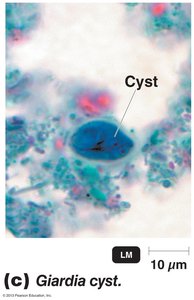
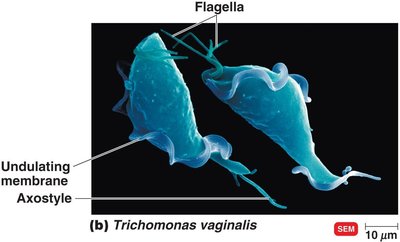
 - Parabasalia: Animal endosymbionts, have basal bodies and modified mitochondria. Trichomonas vaginalis causes trichomoniasis.
 - Euglenozoa: Include photosynthetic and nonphotosynthetic species. Euglena has flagella, pellicle, stigma, and chloroplasts.
Trypanosomes
Trypanosomes are disease-causing flagellated euglenozoa transmitted by insect bites. - T. brucei: African trypanosomiasis (sleeping sickness), transmitted by tsetse fly. 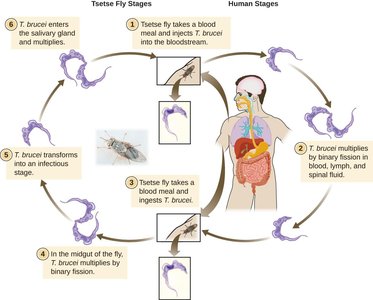 - T. cruzi: American trypanosomiasis (Chagas' disease), transmitted by kissing bug.
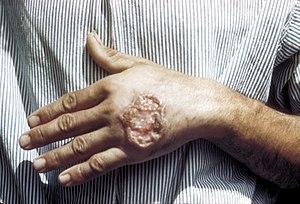
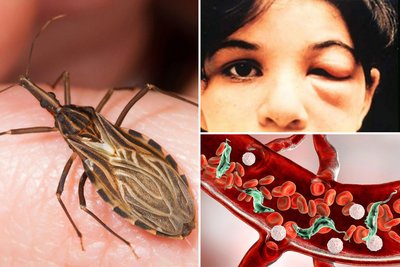 - Leishmania: Causes skin and systemic disease.
Parasitic Helminths
General Characteristics
Helminths are multicellular, chemoheterotrophic animals with complex life cycles. - Groups: Nematoda (roundworms), Platyhelminthes (flatworms: trematodes and cestodes) - Features: Reduced nervous and digestive systems, complex reproduction, microscopic eggs and larvae
Nematoda (Roundworms)
- Digestive system: Complete, even when parasitic - Common parasites: Ascaris lumbricoides (intestinal), Enterobius vermicularis (pinworm), Toxocara spp. (toxocariasis), Necator americanus (hookworm), Trichinella spiralis (trichinellosis), Dirofilaria immitis (heartworm), Dracunculus medinensis (guinea worm)
Platyhelminthes (Flatworms)
- Trematodes (flukes): Hermaphroditic, complex life cycles - Cestodes (tapeworms): Segmented, eggs and larvae infect humans
Fungi
General Characteristics
Fungi are eukaryotic, chemoheterotrophic organisms with unique cell wall and membrane features. - Cell wall: Chitin - Cell membrane: Ergosterols - Multicellularity: All except yeasts - Food acquisition: Absorptive - Reproduction: Sexual and asexual spores
Comparison of Fungi and Bacteria
Feature | Fungi | Bacteria |
|---|---|---|
Cell Type | Eukaryotic | Prokaryotic |
Cell Membrane | Ergosterols | Sterols absent (except Mycoplasma) |
Cell Wall | Glucans, Mannans, Chitin | Peptidoglycan |
Spores | Sexual, Asexual | Endospores, some asexual |
Metabolism | Heterotrophic, Aerobic, Facultative anaerobic | Heterotrophic, Autotrophic, Aerobic, Anaerobic |
Multicellular Fungi (Molds)
- Hyphae: Filaments forming mycelium and thallus - Types: Septate (with cross-walls), coenocytic (without cross-walls)
Unicellular Fungi (Yeasts)
- Budding yeast: Reproduce by budding, may form pseudohyphae - Dimorphic fungi: Can grow as yeast or mold depending on conditions
Fungal Reproduction
- Asexual spores: Conidiospores (not enclosed), sporangiospores (enclosed) - Sexual spores: Result from three phases of sexual reproduction
Fungal Diseases (Mycoses)
- Types: Superficial, opportunistic, cutaneous, subcutaneous, systemic
Medically Important Fungal Phyla
Phylum | Characteristics | Examples |
|---|---|---|
Zygomycota | Coenocytic hyphae, zygospores | Rhizopus, Mucor |
Ascomycota | Septate hyphae, ascospores, conidiospores | Aspergillus, Blastomyces, Histoplasma, Trichophyton |
Basidiomycota | Basidia, basidiospores | Cryptococcus, mushrooms |
Microsporidia | Lack mitochondria, produce polar tube | Enterocystozoan |
Algae
General Characteristics
Algae are photoautotrophic eukaryotes, ranging from unicellular to multicellular forms. - Cellular arrangement: Unicellular, colonial, filamentous, tissues - Food acquisition: Diffusion - Characteristic features: Pigments for photosynthesis
Major Algal Groups
- Phaeophyta (Brown algae): Multicellular, harvested for algin - Rhodophyta (Red algae): Multicellular, harvested for agar and carrageenan - Chlorophyta (Green algae): Unicellular or multicellular, thought to have given rise to terrestrial plants - Diatoms: Unicellular, cell walls of pectin and silica, store oil - Dinoflagellates: Unicellular, cause paralytic shellfish poisoning
Lichens
General Characteristics
Lichens are mutualistic associations between an alga (or cyanobacterium) and a fungus. - Alga: Produces carbohydrates - Fungus: Provides holdfast and structure
Arthropods as Disease Vectors
General Characteristics
Arthropods may transmit diseases as vectors. - Phylum: Arthropoda (exoskeleton, jointed legs) - Classes: Insecta (6 legs: lice, fleas, mosquitoes), Arachnida (8 legs: mites, ticks) - Transmission: Mechanical (surface), biological (microbe multiplies in vector) Definitive host: Microbe's sexual reproduction occurs in the vector Example: Mosquitoes transmit malaria, ticks transmit Lyme disease. Additional info: This guide covers the diversity, classification, and medically important features of eukaryotic microorganisms, including their life cycles, ecological roles, and impact on human health.
