 Indietro
Evolution and Classification of Animals: From Early Life to Cnidarians
Guida di studio - Note intelligenti
 Appunti personalizzati basati sui tuoi materiali, ampliati con definizioni chiave, esempi e contesto.
Evolution and Classification of Animals
Introduction to Animal Diversity
The animal kingdom is characterized by a vast diversity of forms and evolutionary adaptations. Understanding the origins and classification of animals is fundamental to General Biology, especially in the context of chapters on animal evolution, invertebrates, and phylogeny.
Domains of Life
The Three Domains
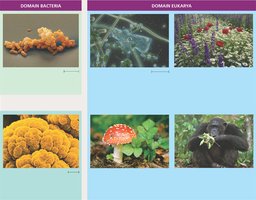
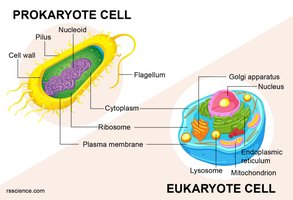
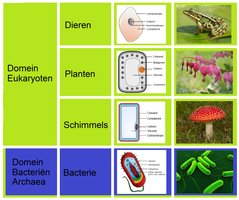
All life is classified into three domains: Bacteria, Archaea, and Eukarya. Bacteria and Archaea are prokaryotes, lacking a true nucleus, while Eukarya includes all eukaryotic organisms, such as animals, plants, fungi, and protists.
Bacteria: Single-celled prokaryotes, diverse and widespread.
Archaea: Single-celled prokaryotes, often found in extreme environments.
Eukarya: Organisms with cells containing a nucleus and organelles; includes animals, plants, fungi, and protists.
Classification Hierarchy
Taxonomic Levels
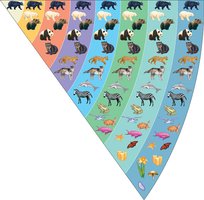
Biological classification organizes living organisms into hierarchical categories. The main levels are: Domain, Kingdom, Phylum, Class, Order, Family, Genus, and Species. This system helps scientists understand evolutionary relationships.
Species: The most specific level, representing a single type of organism.
Genus: Groups closely related species.
Family: Groups related genera.
Order: Groups related families.
Class: Groups related orders.
Phylum: Groups related classes.
Kingdom: Groups related phyla.
Domain: The broadest category.
Characteristics of Animals
Defining Features
Animals are multicellular, eukaryotic organisms that lack cell walls and plastids. Their cells are specialized and organized into tissues. Animals are chemoheterotrophic, obtaining energy and nutrients by ingesting other organisms.
Multicellularity: Composed of multiple cells.
Specialized cells: Organized into tissues.
Chemoheterotrophy: Dependence on other organisms for food.
Genetic Regulation: Hox Genes
Role of Hox Genes in Animal Development
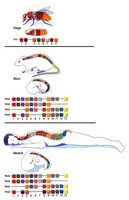
Hox genes are a group of regulatory genes that determine the body plan along the head-tail axis in animals. They are crucial for the development of structures such as limbs, vertebrae, and segments. Variations in Hox gene expression contribute to the diversity of animal forms.
Function: Specify the identity and arrangement of body parts.
Conservation: Hox genes are highly conserved across animal phyla.
Example: In humans, Hox genes regulate the formation of the vertebral column and limbs.
Early Animals and Evolutionary Milestones
Origins and Feeding Strategies
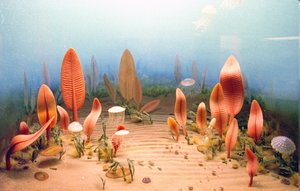
Early animals were multicellular and fed on bacteria, protists, or organic remnants. They evolved mechanisms for feeding, such as creating water currents or actively moving to capture food. Examples include sponges, polyps, and Ediacaran fauna.
Sponges: Sessile, filter-feeding animals.
Polyps: Simple, tentacled animals.
Ediacaran fauna: Early multicellular organisms from the Neoproterozoic era.

Phylum Porifera: Sponges
Structure and Function
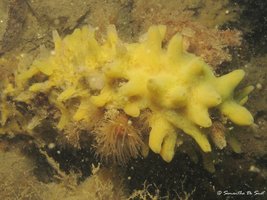
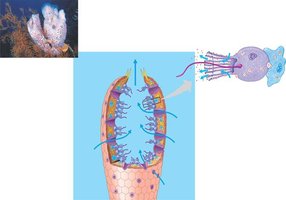
Sponges are simple, asymmetrical animals with porous bodies. They lack true tissues and organs, and are suspension feeders, filtering food particles from water. Most sponges are hermaphroditic.
Habitat: Found in both freshwater and marine environments.
Feeding: Water flows through pores, food is captured by choanocytes.
Reproduction: Hermaphroditic, capable of both sexual and asexual reproduction.
Symmetry in Animals
Types of Symmetry
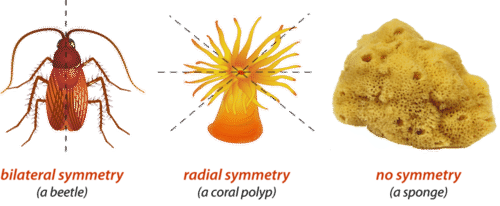
Animal body plans exhibit different types of symmetry, which are important for classification and function.
No symmetry: Sponges (Porifera).
Radial symmetry: Cnidarians (e.g., jellyfish, sea anemones).
Bilateral symmetry: Most other animals, including vertebrates and many invertebrates.
Phylum Cnidaria: Neteldieren
Body Plan and Function
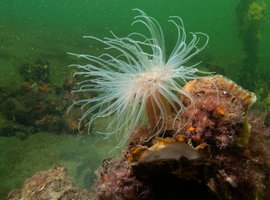
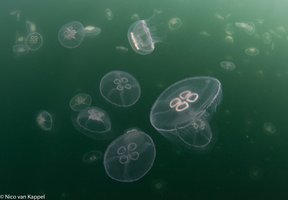
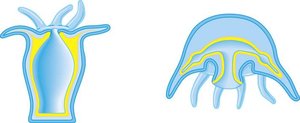
Cnidarians are among the oldest animal groups, characterized by radial symmetry, a gastrovascular cavity, and specialized stinging cells called cnidocytes. Their body plan is diploblastic, consisting of ectoderm and endoderm.
Gastrovascular cavity: Functions in digestion and gas exchange.
Cnidocytes: Unique cells for defense and prey capture.
Body forms: Polyp (sessile) and medusa (free-swimming).
Classes of Cnidaria
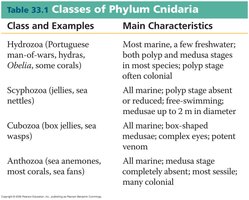
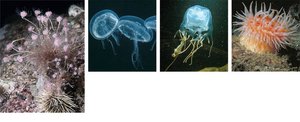
Cnidaria is divided into four main classes: Hydrozoa, Scyphozoa, Cubozoa, and Anthozoa. Each class has distinct characteristics and representative species.
Class | Examples | Main Characteristics |
|---|---|---|
Hydrozoa | Portuguese man-of-war, hydras, Obelia | Most marine, some freshwater; both polyp and medusa stages; often colonial |
Scyphozoa | Jellies, sea nettles | All marine; polyp stage absent or reduced; free-swimming medusa up to 2 m |
Cubozoa | Box jellies, sea wasps | All marine; box-shaped medusae; complex eyes; potent venom |
Anthozoa | Sea anemones, most corals, sea fans | All marine; medusa stage absent; most sessile; many colonial |
Life Cycle of Hydrozoa
Alternation of Generations
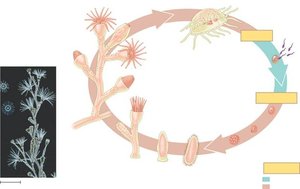
Hydrozoans typically alternate between polyp and medusa stages. Colonies of polyps can specialize for feeding or reproduction. Medusae are produced asexually and reproduce sexually, leading to the formation of larvae (planula) that develop into new polyps.
Asexual reproduction: Budding of medusae from reproductive polyps.
Sexual reproduction: Medusae produce gametes; fertilization forms zygotes.
Larval stage: Planula larvae settle and develop into polyps.
Evolutionary Innovations: Bilateral Symmetry and Cephalization
Development of Complex Body Plans
The evolution of bilateral symmetry and cephalization (head formation) enabled animals to develop more complex behaviors, movement, and sensory systems. This led to the rapid diversification of animal types during the Cambrian explosion.
Bilateral symmetry: Distinct dorsal, ventral, anterior, and posterior sides.
Cephalization: Concentration of sensory organs and nervous tissue at the anterior end.
Embryonic Development and Tissue Layers
Formation of Germ Layers
Animal embryos develop distinct germ layers: ectoderm, endoderm, and mesoderm. These layers give rise to various tissues and organs. Sponges have one layer, diploblastic animals have two, and triploblastic animals have three.
Ectoderm: Forms the outer covering and nervous system.
Endoderm: Forms the digestive tract and associated organs.
Mesoderm: Forms muscles and other organs between the digestive tract and body wall.
Body Cavities
Types of Body Cavities
Triploblastic animals may have a body cavity (coelom) or lack one. The presence and origin of the cavity are important for classification.
Coelomate: True coelom, fully lined by mesoderm.
Pseudocoelomate: Body cavity partially lined by mesoderm.
Acoelomate: No body cavity between digestive tract and body wall.
Protostome vs. Deuterostome Development
Embryonic Development Patterns
Animals are classified based on their embryonic development. In protostomes, the blastopore becomes the mouth; in deuterostomes, it becomes the anus. Cleavage patterns also differ: spiral and determinate in protostomes, radial and indeterminate in deuterostomes.
Protostome: Molluscs, annelids, arthropods.
Deuterostome: Echinoderms, chordates.
Summary
By understanding the classification, evolutionary history, and developmental biology of animals, students gain insight into the diversity and complexity of life. Key concepts include the domains of life, taxonomic hierarchy, animal characteristics, Hox genes, early animal evolution, symmetry, tissue layers, body cavities, and embryonic development patterns.
