 Indietro
Evolution and Diversity of Plant Groups: Nonvascular and Seedless Vascular Plants
Guida di studio - Note intelligenti
 Appunti personalizzati basati sui tuoi materiali, ampliati con definizioni chiave, esempi e contesto.
Major Episodes in Plant Evolution
Overview of Plant Evolution
The evolution of plants is marked by four major episodes, each representing significant adaptations that allowed plants to colonize and diversify on land. Understanding these episodes provides insight into the diversity and complexity of modern plant life.
Origin of Plants from Algal Ancestors: The earliest plants evolved from green algal ancestors, adapting to terrestrial environments.
Origin and Diversification of Vascular Plants: The development of vascular tissues enabled plants to transport water and nutrients efficiently, supporting larger body sizes.
Origin of Seeds: Seeds provided a protective structure for plant embryos, facilitating survival and dispersal in diverse environments.
Origin of Flowers: The evolution of flowers enhanced reproductive success and diversification, especially among angiosperms.
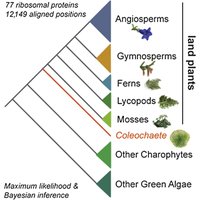
Phylogenetic trees illustrate the evolutionary relationships among major plant groups, highlighting the transition from aquatic green algae to complex land plants.
Nonvascular Plants (Bryophytes)
Classification and Characteristics
Nonvascular plants (NVP), commonly referred to as bryophytes, are small, herbaceous plants that lack specialized vascular tissues. They are classified into three main phyla:
Phylum Hepatophyta: Liverworts
Phylum Bryophyta: Mosses
Phylum Anthocerophyta: Hornworts
Bryophytes are considered a monophyletic group, meaning they include a single common ancestor and all its descendants. In all three phyla, the gametophyte is the dominant, longer-living stage of the life cycle.
Life Cycle and Structure
The life cycle of bryophytes is characterized by a dominant gametophyte and a dependent sporophyte. Key features include:
Gametophyte: Develops from a spore into a structure composed of a protonema and a gametophore (gamete-producing structure).
Rhizoids: Root-like structures that anchor the gametophyte but lack vascular tissue, distinguishing them from true roots.
Sporophyte: Consists of a foot, seta (stalk), and sporangium (capsule), which releases spores through a peristome.
Reproduction: Mature gametophytes produce flagellated sperm in antheridia and eggs in archegonia. Sperm require water to swim to the egg for fertilization.
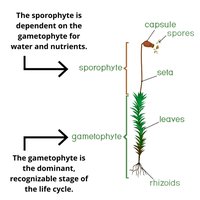
Nonvascular plants were the dominant vegetation during the first 100 million years of plant evolution, preceding the rise of vascular plants.
Vascular Plants
Seedless Vascular Plants (SVP)
Vascular plants possess specialized tissues—xylem and phloem—that allow for efficient transport of water, minerals, and nutrients. The evolution of vascular tissues enabled these plants to grow taller and colonize new environments.
Dominant Sporophyte: In vascular plants, the sporophyte is the larger, more conspicuous generation, while the gametophyte is reduced and often grows on or below the soil surface.
Xylem: Conducts water and minerals; composed of dead cells called tracheids.
Phloem: Distributes sugars, amino acids, and other organic products; consists of living cells.
Lignin: Strengthens water-conducting cells, providing structural support and enabling increased height.
Roots: Anchor the plant and absorb water and nutrients; may have evolved independently in different lineages.
Leaves: Increase surface area for photosynthesis; categorized as microphylls (single vein, found in lycophytes) or megaphylls (branched vascular system).
Reproductive Adaptations
Sporophylls: Modified leaves bearing sporangia.
Sori: Clusters of sporangia on the undersides of sporophylls.
Strobili: Cone-like structures formed from groups of sporophylls.
Homosporous Plants: Produce one type of spore that develops into a bisexual gametophyte (most SVP).
Heterosporous Plants: Produce megaspores (female gametophytes) and microspores (male gametophytes); all seed plants and some SVP.
Classification of Seedless Vascular Plants
Phylum Lycophyta: Club mosses, spike mosses, quillworts (note: true mosses are bryophytes, not lycophytes).
Phylum Monilophyta: Ferns, horsetails, whisk ferns, and their relatives.
Significance of Seedless Vascular Plants
Ancestors of modern SVP formed the first forests during the Devonian and Carboniferous periods.
Increased photosynthesis by these forests contributed to global cooling at the end of the Carboniferous period.
Decaying plant material from these forests eventually became coal, an important fossil fuel.
Summary Table: Comparison of Nonvascular and Vascular Plants
Feature | Nonvascular Plants (Bryophytes) | Vascular Plants (SVP) |
|---|---|---|
Dominant Generation | Gametophyte | Sporophyte |
Vascular Tissue | Absent | Present (xylem, phloem) |
Size | Small | Can be large/tall |
Roots | Rhizoids (not true roots) | True roots |
Leaves | Simple or absent | Microphylls or megaphylls |
Water Requirement for Fertilization | Yes | Yes (in SVP) |
Additional info: The transition from nonvascular to vascular plants marks a key evolutionary step, enabling greater complexity, size, and ecological impact in terrestrial environments.
