 Indietro
Evolution and Diversity of Vertebrates: Fishes, Limbs, and Ancestral Traits
Guida di studio - Note intelligenti
 Appunti personalizzati basati sui tuoi materiali, ampliati con definizioni chiave, esempi e contesto.
Vertebrate Evolution and the Paraphyly of Fishes
Understanding Paraphyly in Fishes
The term "fishes" refers to a paraphyletic group, meaning it does not include all descendants of a common ancestor. This is important in evolutionary biology because it highlights that the group labeled "fishes" excludes tetrapods (amphibians, reptiles, birds, and mammals), even though these groups evolved from fish-like ancestors.
Paraphyletic Group: A group that includes some, but not all, descendants of a common ancestor.
Fins as Retained Ancestral Characteristic: Fins are a trait inherited from the common ancestor of all vertebrates, including tetrapods.
Modern Classification: No recent classification includes a single group labeled "fishes"; instead, vertebrates are divided into several clades.
Major Clades of Fishes
There are four main clades widely considered as fishes, each with distinct evolutionary histories and characteristics.
Ray-Finned Fishes (Actinopterygii): The most diverse group, with over 30,000 species. Examples include salmon, goldfish, and clownfish.
Cartilaginous Fishes (Chondrichthyes): Includes sharks, rays, and skates (~1,000 species).
Lobe-Finned Fishes (Sarcopterygii): Includes lungfishes and coelacanths.
Jawless Fishes (Agnatha): Includes lampreys (~40 species).
Vertebrate Group | Examples | # Extant Species |
|---|---|---|
Ray-Finned Fishes | Salmon, Goldfish, Clownfish | 30,000+ |
Cartilaginous Fishes | Sharks, Rays, Skates | 1,000 |
Lobe-Finned Fishes | Lungfish, Coelacanths | 8 |
Jawless Fishes | Lampreys | 40 |
Evolution of Limbs: The Tiktaalik Transition
From Fins to Limbs
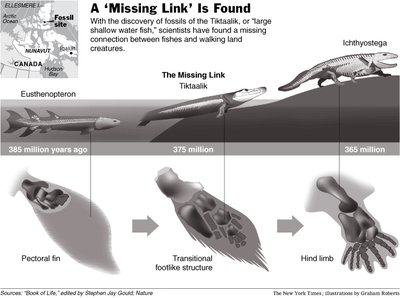
The evolution of limbs from fins is a key event in vertebrate history, marking the transition from aquatic to terrestrial life. Tiktaalik is a fossil species that represents a "missing link" between fish and tetrapods.
Tiktaalik: Lived ~375 million years ago; had both fish-like fins and limb-like structures.
Natural Selection: Larger bones in the fin could evolve if they provided a survival advantage, such as supporting movement in shallow water or on land.
Darwin's Postulates: Variation, heritability, and differential survival/reproduction drive evolutionary change.
Example: The pectoral fin of Eusthenopteron evolved into the transitional footlike structure in Tiktaalik, and eventually into the hind limb of Ichthyostega.
Homologous vs. Analogous Structures
Homologous structures share an evolutionary origin, while analogous structures arise independently due to similar selective pressures.
Homologous: Fins of fish are homologous with limbs of tetrapods.
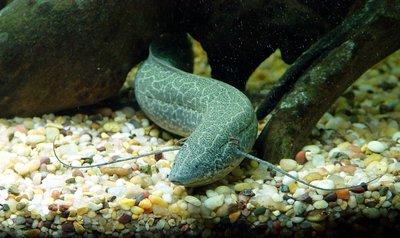
Analogous: Front fins of some lungfish are analogous to cat whiskers or cricket antennae, not derived from the same ancestral structure.
Retained Ancestral vs. Shared Derived Characteristics
Definitions and Examples
Understanding the difference between retained ancestral and shared derived characteristics is crucial for reconstructing evolutionary relationships.
Retained Ancestral Characteristic: Traits inherited from a distant ancestor and present in multiple groups (e.g., fins in fishes).
Shared Derived Characteristic (Synapomorphy): Traits that evolved in a common ancestor of a group and are unique to that group (e.g., limbs in tetrapods).
Example: Scaly skin in reptiles is a retained ancestral characteristic; amniotic egg is a shared derived characteristic of amniotes.
Diversity and Misconceptions about "Primitive" Species
Species-Poor Lineages and the "Primitive" Fallacy
Lineages with few extant species are often incorrectly considered "primitive." This misconception arises because low diversity is mistaken for ancestral simplicity.
Low Diversity: Lungfish and coelacanths have few extant species, but are not "living fossils" or less evolved.
Evolutionary Change: All extant species are equally evolved; some lineages simply have fewer species due to evolutionary processes.
Processes Affecting Diversity: Speciation increases numbers; extinction decreases numbers.
Lungfish Diversity and Misconceptions
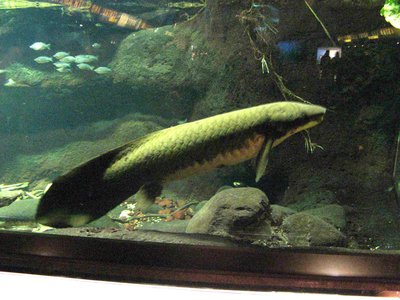
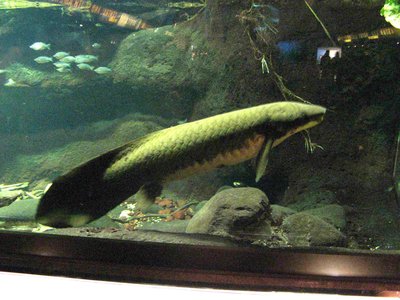
Lungfish are often cited as "primitive," but this is misleading. The Australian lungfish is considered the most basal extant species, while African and South American lungfish are more derived.
Phylogenetic Relationships Among Vertebrates
Reconstructing Ancestral States Using Parsimony
Parsimony is a principle used to infer the simplest evolutionary pathway, minimizing the number of changes required. It helps determine where traits like limbs were gained or lost in the vertebrate tree.
Parsimony: The simplest explanation with the fewest evolutionary changes is preferred.
Application: Used to reconstruct ancestral states and evolutionary transitions (e.g., fins to legs).
Summary Table: Vertebrate Groups and Their Characteristics
Group | Examples | # Extant Species |
|---|---|---|
Reptiles (including birds) | Turtle, Bird | 20,000 |
Mammals | Human, Deer | 5,000 |
Amphibians | Salamander, Frog | 5,000 |
Lungfish | Australian, African, S. American | 6 |
Coelacanths | Africa, SE Asia | 2 |
Ray-Finned Fishes | Salmon, Goldfish | 30,000 |
Cartilage Fishes | Sharks, Rays, Skates | 1,000 |
Jawless Fishes | Lampreys | 40 |
Key Concepts in Vertebrate Evolution
Homology and Analogy
Homologous Structures: Indicate common ancestry (e.g., rear fins of lungfish and legs of salamanders).
Analogous Structures: Result from convergent evolution (e.g., front fins of lungfish and cat whiskers).
Evolutionary Trees and Trait Mapping
Phylogenetic trees are used to visualize relationships and map the evolution of traits such as fins, legs, milk, and amniotic eggs.
Trait Bars: Indicate where traits evolved on the tree.
Connecting Trees: All trees are incomplete; practice connecting them to understand the "Tree of Life."
Conclusion
The study of vertebrate evolution reveals the complexity of relationships among fishes and tetrapods, the importance of distinguishing ancestral and derived traits, and the pitfalls of labeling species as "primitive." Understanding these concepts is essential for reconstructing the evolutionary history of life on Earth.
