 Indietro
Evolution by Natural Selection: Patterns, Evidence, and Processes
Guida di studio - Note intelligenti
 Appunti personalizzati basati sui tuoi materiali, ampliati con definizioni chiave, esempi e contesto.
Evolutionary Patterns and Processes
Introduction to Evolution and Diversity of Life
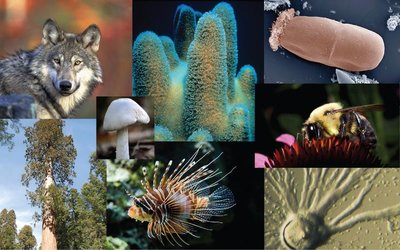
Evolution is the fundamental process responsible for the diversity of life on Earth. It is defined as the change in allele frequency in a population over time, resulting in the modification and adaptation of species. The study of evolution provides explanations for the origin, diversity, and relationships among organisms.
Population: A group of individuals of the same species living in the same geographic area at the same time.
Evolution: Change in allele frequency in a population over time.
Diversity: The result of evolutionary processes acting over millions of years.
The Rise of Evolutionary Thought
Historical Models of Diversity
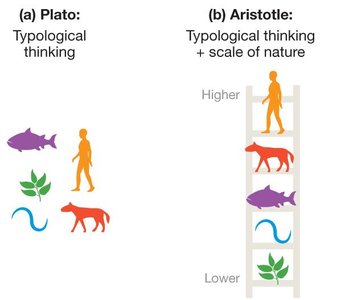
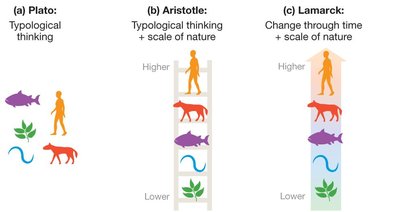
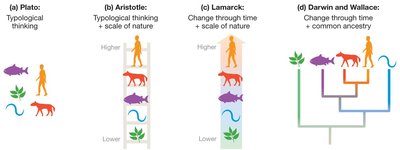
Explanations for the diversity of life have evolved from typological thinking to the modern understanding of evolution by natural selection. Early models, such as those proposed by Plato and Aristotle, viewed species as fixed and unchanging. Lamarck introduced the idea of change through time, while Darwin and Wallace explained diversity through common ancestry and natural selection.
Typological Thinking: The belief that all organisms are created as perfect "types" or essences.
Scale of Nature: Aristotle's concept of organizing organisms by size and complexity.
Lamarck: Proposed that species change through time via acquired characteristics.
Darwin and Wallace: Introduced the concept of evolution by natural selection and common ancestry.
Evidence for Evolution
Geologic Time Scale and Fossil Record
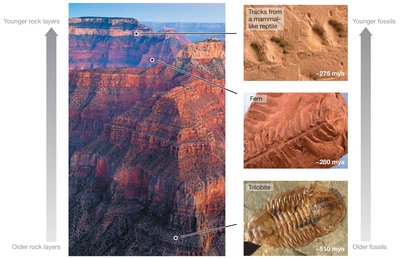
The geologic time scale and fossil record provide evidence for the age of Earth and the existence of life over billions of years. Fossils preserve evidence of past life and document the changes in species through time.
Geologic Time Scale: Earth is about 4.6 billion years old; first evidence of life 3.4-3.8 billion years ago.
Fossil Record: Preserves evidence of extinct and transitional species.
Extinction
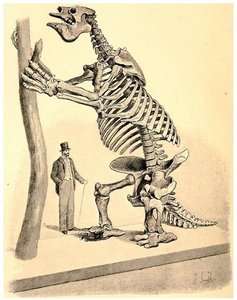
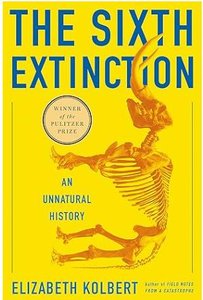
Extinction is a key concept in understanding evolution. More than 99% of all species that have ever lived are extinct, indicating that diversity has changed over time.
Extinction: The disappearance of species from Earth.
Implication: Supports the idea that species are not fixed and can change or disappear.
Transitional Features
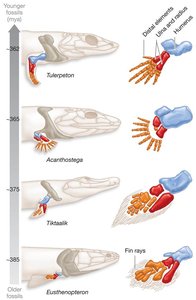
Transitional features are traits in fossil species that are intermediate between ancestral and derived species. These features provide evidence for gradual evolutionary change.
Transitional Features: Intermediate traits linking older and younger species.
Examples: Feathers in birds, loss of limbs in snakes, transition from fin to limb in vertebrates.
Vestigial Traits
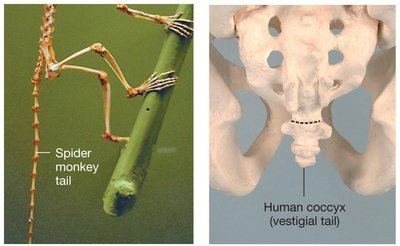
Vestigial traits are reduced or incompletely developed structures that have no function or reduced function but are similar to functioning organs in ancestral species. They provide evidence for descent from common ancestors.
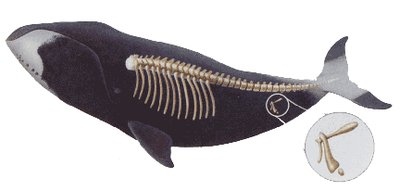
Vestigial Traits: Structures with reduced function, such as the human tailbone or whale pelvic bones.
Implication: Suggests evolutionary history and adaptation from ancestral forms.
Modern Observations
Evolutionary change has been observed in modern populations over short time scales, such as days, weeks, or months. These observations provide direct evidence for ongoing evolution.
Examples: Changes in allele frequencies, adaptation to environmental changes, evolution of drug resistance.
Evidence of Descent from a Common Ancestor
Geographic Distribution and Homology
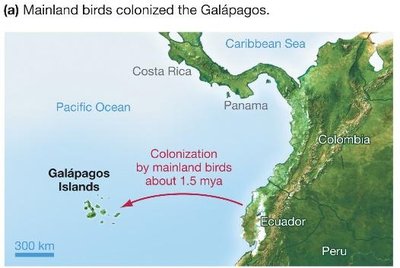
Similar species are often found in the same geographic area, consistent with descent from a common ancestor. Homology refers to similarities due to common ancestry and is recognized at genetic, developmental, and structural levels.
Homology: Similarity due to common ancestry.
Genetic Homology: Similar DNA, RNA, or amino acid sequences.
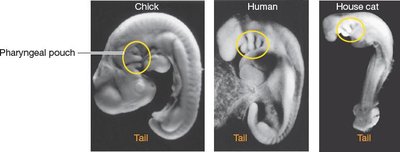
Developmental Homology: Similar embryonic forms or developmental processes.
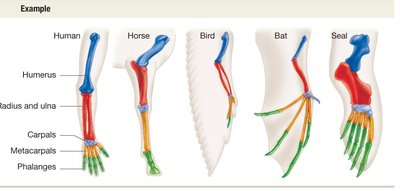
Structural Homology: Similar adult structures, such as vertebrate limbs.
Homology Table
Homology is studied at three levels: genetic, developmental, and structural. The following table summarizes these types:
Type of Homology | Description | Example |
|---|---|---|
Genetic | Similarity in DNA, RNA, or protein sequences | Aniridia gene in humans and eyeless gene in Drosophila |
Developmental | Similarity in embryonic development | Pharyngeal pouches in chick, human, and cat embryos |
Structural | Similarity in adult anatomical structures | Vertebrate limb bones |
Evolution’s Internal Consistency
Multiple Lines of Evidence
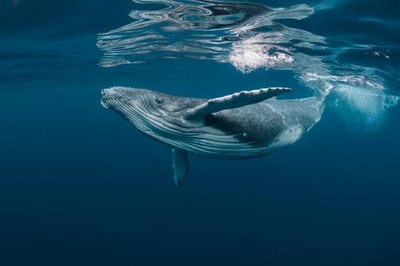
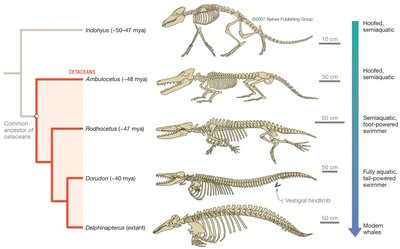
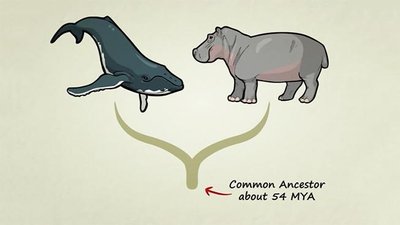
Independent lines of evidence support evolutionary theory, including fossil records, phylogenies, vestigial traits, and genetic data. The evolution of whales from terrestrial ancestors is a well-documented example.
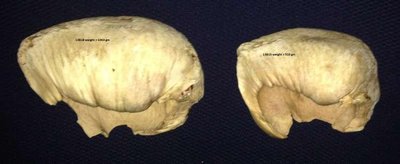
Fossil Record: Transitional fossils with distinctive ear bones.
Phylogeny: Gradual transition from terrestrial to aquatic forms.
Vestigial Traits: Hip and hindlimb bones in whales.
Genetic Evidence: Closest living relatives are hippos.
The Process of Evolution: Natural Selection
Darwin’s Four Postulates
Darwin and Wallace independently developed the theory of natural selection, explaining how heritable variation leads to differential reproductive success. Darwin’s four postulates summarize the process:
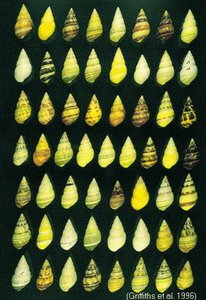
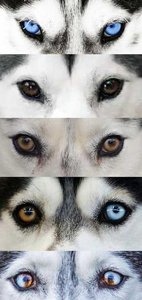
Variation: Individuals in a population vary in traits (e.g., size, shape, color).
Heritability: Some trait differences are heritable.
Survival and Reproduction: Not all individuals survive and reproduce equally.
Non-random Survival: Individuals with certain traits are more likely to survive and reproduce.
Key Definitions
Fitness: An individual’s ability to produce surviving, fertile offspring relative to others.
Adaptation: A heritable trait that increases fitness.
Selection: The process by which certain traits become more common due to differential survival and reproduction.
Evolution in Action
Case Study: Galápagos Finches
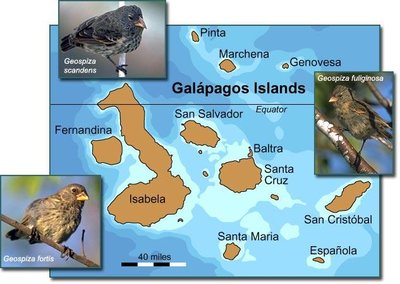
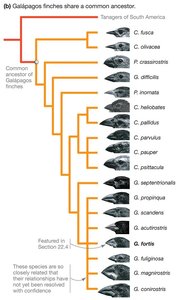
Natural experiments, such as the study of Galápagos finches by Peter and Rosemary Grant, provide direct evidence for natural selection. During a drought, finches with deeper beaks survived better, demonstrating heritable variation and differential survival.
Natural Experiment: Environmental changes create treatment and control groups.
Selection Event: Drought led to survival of finches with deeper beaks.
Heritability: Beak depth is heritable, resulting in evolutionary change.
Debunking Common Misconceptions about Natural Selection and Evolution
Misconceptions and Clarifications
Several misconceptions about evolution and natural selection persist. It is important to understand that natural selection does not change individuals, is not goal-directed, and does not lead to perfection.
Natural Selection Does Not Change Individuals: It acts on individuals, but populations evolve.
Acclimatization vs. Adaptation: Acclimatization is a phenotypic change in response to environment, not heritable; adaptation is a heritable trait.
Natural Selection Is Not Goal Directed: Mutations occur by chance; evolution is not progressive.
Natural Selection Does Not Lead to Perfection: Not all traits are adaptive; fitness trade-offs and genetic constraints exist.
Constraints on Evolution
Genetic Constraints: Genetic correlation and lack of variation can limit evolution.
Historical Constraints: Traits evolve from previous traits; natural selection works with existing structures.
Environmental Constraints: What is adaptive in one environment may not be adaptive in another.
Other Mechanisms: Genetic drift, gene flow, and mutation are also mechanisms of evolution, often random with respect to fitness.
Summary and Study Tips
Focus on understanding the key concepts, evidence, and mechanisms of evolution. Review figures and tables, and answer end-of-chapter questions for mastery.
