 Indietro
Evolution by Natural Selection: Patterns, Evidence, and Processes
Guida di studio - Note intelligenti
 Appunti personalizzati basati sui tuoi materiali, ampliati con definizioni chiave, esempi e contesto.
Evolutionary Patterns and Processes
Introduction to Evolution
Evolution is the central concept explaining the diversity of life on Earth. It refers to the change in allele frequencies within a population over time, resulting in the adaptation and diversification of species. The study of evolution encompasses both the patterns observed in nature and the processes that drive these changes.
Historical Perspectives on Evolutionary Thought
Explanations for the diversity of life have evolved throughout history, transitioning from typological thinking to the modern understanding of evolution by natural selection.
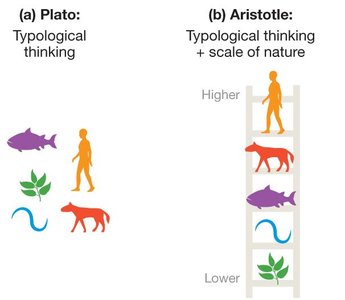
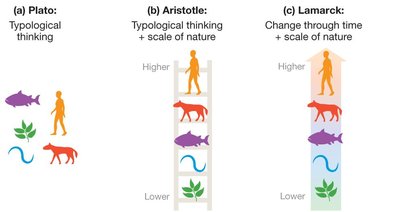
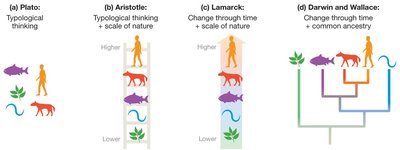
Typological Thinking: Plato proposed that all organisms are created as perfect 'types' or essences.
Scale of Nature: Aristotle expanded typological thinking by introducing a hierarchy based on complexity and size.
Lamarck: Suggested that species change through time via acquired characteristics.
Darwin and Wallace: Introduced the concept of change through time and common ancestry, forming the basis of evolutionary theory.
Phylogenetic Trees and Common Ancestry
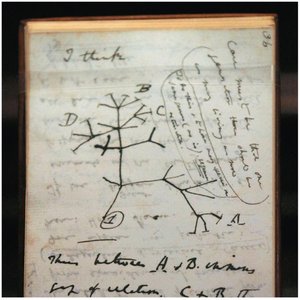
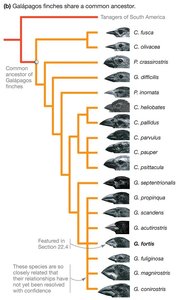
Phylogenetic trees are diagrams that represent evolutionary relationships among species, illustrating descent from common ancestors. Darwin's early sketches laid the foundation for this concept.
Evidence for Evolution
Geologic Time Scale and Fossil Record
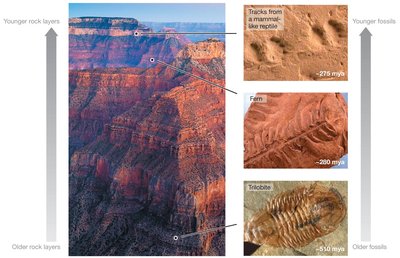
The geologic time scale provides a framework for understanding Earth's history. Fossil records preserve evidence of past life, demonstrating that species have changed over millions of years.
Earth's Age: Approximately 4.6 billion years.
First Evidence of Life: 3.4–3.8 billion years ago.
Fossil Record: Shows progression and extinction of species.
Extinction
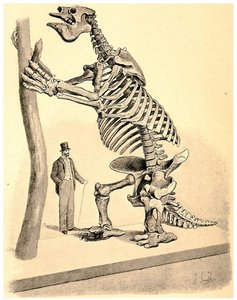
Extinction is a natural process, with over 99% of all species that have ever lived now extinct. The concept was not widely accepted until the work of Cuvier in the early 1800s.
Transitional Features
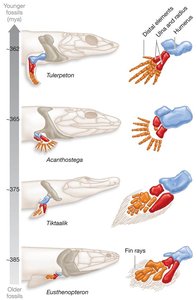
Transitional features are traits in fossil species that are intermediate between ancestral and derived species. These features provide direct evidence for evolutionary change.
Example: The transition from fin to limb in vertebrates over 25 million years.
Vestigial Traits
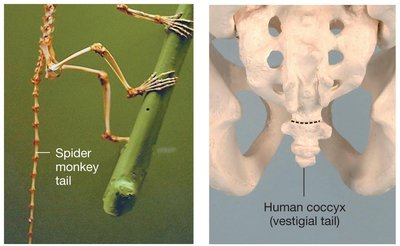
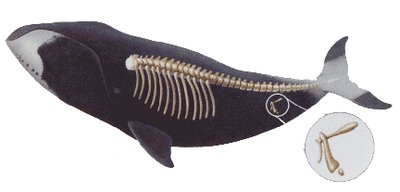
Vestigial traits are reduced or incompletely developed structures that have no function or reduced function, but are similar to functioning organs in ancestral species.
Example: Human coccyx (tailbone) and vestigial pelvic bones in whales.
Modern Observations
Evolutionary changes have been observed in modern populations over short timescales, such as days, weeks, or months. These observations provide real-time evidence for evolution.
Descent from a Common Ancestor
Geographic Distribution and Speciation
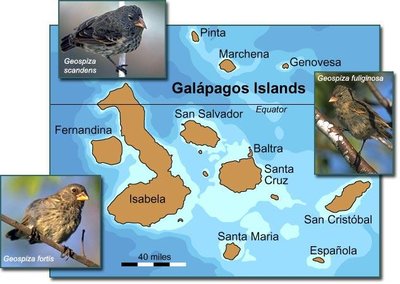
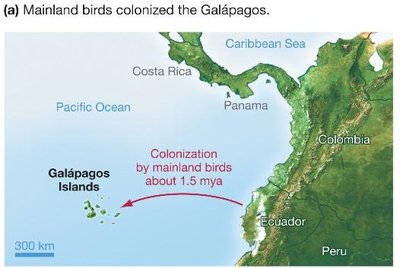
Similar species are often found in the same geographic area, consistent with descent from a common ancestor. The formation of new species from preexisting ones can be observed today.
Homology
Homology is a similarity that exists in species due to common ancestry. It is recognized at three levels:
Genetic Homology: Similarity in DNA, RNA, or amino acid sequences.
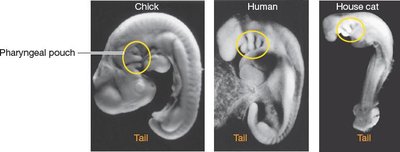
Developmental Homology: Similarity in embryonic form or developmental processes.
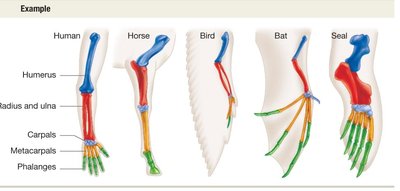
Structural Homology: Similarity in adult organismal structures.
Type of Homology | Description | Example |
|---|---|---|
Genetic | Similarity in genetic sequences | Human and Drosophila eye genes |
Developmental | Similarity in embryonic development | Chick, human, and cat embryos |
Structural | Similarity in adult structures | Vertebrate limb bones |
Evolution’s Internal Consistency
Multiple Lines of Evidence
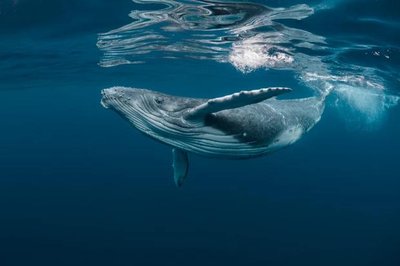
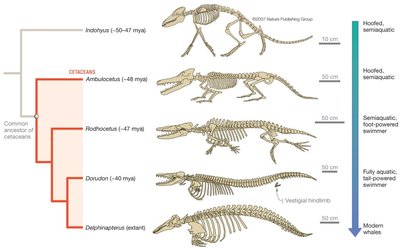
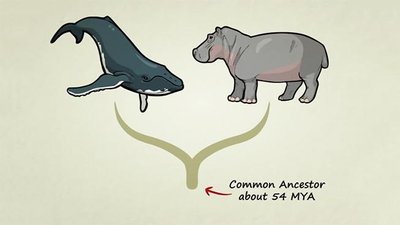
Independent lines of evidence support evolutionary theory. For example, whales evolved from terrestrial ancestors, as shown by fossil records, phylogenies, and vestigial traits.
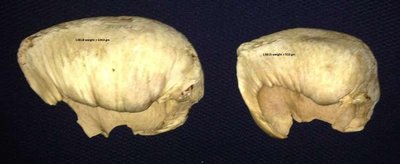
Fossil Record: Distinctive ear bones found only in cetaceans.
Phylogeny: Gradual transition from terrestrial to aquatic forms.
Living Relatives: Hippos are the closest living relatives to whales.
Vestigial Traits: Hip and hindlimb bones in whales.
The Process of Evolution: Natural Selection
Darwin’s Four Postulates
Natural selection is the process that explains descent with modification. Darwin’s four postulates describe the conditions necessary for evolution by natural selection:
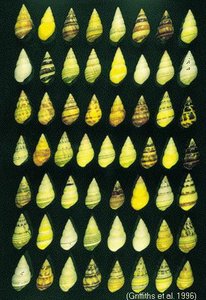
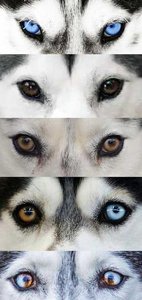
Variation: Individuals within a population vary in traits (e.g., size, shape, color).
Heritability: Some trait differences are heritable.
Survival and Reproduction: There is variability in survival and reproduction.
Non-random Survival: Individuals with certain traits are more likely to survive and reproduce.
Key Terms in Evolution
Fitness: An individual’s ability to produce surviving, fertile offspring relative to others.
Adaptation: A heritable trait that increases fitness.
Selection: In natural selection, selection is a passive process, not a conscious choice.
Evolution in Action
Case Study: Galápagos Finches
Peter and Rosemary Grant’s long-term study of Galápagos finches demonstrated natural selection in action. During a drought, finches with deeper beaks survived better, leading to an increase in beak depth in the next generation.
Natural Experiment: Environmental changes create treatment and control groups.
Adaptive Value: The value of a trait changes as environmental conditions change.
Common Misconceptions about Natural Selection and Evolution
Misconceptions and Clarifications
Natural Selection Does Not Change Individuals: It acts on individuals, but populations evolve.
Natural Selection Is Not Goal Directed: Mutations occur by chance; evolution is not progressive.
Natural Selection Does Not Lead to Perfection: Not all traits are adaptive; fitness trade-offs and genetic constraints exist.
Acclimatization vs. Adaptation: Acclimatization is a phenotypic change in response to environment, not heritable; adaptation is a heritable trait.
Constraints on Evolution
Genetic Constraints: Genetic correlation and lack of variation can limit evolution.
Historical Constraints: Traits evolve from previous traits; natural selection works with existing structures.
Environmental Constraints: What is adaptive in one environment may not be adaptive in another.
Other Mechanisms: Genetic drift, gene flow, and mutation are also mechanisms of evolution, often random with respect to fitness.
Summary and Study Tips
Evolution by natural selection is a foundational theory in biology, supported by multiple lines of evidence. Understanding the patterns, processes, and misconceptions is essential for mastering this topic. Review figures, answer end-of-chapter questions, and focus on key concepts for exam preparation.
