 Indietro
Evolution, Infectious Diseases, and Human Body Systems: General Biology Study Guide
Guida di studio - Note intelligenti
 Appunti personalizzati basati sui tuoi materiali, ampliati con definizioni chiave, esempi e contesto.
Evolution by Natural Selection
Definition and Mechanism
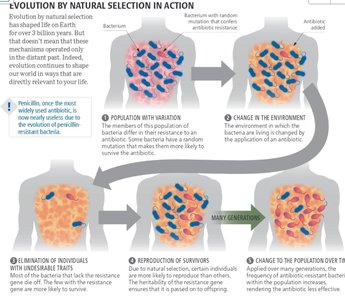
Evolution is the process by which living species descend from previous generations with accumulated modifications that enhance survival in their habitats. The primary mechanism for evolution is natural selection, where organisms with advantageous traits are more likely to survive and reproduce, passing those traits to future generations.
Natural Selection: Individuals with traits well-suited to their environment are more likely to survive and reproduce.
Adaptation: The accumulation of favorable traits in a population over time due to natural selection.
Population: The smallest biological unit that can evolve; individuals do not evolve, populations do.
Heritable Traits: Only traits encoded in genes and passed to the next generation can be subject to evolution.
Random Mutation: Mutations occur randomly and may be beneficial, neutral, or harmful. Beneficial mutations may become adaptations if they enhance survival and reproduction.
No Goal: Evolution does not anticipate future needs; it is driven by current environmental conditions.
Descent with Modification
Darwin described evolution as "descent with modification," meaning traits are passed down from generation to generation and may undergo changes over time, such as through mutations. Over many generations, continuous natural selection results in evolution.
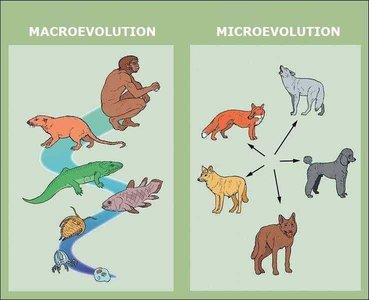
Macroevolution vs. Microevolution
Macroevolution: Major evolutionary changes, such as the origin of new species, mass extinctions, and diversification of life forms.
Microevolution: Changes in gene frequency within a population over generations.
Historical Context of Darwin's Theory
Scientific and Cultural Influences
Ancient Greeks: Believed species were permanent and unchanging.
Middle Ages: Life was thought to be recently created and unchanging.
Lamarck (1800s): Suggested life evolves through physical changes that help organisms succeed in their environment.
Fossils (1700s): Discovery of fossils suggested Earth is older than previously thought and that life has changed over time.
Lyell (1830): Proposed that Earth is very old and changes gradually through processes like erosion and earthquakes.
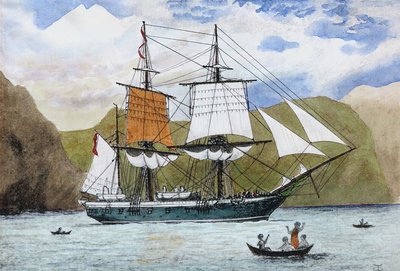
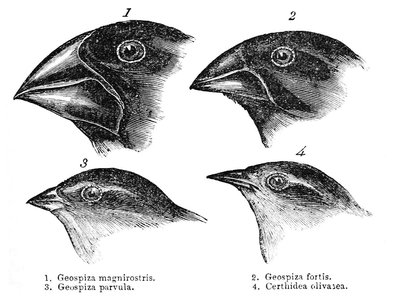
Darwin's Voyage (1831-36): Observations during the voyage of the Beagle, especially in the Galapagos Islands, influenced his ideas.
Wallace (1850s): Independently conceived the idea of natural selection, prompting Darwin to publish his work.
"On the Origin of Species" (1859): Darwin's publication provided strong arguments and evidence for evolution by natural selection.

Evidence for Evolution
Types of Evidence
Artificial Selection: Humans breed plants and animals for desirable traits, demonstrating how selection can change populations.
Antibiotic Resistance: Bacteria evolve resistance to antibiotics through natural selection, a process observable in real time.
Biogeography: The geographic distribution of species provides evidence for evolution.
Comparative Anatomy: Similarities and differences in the anatomy of different species reveal evolutionary relationships.
Bioinformatics: DNA and protein sequence comparisons show shared evolutionary history.
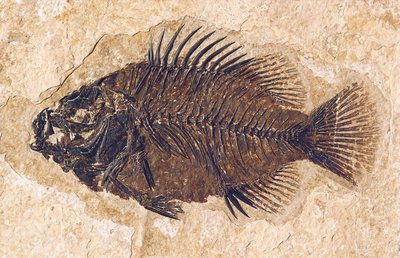
Fossil Record: Fossils provide chronological evidence of evolutionary changes.
Determining the Age of Fossils
Relative Dating: Uses the position of fossils in rock layers to determine their relative age (older fossils are deeper).
Radiometric Dating: Measures the decay of radioactive isotopes to determine absolute age.
Phylogenetic Trees
Systematics classifies organisms to learn about their evolutionary relationships. Phylogenetic trees are hypotheses about the evolutionary history of related species, based on evidence such as fossil records and DNA analysis.
Clade: A group containing an ancestor and all its descendants.
Ingroup: Species descended from a common ancestor.
Outgroup: Species that diverged before the common ancestor of the ingroup.
Mechanisms of Evolution
Mutation
Mutations are random changes to DNA that create genetic variation within a population. They may have no effect, a negative effect, or a positive effect on survival and reproduction.
Migration (Gene Flow)
Gene flow occurs when individuals migrate into or out of a population, making populations more genetically similar.
Genetic Drift
Genetic drift is a change in a gene pool due to chance, especially in small populations. Two important types are:
Bottleneck Effect: A drastic reduction in population size (e.g., due to disaster) reduces genetic diversity.
Founder Effect: A small group separates from a larger population, leading to a new population with different gene frequencies.
Natural Selection
Natural selection favors individuals with traits best adapted to their environment, leading to evolutionary change.
Speciation and Reproductive Barriers
Definition of Species
A species is a population capable of interbreeding to produce healthy, fertile offspring.
Reproductive Barriers
Six reproductive barriers can lead to the formation of new species:
Behavioral Isolation: Different mating behaviors prevent interbreeding.
Mating Time Differences: Breeding occurs at different times.
Habitat Isolation: Populations live in different habitats.
Mechanical Incompatibility: Anatomical differences prevent mating.
Gametic Incompatibility: Sperm and egg cannot fuse.
Hybrid Weakness: Hybrids are sterile or less fit.
Allopatric vs. Sympatric Speciation
Allopatric Speciation: New species evolve due to geographic isolation.
Sympatric Speciation: New species evolve without geographic separation.
Endosymbiosis and the Evolution of Eukaryotic Cells
Theory of Endosymbiosis
Endosymbiosis is the theory that mitochondria and chloroplasts originated as free-living prokaryotes engulfed by ancestral eukaryotic cells. This mutually beneficial relationship led to the evolution of complex cells.
Evidence: Mitochondria and chloroplasts have their own DNA, RNA, and proteins similar to prokaryotes.
Adaptation and Diversification
Adaptations to different environments can lead to the diversification of organisms, such as the wide variety of plant forms adapted to different habitats.
Misconceptions about Human Evolution
Humans did not evolve from modern chimpanzees; both share a common ancestor.
Human evolution was not a linear progression from one species to the next.
Key human features evolved at different times, not all at once.
Prokaryotic and Eukaryotic Cells
Differences
Feature | Eukaryotic Cells | Prokaryotic Cells |
|---|---|---|
Size & Complexity | Larger, more complex | Smaller, simpler |
Organelles | Membrane-enclosed organelles | No membrane-enclosed organelles |
DNA Location | In nucleus | Not in nucleus |
Examples | Plants, animals, fungi, protists | Bacteria, archaea |
Prokaryotic Structure and Diversity
Flagella: Used for movement.
Capsule: Sticky outer layer for protection and adherence.
Cell Wall: Provides structural support.
Endospore: Dormant, tough structure for surviving harsh conditions.
Biofilms: Communities of microorganisms attached to surfaces.
Shapes: Cocci (spherical), bacilli (rod-shaped), spiral.
Bacteria vs. Archaea
Bacteria: Found in most habitats, includes both helpful (e.g., nitrogen-fixing) and harmful (e.g., pathogens) species.
Archaea: Often extremophiles, living in extreme environments (e.g., methanogens, halophiles, thermophiles).
Viruses, Prions, and Viroids
Structure of Viruses
Nucleic Acid: DNA or RNA, single or double stranded.
Capsid: Protein coat.
Recognition Spike: Protein(s) for binding to host cells.
Viruses are not considered alive because they do not grow, cannot reproduce independently, and lack cellular structure and metabolism.
Bacteriophage Life Cycle (Transduction)
Bacteriophages are viruses that infect bacteria. During transduction, viral DNA directs the production of new viruses, sometimes incorporating bacterial genes, which can then be transferred to other bacteria.
Plasmids and Antibiotic Resistance
Plasmids are small, circular DNA molecules in bacteria that can carry antibiotic resistance genes. These genes can be transferred between bacteria, spreading resistance.
Emerging Viruses
New viruses can emerge through mutation or by expanding their range. HIV is an example of an emerging virus that severely impacts the immune system.
Prions and Viroids
Prions: Infectious proteins that cause degenerative brain diseases (e.g., Mad Cow Disease, Kuru).
Viroids: Small, circular RNA molecules that infect plants, causing diseases like Potato Spindle Tuber Viroid.
Infectious Diseases and Human Body Systems
Infectious vs. Genetic Diseases
Infectious Diseases | Genetic Diseases |
|---|---|
Caused by pathogens (bacteria, viruses, etc.) | Heritable, caused by gene mutations |
Examples: Tuberculosis, AIDS | Examples: Sickle-cell anemia, Cystic Fibrosis |
Combating Infectious Diseases
Antibiotics: Kill bacteria, used after infection.
Vaccines: Prevent viral infections, provide long-term immunity.
Sexually Transmitted Diseases (STDs)
Bacterial: Chlamydia (treatable with antibiotics).
Viral: HIV/AIDS, HPV (some preventable by vaccine).
Protists: Trichomoniasis.
Fungi: Candidiasis.
Major Human Body Systems
The Circulatory System
Heart: Pumps blood throughout the body.
Arteries: Carry blood away from the heart.
Veins: Carry blood to the heart.
Capillaries: Allow exchange of materials between blood and cells.
Double Circulation: Pulmonary circuit (heart-lungs-heart) and systemic circuit (heart-body-heart).
The Immune System
External Defenses: Skin, hair, cilia, mucous membranes, stomach acid, secretions.
Adaptive Immunity: Inflammatory response, lymphatic system, specific immunity (B cells, T cells, antibodies).
Immune Response: Lymphocytes recognize antigens, produce antibodies, and destroy pathogens. Memory cells provide future immunity.
The Endocrine System
Hormones: Chemical messengers that regulate metabolism, growth, and reproduction.
Major Glands: Hypothalamus, pituitary, thyroid, parathyroid, pancreas, adrenal glands, testes, ovaries.
Homeostasis: Maintains internal balance in the body.
Integration of Body Systems
The circulatory, immune, and endocrine systems work together to maintain health. Hormones travel via the bloodstream, nutrients are distributed, and immune cells are transported to fight infections.
Invasive Species
Definition and Effects
An invasive species is a non-native organism that spreads rapidly in a new habitat, often causing environmental damage by outcompeting native species. This can lead to the extinction of local populations and disruption of ecosystems.
Example: Kudzu vine in the southern United States, Eucalyptus in San Diego.
