 Indietro
Chapter 20-21
Guida di studio - Note intelligenti
 Appunti personalizzati basati sui tuoi materiali, ampliati con definizioni chiave, esempi e contesto.
Evolutionary Evidence and Mechanisms
Introduction to Evolutionary Evidence
Evolution is the process by which species change over time through descent with modification. Multiple lines of scientific evidence support the theory of evolution, including direct observations, homology, the fossil record, and biogeography.
Direct Observations: Examples include the evolution of drug-resistant bacteria such as Staphylococcus aureus (MRSA).
Homology: Similarities in structure due to common ancestry.
The Fossil Record: Provides chronological evidence of evolutionary change.
Biogeography: The geographic distribution of species supports patterns of descent.
Evolution of Drug-Resistant Bacteria
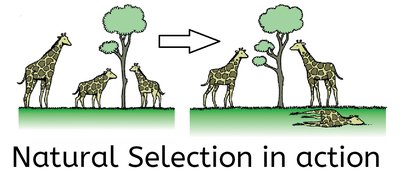
The rapid evolution of antibiotic resistance in bacteria is a clear example of natural selection in action. When antibiotics are used, bacteria with resistance genes survive and reproduce, leading to populations dominated by resistant strains.
Example: Staphylococcus aureus developed resistance to penicillin and later to methicillin (MRSA) within a few years of each antibiotic's introduction.
Mechanism: Methicillin inhibits a protein used for cell wall synthesis. MRSA strains use a different protein, allowing them to survive antibiotic treatment.
Key Point: Natural selection does not create new traits but selects for traits already present in the population.
Homology and Convergent Evolution
Homology
Homology refers to similarities among organisms due to shared ancestry. These similarities can be anatomical, molecular, or developmental.
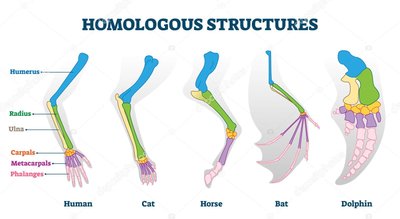
Homologous Structures: Anatomical features that are structurally similar but may serve different functions in different species (e.g., the forelimbs of mammals).
Example: The bones in the human arm, cat leg, horse leg, bat wing, and dolphin flipper share a common structural arrangement.
Convergent Evolution
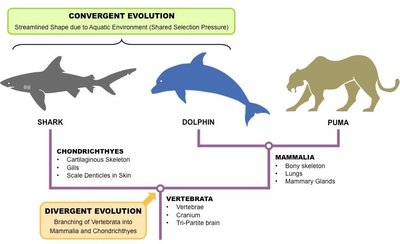
Convergent evolution occurs when unrelated species evolve similar traits independently, often due to similar environmental pressures.
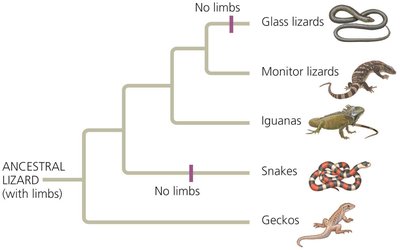
Example: Legless lizards and snakes both evolved limbless bodies, but from different ancestral lineages.
Key Point: Convergent evolution results in analogous structures, which are similar in function but not due to common ancestry.
Phylogeny and Systematics
Phylogeny and Classification
Phylogeny is the evolutionary history of a species or group of related species. Systematics is the scientific discipline that classifies organisms and determines their evolutionary relationships.
Taxonomy: The ordered division and naming of organisms.
Binomial Nomenclature: Each species is given a two-part Latin name (genus and species).
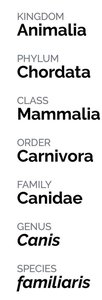
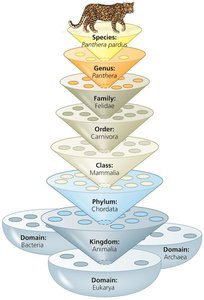
Hierarchical Classification: Species are grouped into increasingly broad categories: species, genus, family, order, class, phylum, kingdom, and domain.
Phylogenetic Trees
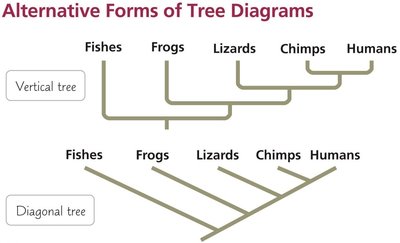
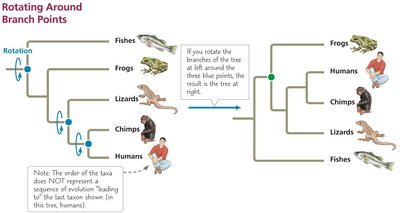
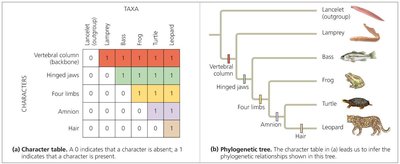
Phylogenetic trees are branching diagrams that represent hypotheses about evolutionary relationships. Each branch point represents the divergence of two lineages from a common ancestor.
Sister Taxa: Groups that share an immediate common ancestor.
Rooted Tree: Includes a branch representing the most recent common ancestor of all taxa in the tree.
Basal Taxon: A lineage that diverges early in the history of a group.
Key Point: Phylogenetic trees show patterns of descent, not phenotypic similarity or the sequence of evolutionary events.
Applying Phylogenies
Phylogenetic analysis can be used to infer species identities, evolutionary relationships, and the origins of traits. For example, DNA-based phylogenies can identify the source species of biological samples.
Genetic Variation and Evolution in Populations
Genetic Variation
Genetic variation is the raw material for evolution. It refers to differences in the genetic makeup (DNA sequences) among individuals in a population.
Phenotypic Variation: Observable differences in traits, often reflecting underlying genetic variation.
Gene Variability: Measured as the average percent of loci that are heterozygous.
Nucleotide Variability: Differences at the molecular level of DNA.
Sources: Mutation, gene duplication, and sexual reproduction.
Formation of New Alleles
New alleles arise through mutations—changes in the DNA sequence. Most mutations are neutral or harmful, but some can be beneficial in certain environments.
Point Mutations: Single nucleotide changes that may or may not affect phenotype.
Neutral Variation: Mutations that do not affect fitness, often occurring in noncoding regions.
Mechanisms of Evolutionary Change
Natural Selection
Natural selection is the process by which individuals with advantageous traits reproduce more successfully, increasing the frequency of those traits in the population.
Adaptive Evolution: Traits that enhance survival or reproduction become more common over time.
Example: Resistance to pesticides in insects or antibiotics in bacteria.
Genetic Drift
Genetic drift is the random fluctuation of allele frequencies in small populations, which can lead to loss of genetic variation and fixation of harmful alleles.
Founder Effect: When a small group establishes a new population, allele frequencies may differ from the original population.
Bottleneck Effect: A drastic reduction in population size can alter allele frequencies by chance.
Gene Flow
Gene flow is the movement of alleles between populations due to migration of individuals or gametes. It tends to reduce genetic differences between populations.
Example: Migration of banded and unbanded water snakes between mainland and island populations.
Summary of Evolutionary Mechanisms
Natural Selection: Consistently leads to adaptive evolution.
Genetic Drift: Significant in small populations, causes random changes, can reduce variation, and may fix harmful alleles.
Gene Flow: Reduces differences between populations, can introduce new alleles.
Limitations of Natural Selection
Natural selection cannot produce perfect organisms due to several constraints:
Selection can only act on existing variation.
Evolution is limited by historical constraints.
Adaptations are often compromises.
Chance, natural selection, and the environment interact in complex ways.
