Indietro
Evolutionary Theory and Evidence: Influences, Mechanisms, and Modern Understanding
Guida di studio - Note intelligenti
 Appunti personalizzati basati sui tuoi materiali, ampliati con definizioni chiave, esempi e contesto.
Ideas That Influenced Darwin
An Ancient, Changing Earth
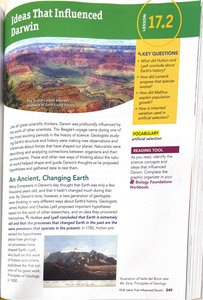
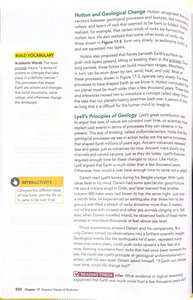
Charles Darwin was influenced by scientific ideas about Earth's history and change. Early geologists, such as James Hutton and Charles Lyell, proposed that Earth was much older than previously thought and that it had changed gradually over time through geological processes.
James Hutton: Suggested that geological processes like erosion and sedimentation occur slowly, shaping Earth's surface over millions of years.
Charles Lyell: Emphasized uniformitarianism, the idea that the same processes shaping Earth today also operated in the past.
Example: The Grand Canyon's rock layers illustrate gradual geological change.
Forces That Shape Earth
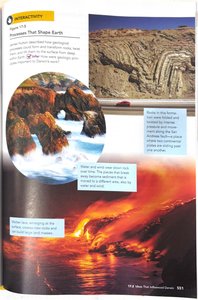
Geological forces such as water, wind, and volcanic activity continually shape Earth's surface. These processes provide evidence for gradual change and support the idea of an ancient Earth.
Water and wind: Erode rocks and create new landforms.
Volcanic activity: Forms new rocks and alters landscapes.
Example: Rock formations and volcanic eruptions demonstrate ongoing geological change.
Lamarck's Evolutionary Hypotheses
Lamarck's Ideas
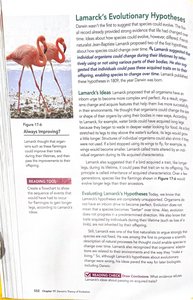
Jean-Baptiste Lamarck proposed that organisms could change during their lifetimes by using or not using certain parts of their bodies. He suggested that these acquired traits could be passed on to offspring, leading to evolutionary change.
Use and disuse: Organs used frequently become stronger; those not used deteriorate.
Inheritance of acquired traits: Traits gained during an organism's life are inherited by its offspring.
Example: Lamarck believed flamingos' long legs resulted from stretching to reach food.
Evaluating Lamarck's Hypotheses
Modern science has shown that acquired traits are not inherited in the way Lamarck proposed. However, his ideas contributed to the development of evolutionary theory by emphasizing adaptation and change.
Key Point: Lamarck's hypotheses were incorrect, but they stimulated further research into evolution.
Population Growth and Artificial Selection
Population Growth
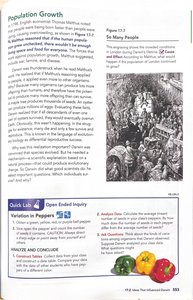
Thomas Malthus observed that populations grow faster than resources, leading to competition and struggle for survival. This concept influenced Darwin's thinking about natural selection.
Overpopulation: More individuals are born than can survive.
Competition: Limited resources lead to struggle among individuals.
Example: Human population growth and resource scarcity.
Artificial Selection
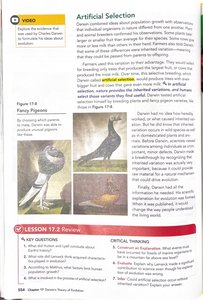
Darwin studied how humans selectively breed plants and animals for desired traits, a process known as artificial selection. This provided a model for understanding natural selection.
Selective breeding: Humans choose traits to enhance in offspring.
Variation: Differences among individuals are essential for selection.
Example: Fancy pigeons bred for specific characteristics.
Darwin's Theory: Natural Selection
Evolution by Natural Selection
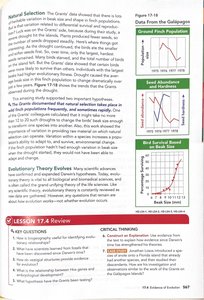
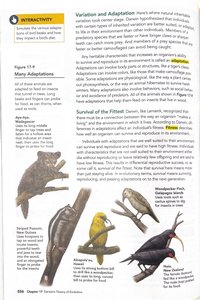
Darwin proposed that evolution occurs through natural selection, where individuals with advantageous traits are more likely to survive and reproduce. Over time, these traits become more common in the population.
Variation: Individuals differ in traits.
Adaptation: Traits that improve survival and reproduction.
Survival of the fittest: Those best suited to their environment thrive.
Mechanism of Natural Selection
Natural selection acts on heritable variation within populations. Favorable traits increase in frequency, while less advantageous traits decrease.
Process: Variation → Competition → Differential survival → Adaptation
Example: Bird populations with different beak shapes adapt to available food sources.
Common Ancestry
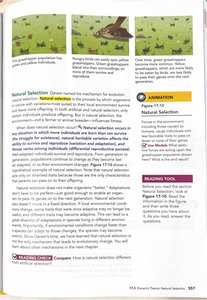
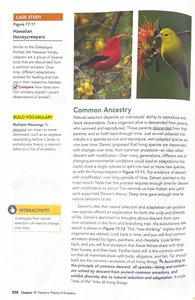
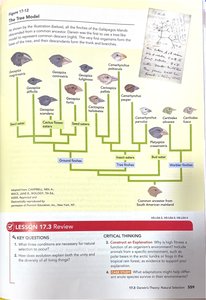
Darwin's theory suggests that all living organisms share a common ancestor. Evidence from comparative anatomy, embryology, and molecular biology supports this idea.
Homologous structures: Similar anatomy due to shared ancestry.
Case Study: Hawaiian honeycreepers evolved from a common ancestor.
Evidence of Evolution
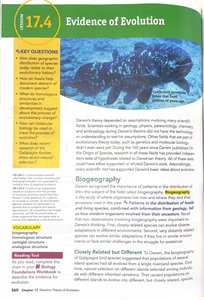
Biogeography
Biogeography is the study of the distribution of species and ecosystems in geographic space and through geological time. Patterns observed by Darwin provided evidence for evolution.
Closely related but different: Species in different environments adapt uniquely.
Distantly related but similar: Similar environments produce similar adaptations in unrelated species.
The Age of Earth and Fossils
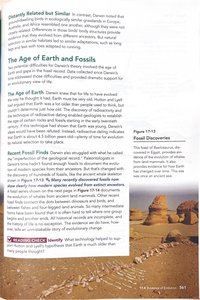
Fossil evidence and geological data indicate that Earth is much older than previously believed. Fossils provide snapshots of ancient life and support evolutionary change.
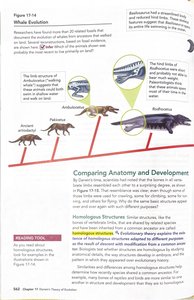
Fossil discoveries: Reveal transitional forms and evolutionary history.
Example: Fossilized remains in sedimentary rock layers.
Comparing Anatomy and Development
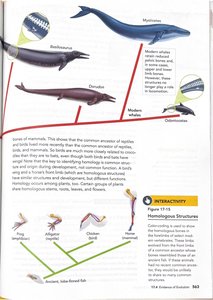
Comparative anatomy and embryology reveal similarities among organisms, supporting common ancestry. Homologous structures indicate evolutionary relationships.
Homologous structures: Similar structures with different functions.
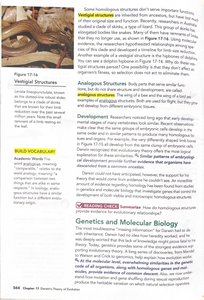
Vestigial structures: Remnants of features that served a function in ancestors.
Analogous structures: Similar functions, different evolutionary origins.
Genetics and Molecular Biology
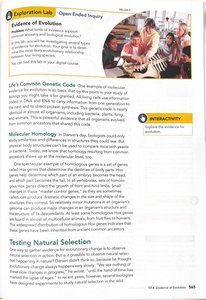
Genetic evidence supports evolutionary theory. All living organisms share a common genetic code, and molecular homology reveals similarities in DNA and protein sequences.
Life's common genetic code: Universal among organisms.
Molecular homology: Similar genes and proteins indicate shared ancestry.
Testing Natural Selection
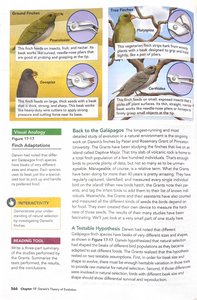
Experiments and field studies, such as those on Galapagos finches, provide direct evidence for natural selection and evolutionary change.
Example: Changes in finch beak size and shape in response to environmental conditions.
Summary Table: Key Concepts in Evolution
Concept | Description | Example |
|---|---|---|
Natural Selection | Process by which organisms with favorable traits survive and reproduce | Finch beak adaptation |
Artificial Selection | Selective breeding by humans | Pigeon breeding |
Homologous Structures | Similar anatomy due to common ancestry | Vertebrate limbs |
Vestigial Structures | Remnants of ancestral features | Snake pelvis |
Biogeography | Distribution of species | Galapagos finches |
Fossil Evidence | Transitional forms in rock layers | Whale evolution |
Molecular Homology | Similar DNA/protein sequences | Genetic code |