 Indietro
Exam 2 Review: Nucleic Acids, Carbohydrates, Lipids, and Membranes
Guida di studio - Note intelligenti
 Appunti personalizzati basati sui tuoi materiali, ampliati con definizioni chiave, esempi e contesto.
Chapter 4: Nucleic Acids and the RNA World
Structure and Function of RNA
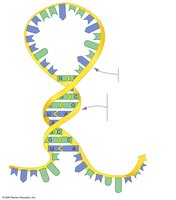
Nucleic acids are polymers made up of nucleotide monomers. RNA (ribonucleic acid) is a crucial molecule in cells, involved in coding, decoding, regulation, and expression of genes. Unlike DNA, RNA is typically single-stranded but can form complex secondary structures through complementary base pairing within the same molecule.
Primary Structure: The sequence of nucleotides in the RNA strand.
Secondary Structure: Regions of the RNA strand can fold and form double-stranded stems and single-stranded loops due to hydrogen bonding between complementary bases (A-U and G-C).
Function: RNA molecules can act as messengers (mRNA), adapters (tRNA), and catalysts (ribozymes).
Example: tRNA molecules fold into a cloverleaf structure, essential for protein synthesis.
Chapter 5: An Introduction to Carbohydrates
Monosaccharide Structure and Isomerism
Carbohydrates are organic molecules composed of carbon, hydrogen, and oxygen, typically with the formula (CH2O)n. Monosaccharides are the simplest carbohydrates and can exist as structural isomers, differing in the arrangement of atoms.
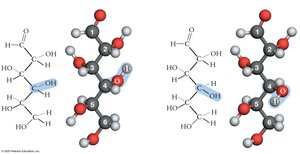
Monosaccharide Structure: Each monosaccharide contains a carbonyl group (C=O), multiple hydroxyl groups (–OH), and a carbon backbone.
Isomerism: Monosaccharides can be classified as either aldoses (aldehyde group) or ketoses (ketone group). They also exhibit stereoisomerism, such as D- and L-forms, depending on the orientation of the hydroxyl group on the asymmetric carbon furthest from the carbonyl.
Example: Glucose and galactose are both hexoses (six-carbon sugars) but differ in the orientation of the hydroxyl group on carbon 4.
Chapter 6: Lipids, Membranes, and the First Cells
Phospholipids and Membrane Structure
Lipids are hydrophobic molecules that play key roles in energy storage, signaling, and membrane structure. Phospholipids are a major component of cell membranes, forming bilayers that separate the cell from its environment.
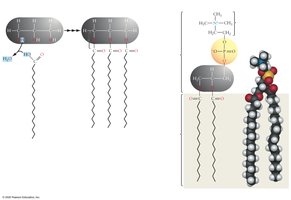
Phospholipid Structure: Composed of a glycerol backbone, two fatty acid tails (hydrophobic), and a phosphate group (hydrophilic head).
Amphipathic Nature: The dual hydrophobic and hydrophilic properties drive the spontaneous formation of bilayers in aqueous environments.
Example: The phospholipid bilayer forms the basic structure of all biological membranes.
Membrane Proteins and Transport
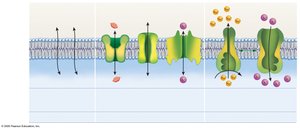
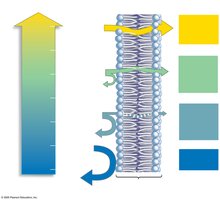
Cell membranes are selectively permeable, allowing some substances to cross more easily than others. Membrane proteins facilitate the movement of ions and molecules across the lipid bilayer.
Types of Transport:
Simple Diffusion: Movement of small, nonpolar molecules directly through the lipid bilayer.
Facilitated Diffusion: Movement of substances via channel or carrier proteins, down their concentration gradient.
Active Transport: Movement of substances against their concentration gradient, requiring energy (often from ATP).
Example: Glucose transporters facilitate the movement of glucose into cells.
Membrane Fluidity
Membrane fluidity is influenced by the composition of fatty acids in phospholipids and the presence of cholesterol. Fluidity affects membrane permeability and the function of embedded proteins.
Saturated vs. Unsaturated Fatty Acids: Unsaturated fatty acids (with double bonds) increase fluidity, while saturated fatty acids (no double bonds) decrease fluidity.
Cholesterol: Acts as a buffer, stabilizing membrane fluidity across temperature changes.
Example: Cells adjust the ratio of saturated to unsaturated fatty acids in their membranes in response to temperature changes.
Chapter 7: Inside the Cell
Introduction to Cellular Structure
Cells are the basic units of life, containing specialized structures called organelles that perform distinct functions. Eukaryotic cells have membrane-bound organelles, while prokaryotic cells do not.
Key Organelles: Nucleus, mitochondria, endoplasmic reticulum, Golgi apparatus, lysosomes, and peroxisomes.
Cytoskeleton: Provides structural support and facilitates cell movement.
Example: The nucleus houses genetic material and controls cellular activities.
Additional info: This section is expanded with general academic context, as the original material only listed the chapter heading.
