 Indietro
Exam 2 Review: Nucleic Acids, Carbohydrates, Lipids, and Cell Structure
Guida di studio - Note intelligenti
 Appunti personalizzati basati sui tuoi materiali, ampliati con definizioni chiave, esempi e contesto.
Chapter 4: Nucleic Acids and the RNA World
Structure and Function of RNA
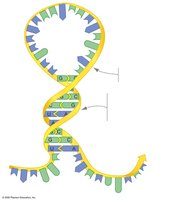
Nucleic acids, such as RNA, are essential biomolecules responsible for storing and transmitting genetic information. RNA molecules are single-stranded but can form complex secondary structures through internal base pairing, which is critical for their function in cells.
RNA Structure: RNA consists of a ribose sugar, phosphate backbone, and nitrogenous bases (adenine, uracil, cytosine, guanine).
Secondary Structure: RNA can fold into hairpin loops and other shapes due to complementary base pairing within the strand.
Function: RNA plays roles in protein synthesis (mRNA, tRNA, rRNA) and catalysis (ribozymes).
Example: The hairpin loop structure is common in tRNA and regulatory RNAs.
Chapter 5: An Introduction to Carbohydrates
Monosaccharide Structure and Isomerism
Carbohydrates are organic molecules composed of carbon, hydrogen, and oxygen. Monosaccharides are the simplest carbohydrates and can exist in different structural forms called isomers.
Monosaccharides: Simple sugars such as glucose and fructose.
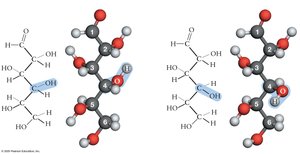
Isomerism: Monosaccharides can have different arrangements of atoms, leading to structural (aldose vs. ketose) and stereoisomers (D- and L-forms).
Functional Groups: Presence of hydroxyl (-OH) and carbonyl (C=O) groups determines reactivity.
Example: Glucose and galactose differ in the orientation of the hydroxyl group on carbon 4.
Chapter 6: Lipids, Membranes, and the First Cells
Lipid Structure and Membrane Formation
Lipids are hydrophobic molecules that form the structural basis of cell membranes. The amphipathic nature of phospholipids allows them to assemble into bilayers, creating a selective barrier for cells.
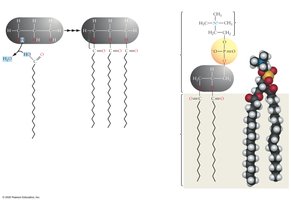
Phospholipids: Composed of a glycerol backbone, two fatty acid tails, and a phosphate group.
Amphipathic Properties: Hydrophilic head and hydrophobic tails enable bilayer formation.
Membrane Function: Membranes separate cellular compartments and regulate transport.
Example: Unsaturated fatty acids create kinks, increasing membrane fluidity.
Transport Across Membranes
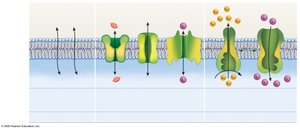
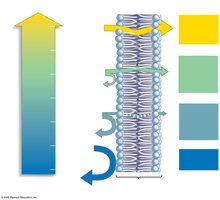
Cell membranes regulate the movement of substances through various transport mechanisms, including passive diffusion, facilitated diffusion, and active transport.
Passive Diffusion: Movement of molecules from high to low concentration without energy input.
Facilitated Diffusion: Transport proteins assist movement of specific molecules across the membrane.
Active Transport: Requires energy (ATP) to move substances against their concentration gradient.
Example: Ion channels and pumps are essential for maintaining cellular homeostasis.
Membrane Fluidity and Permeability
The fluidity and permeability of cell membranes are influenced by lipid composition, temperature, and the presence of cholesterol.
Fluidity: Unsaturated fatty acids increase fluidity; saturated fatty acids decrease it.
Permeability: Membranes are selectively permeable, allowing some molecules to pass while blocking others.
Cholesterol: Modulates membrane fluidity and stability.
Example: High membrane fluidity enhances transport of small, nonpolar molecules.
Chapter 7: Inside the Cell
Cell Structure Overview
Cells are the basic units of life, containing specialized structures (organelles) that perform distinct functions. Eukaryotic cells have membrane-bound organelles, while prokaryotic cells lack them.
Organelles: Structures such as the nucleus, mitochondria, endoplasmic reticulum, and Golgi apparatus.
Prokaryotes vs. Eukaryotes: Prokaryotes have a simpler structure; eukaryotes are more complex.
Function: Organelles compartmentalize cellular processes for efficiency.
Example: The nucleus stores genetic material; mitochondria produce ATP.
Additional info: Chapter 7 content inferred based on standard General Biology curriculum, as no specific images or text were provided for this chapter.
