 Indietro
Exploring Life: Introduction to Biology and Its Unifying Themes
Guida di studio - Note intelligenti
 Appunti personalizzati basati sui tuoi materiali, ampliati con definizioni chiave, esempi e contesto.
Chapter 1: Exploring Life
Biology: The Scientific Study of Life
Biology is the scientific study of life, encompassing the structure, function, growth, origin, evolution, and distribution of living organisms. Biologists seek to understand what distinguishes living things from non-living matter by examining the properties and processes that characterize life.
Definition: Biology is the study of living organisms and their interactions with the environment.
Key Question: What is life? Life is defined by a set of properties and processes unique to living organisms.
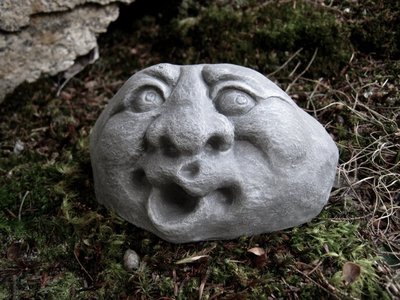
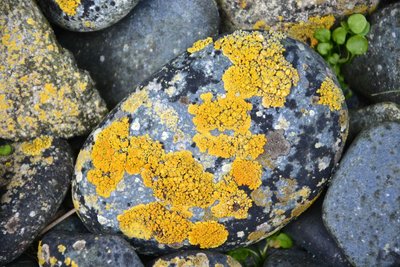
Example: A rock is not alive, but lichen growing on a rock is a living organism.
Properties of Life
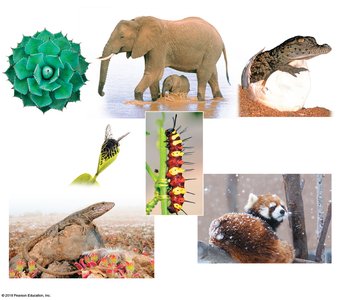
Life can be characterized by several fundamental properties and processes:
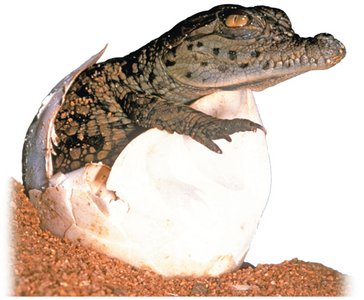
Order: Living things exhibit complex organization and pattern, such as the arrangement of cells into tissues and organs.
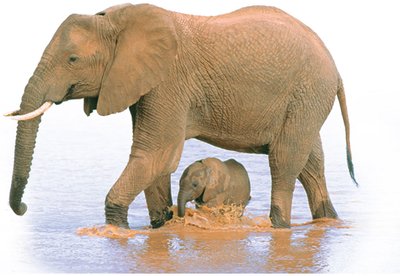
Reproduction: Organisms reproduce their own kind, ensuring the continuation of their species.
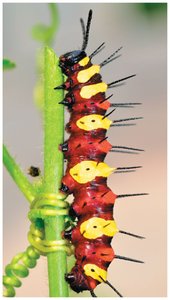
Growth and Development: Organisms grow and develop according to genetic instructions inherited from their parents.
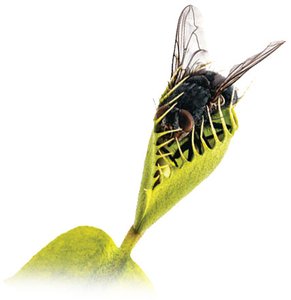
Response to the Environment: Living things respond to environmental stimuli, such as a Venus flytrap closing on prey.
Energy Processing: Organisms take in energy and use it for various life processes, such as cellular respiration.
Regulation: Internal conditions are regulated to maintain homeostasis, such as thermal regulation.
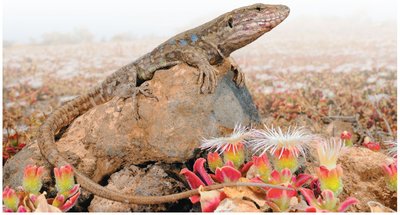
Evolutionary Adaptation: Traits evolve over time, enhancing survival and reproductive success.
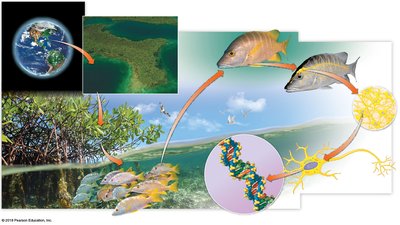
Biological Organization: Levels of Life
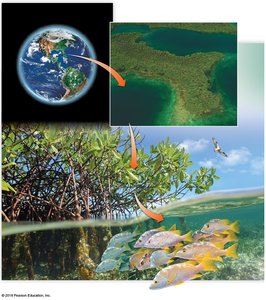
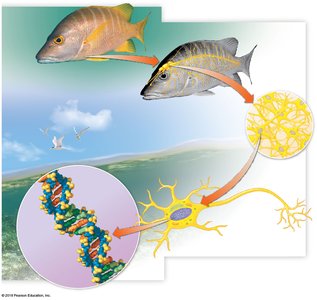
Biologists study life at different levels of organization, from molecules to the entire biosphere. Each level exhibits emergent properties that arise from the arrangement and interaction of its parts.
Biosphere: All ecosystems on Earth.
Ecosystem: Community of organisms and their physical environment.
Community: Different populations of species living and interacting in an area.
Population: Group of organisms of the same species in a particular area.
Organism: An individual living being.
Organ and Organ System: Structures made of tissues for specific functions.
Tissue: Groups of similar cells performing a function.
Cell: The fundamental unit of life.
Organelle: Structures within cells that perform specific functions.
Molecule: The basic chemical building block.
Emergent Properties
Emergent properties are new characteristics that arise at each level of biological organization, resulting from the specific arrangement and interactions among component parts. For example, individual organs such as the stomach and intestines together form the digestive system, which has functions greater than the sum of its parts.
Definition: Emergent properties are features that are not present at the preceding level but arise from the complexity of the system.
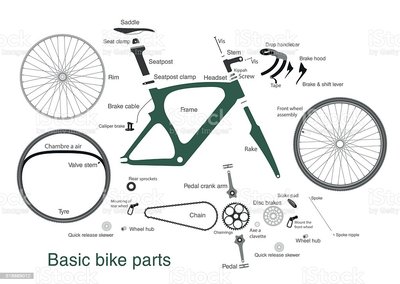
Example: A box of bicycle parts does nothing, but when assembled, the bike can be ridden.
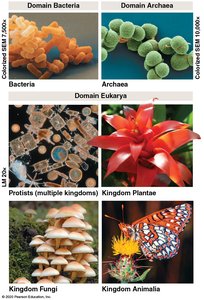
The Three Domains of Life
Taxonomists classify life into three domains based on cell structure and genetic differences:
Domain Bacteria: Single-celled prokaryotes without a nucleus.
Domain Archaea: Single-celled prokaryotes, often found in extreme environments, with DNA closer to eukaryotes.
Domain Eukarya: Organisms with complex cells containing a nucleus and organelles; includes protists, fungi, plants, and animals.
Prokaryotes vs. Eukaryotes
Cells are classified as prokaryotic or eukaryotic based on their structure:
Prokaryotes: No nucleus, no membrane-bound organelles, usually unicellular, small size (0.1–5 μm).
Eukaryotes: Have a nucleus, membrane-bound organelles, can be unicellular or multicellular, larger size (10–100 μm).
The Scientific Method
Science is a way of knowing, using an evidence-based process of inquiry to investigate the natural world. The scientific method involves:
Observation: Gathering information about phenomena.
Hypothesis: A logical explanation for a set of observations, must be testable and falsifiable.
Prediction: What will happen if the hypothesis is correct.
Experiment: Testing the hypothesis by manipulating variables.
Analysis: Interpreting data to support or refute the hypothesis.
Conclusion: Drawing inferences based on results.
Controlled Experiments
Controlled experiments manipulate one variable (independent variable) and measure its effect on another (dependent variable), comparing experimental and control groups.
Independent Variable: The factor being manipulated.
Dependent Variable: The measure used to judge the outcome.
Control Group: The group not receiving the experimental treatment.
Habitat | Number of Attacks on Camouflaged Models | Number of Attacks on Noncamouflaged Models | % Attacks on Noncamouflaged Models |
|---|---|---|---|
Beach (light habitat) | 2 | 5 | 71% |
Inland (dark habitat) | 5 | 16 | 76% |
Additional info: This table demonstrates that mice models not matching their habitat had higher predation rates, supporting the hypothesis that camouflage coloration protects mice from predation.
Hypotheses and Observational Data
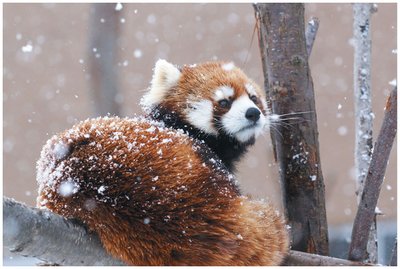
Hypotheses can be tested using observational data, such as the evolutionary relationships of red pandas. Molecular data (DNA sequences) led scientists to classify red pandas as the only living species of their own family, despite physical similarities to raccoons and giant pandas.
Scientific Theory vs. Hypothesis
Hypothesis: A proposed explanation for a set of observations, testable and falsifiable.
Scientific Theory: A broad, well-tested explanation supported by a large body of evidence, explaining why or how something happens.
Five Unifying Themes in Biology
Biology is unified by five major themes:
Evolution: The process of change that has transformed life on Earth.
Information: Life depends on the flow of information, primarily through DNA.
Organization: Structure and function are related at every level.
Energy and Matter: Life depends on the transfer and transformation of energy and matter.
Interactions: Life depends on interactions within and between systems.
Evolution: The Core Theme of Biology
Evolution explains both the unity and diversity of life. Darwin's theory of natural selection describes how traits that enhance survival and reproduction become more common in populations over time.
Natural Selection: Acts as a filtering agent at the population level.
Example: Red pandas, weasels, and raccoons share evolutionary relationships.
Information Flow: DNA and Heredity
DNA is responsible for heredity and programming cellular activities by providing the blueprint for proteins. Information flows from DNA to RNA to protein, regulating body processes and gene expression.
Central Dogma:
Example: Regulation of blood glucose levels by insulin.
Structure and Function Are Related
The relationship between structure and function is evident at every level of life. For example, the structure of hemoglobin enables it to transport oxygen, and the shape of a red panda's "false thumb" helps it grasp bamboo.
Energy and Matter in Ecosystems
Energy flows through ecosystems in one direction, entering as sunlight, converted to chemical energy by producers, passed to consumers, and exiting as heat. Matter cycles through ecosystems, being recycled by decomposers.
Energy Flow: Sunlight → Producers → Consumers → Heat
Matter Cycling: Atmosphere/soil → Producers → Consumers → Decomposers → Environment
Interactions Within and Between Systems
Emergent properties result from interactions between components of biological systems. Systems biology models these interactions to understand complex behaviors.
Practice Questions
Describe seven properties common to all life.
Compare the three domains of life.
Describe the levels of biological organization from molecules to the biosphere.
Explain the concept of emergent properties.
Define science and distinguish between a hypothesis and a scientific theory.
Describe the structure of a controlled experiment.
Explain how DNA determines an organism’s structures and functions.
Describe the relationship between structure and function in biology.
Compare the dynamics of nutrients and energy in an ecosystem.
Explain how systems biology is used to understand biological systems.
