 Indietro
Exploring Life: Introduction to Biology and the Scientific Method
Guida di studio - Note intelligenti
 Appunti personalizzati basati sui tuoi materiali, ampliati con definizioni chiave, esempi e contesto.
Chapter 1: Exploring Life
Biology: The Scientific Study of Life
Biology is defined as the scientific study of life. Biologists seek to understand what constitutes life and how living organisms function, interact, and evolve. The study of biology encompasses a wide range of topics, from molecular processes to the diversity of organisms and their adaptations.
Properties of Life
Life can be characterized by several fundamental properties and processes. These properties distinguish living organisms from non-living matter.
Order: Living things exhibit complex organization and pattern, such as the arrangement of cells and tissues in plants and animals.
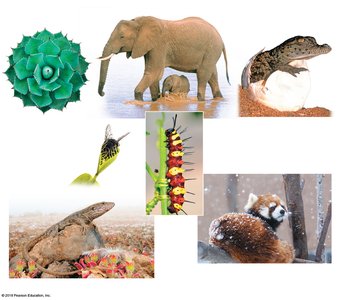
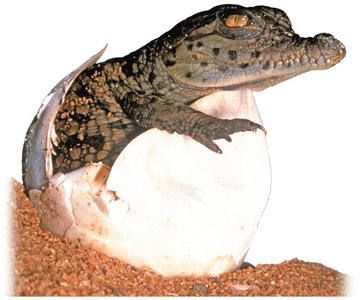
Reproduction: Organisms reproduce their own kind, ensuring the continuation of their species.
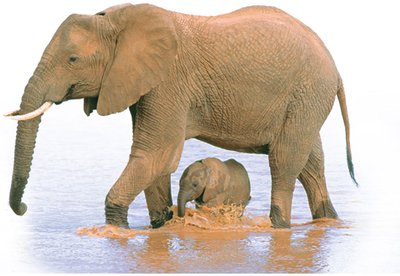
Growth and Development: Organisms grow and develop according to genetic instructions inherited from their parents.
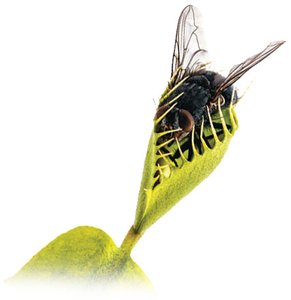
Response to the Environment: Living things respond to environmental stimuli, such as a Venus fly trap closing its leaves in response to touch.
Energy Processing: Organisms take in energy and use it to power their activities and maintain their internal order.
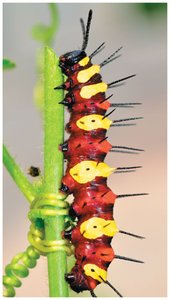
Regulation: Internal mechanisms regulate an organism's body processes, such as temperature and water balance.
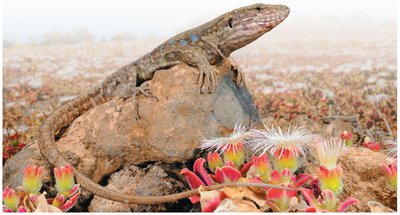
Evolutionary Adaptation: Traits evolve over time, and organisms with advantageous traits have greater survival and reproductive success.
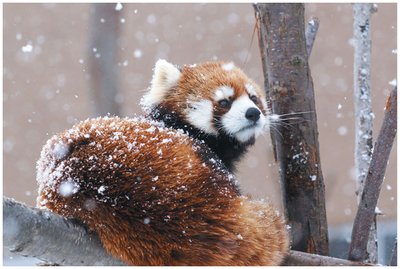
Biological Organization: Levels of Life
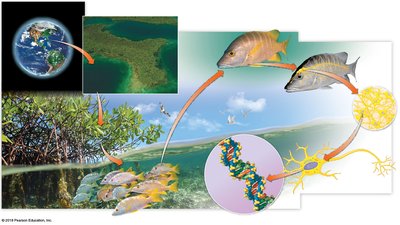
Biologists study life at various levels of organization, from molecules to the biosphere. Each level exhibits emergent properties that arise from the arrangement and interaction of its components.
Biosphere: The global ecosystem, encompassing all life and environments on Earth.
Ecosystem: All living organisms and their physical environment in a particular area.
Community: All organisms inhabiting a particular ecosystem.
Population: Individuals of the same species living in a specific area.
Organism: An individual living entity.
Organ and Organ Systems: Structures composed of tissues that perform specific functions.
Tissues: Groups of cells with a common function.
Cells: The basic unit of life.
Organelles: Specialized structures within cells.
Molecules: Chemical structures consisting of two or more atoms.
Emergent Properties
Emergent properties are new characteristics that arise at each level of biological organization due to the arrangement and interaction of parts. For example, individual organs such as the stomach, pancreas, and intestines together form the digestive system, which performs functions greater than the sum of its parts.
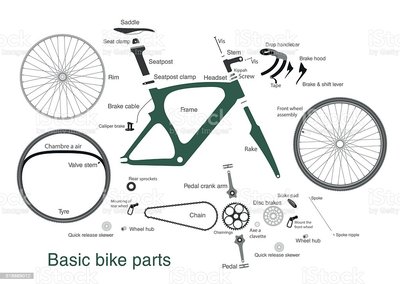
Non-biological Example: Bicycle parts individually cannot transport a person, but when assembled, they form a functioning bicycle.
Biological Example: The digestive system is composed of multiple organs working together to process food.

Classification of Life: Three Domains
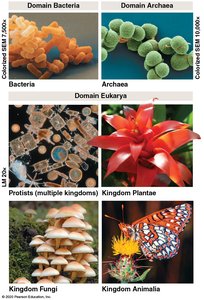
Taxonomists classify life into three domains based on cell structure and genetic differences:
Domain Bacteria: Contains organisms with simple, prokaryotic cells.
Domain Archaea: Also prokaryotic, but genetically distinct from bacteria; often found in extreme environments.
Domain Eukarya: Contains organisms with complex, eukaryotic cells, including protists, fungi, plants, and animals.
The Scientific Method
Science is an evidence-based approach to understanding the natural world. The scientific method is a systematic process used to investigate questions and test hypotheses.
Observation: Gathering information about phenomena.
Question: Asking why or how something occurs.
Hypothesis: Proposing a logical explanation for observations.
Prediction: Making testable statements based on the hypothesis.
Experiment: Testing predictions through controlled experiments.
Analysis: Interpreting data to draw conclusions.
Conclusion: Determining whether the hypothesis is supported or contradicted.
Scientific Hypotheses and Controlled Experiments
A scientific hypothesis must generate predictions that are testable and falsifiable. Controlled experiments manipulate one variable (independent variable) and measure its effect on another (dependent variable), while keeping other factors constant.
Independent Variable: The factor that is manipulated (e.g., type of fertilizer).
Dependent Variable: The outcome measured (e.g., plant growth).
Control Group: The group that does not receive the experimental treatment, used for comparison.
Example: Camouflage Experiment
Researchers tested the hypothesis that mice with coloration matching their habitat have lower predation rates. Models of mice with different colors were placed in beach (light) and inland (dark) habitats, and predation rates were measured.
Independent Variable: Color of the mouse/model.
Dependent Variable: Number of attacks/predation.
Control Group: Native mice models matching the habitat color.
Conclusion: Mice models that did not match their habitat had higher predation rates, supporting the hypothesis.
Habitat | Number of Attacks on Camouflaged Models | Number of Attacks on Noncamouflaged Models | % Attacks on Noncamouflaged Models |
|---|---|---|---|
Beach (light habitat) | 2 | 5 | 71% |
Inland (dark habitat) | 5 | 16 | 76% |
Interpreting Data: The experiment supports the hypothesis that camouflage coloration protects mice from predation.
Summary
This chapter introduces the fundamental concepts of biology, the properties that define life, the hierarchical organization of living systems, the classification of life into three domains, and the scientific method used to investigate biological questions. Understanding these principles is essential for further study in biology.
