 Indietro
Factors Influencing Amylase Activity: Temperature, pH, Buffers, and Cofactors
Guida di studio - Note intelligenti
 Appunti personalizzati basati sui tuoi materiali, ampliati con definizioni chiave, esempi e contesto.
Factors Influencing Amylase Activity
Introduction to Enzyme Activity
Enzymes are biological catalysts that accelerate chemical reactions in living organisms. The activity of enzymes, such as amylase, is influenced by several environmental factors including temperature, pH, and the presence of cofactors. Understanding these influences is essential for optimizing enzyme function in biological and laboratory settings.
Protein Structure and Denaturation
Enzymes must maintain a precise three-dimensional structure to function effectively. Environmental changes, such as extreme temperatures or pH, can disrupt this structure, leading to protein denaturation. Denaturation results in the loss of enzyme activity because the active site is altered or destroyed.
Denaturation: The process by which proteins lose their native structure and function due to external stress (e.g., heat, pH).
Optimal Conditions: Each enzyme has specific conditions under which its activity is maximized.

Effect of Temperature on Amylase Activity
Experimental Design
Amylase activity is tested at various temperatures (0°C, 40°C, 80°C, 100°C) by measuring the breakdown of starch into maltose. The color change in a multiwell plate, using Lugol’s iodine, indicates the presence or absence of starch.
High Temperatures: Can cause denaturation, resulting in loss of enzyme activity.
Low Temperatures: Slow down molecular movement, reducing reaction rates.
Optimal Temperature: The temperature at which amylase activity is greatest, determined experimentally.
Colorimetric Test: Blue-black color indicates starch presence; yellow indicates starch absence and active amylase.
Example: If the solution turns yellow at 40°C but remains blue-black at 0°C and 100°C, 40°C is likely the optimal temperature for amylase activity.
Effect of pH on Amylase Activity
pH and Hydrogen Ion Concentration
The pH of a solution is a measure of its hydrogen ion concentration. Enzyme activity is highly sensitive to pH, with each enzyme having an optimal pH range.
Acidic Solutions: pH < 7, high [H+]
Neutral Solutions: pH = 7, equal [H+] and [OH-]
Basic Solutions: pH > 7, low [H+]
pH Formula:
Hydrogen Ion Concentration:
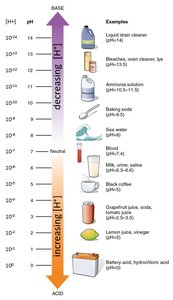
Example: Amylase may be most active at pH 7, with reduced activity at pH 3 or pH 10 due to denaturation or altered active site structure.
Buffering Capacity and Enzyme Activity
Role of Buffers in Biological Systems
Buffers are solutions that resist changes in pH when acids or bases are added. They are crucial for maintaining optimal conditions for enzyme activity.
Buffer System: Consists of a weak acid and its conjugate base (e.g., carbonic acid and bicarbonate).
Buffering Capacity: High buffering capacity means the solution resists pH changes; low capacity means pH changes easily.
Importance: Buffers help maintain the pH required for optimal enzyme activity.
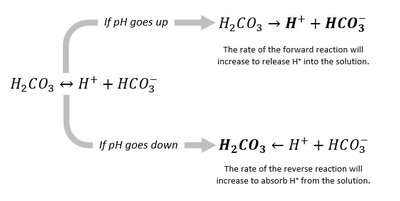
Experimental Analysis of Buffering Capacity
By adding acid (HCl) or base (NaOH) to solutions D and E, the change in pH is measured to determine which solution has higher buffering capacity. The ideal buffer for amylase activity is the one that maintains pH stability.
pH of Solution D | pH of Solution E | mL HCl added | Initial pH | mL NaOH added |
|---|---|---|---|---|
Measured | Measured | 0-5 | Measured | 0-5 |
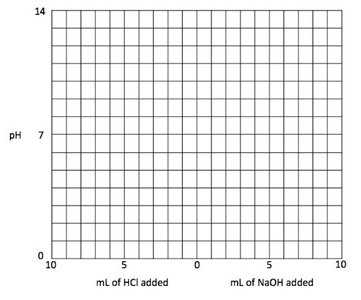
Example: If Solution D shows little change in pH after adding acid or base, it has higher buffering capacity and is preferable for enzyme studies.
Effect of Cofactors on Amylase Activity (Optional)
Cofactors and Chelating Agents
Many enzymes require cofactors, such as metal ions (Ca2+, Mg2+), for activity. Chelating agents like EGTA bind and remove these ions, potentially inhibiting enzyme function.
Cofactor: A non-protein molecule or ion required for enzyme activity.
Chelator: A molecule that binds metal ions, preventing their interaction with enzymes.
EGTA: Specifically binds Ca2+ ions, used to test if amylase requires calcium for activity.
Example: If amylase activity decreases with increasing EGTA concentration, it suggests that calcium ions are necessary cofactors for amylase.
Summary and Discussion
Ideal Conditions: Amylase activity is highest at its optimal temperature and pH, in a buffered solution, and with required cofactors present.
Experimental Limitations: Testing only large increments of pH and temperature may not precisely identify optimal conditions; finer increments are needed for conclusive results.
Further Testing: Use smaller increments and additional controls to refine optimal conditions.
Importance of Buffers: Buffers maintain stable pH, essential for consistent enzyme activity.
Cofactor Requirement: The presence of chelators can reveal the necessity of specific ions for enzyme function.
Additional info: These experiments illustrate fundamental principles of enzyme activity, relevant to topics such as biomolecules, cell components, energy and metabolism, and laboratory techniques in General Biology.
