 Indietro
Fermentation and Anaerobic Respiration: Cellular Energy Production Without Oxygen
Guida di studio - Note intelligenti
 Appunti personalizzati basati sui tuoi materiali, ampliati con definizioni chiave, esempi e contesto.
Fermentation and Anaerobic Respiration
Overview of ATP Production Without Oxygen
Cells can produce ATP in the absence of oxygen through fermentation and anaerobic respiration. While most cellular respiration requires oxygen as the final electron acceptor in the electron transport chain, these alternative pathways allow cells to survive and generate energy when oxygen is unavailable.
Fermentation uses substrate-level phosphorylation to generate ATP, bypassing the electron transport chain.
Anaerobic respiration utilizes an electron transport chain with a final electron acceptor other than oxygen (e.g., sulfate).
Both processes begin with glycolysis, which produces a net gain of 2 ATP per glucose molecule.
Types of Fermentation
Fermentation consists of glycolysis followed by reactions that regenerate NAD+, allowing glycolysis to continue. The two most common types are alcohol fermentation and lactic acid fermentation.
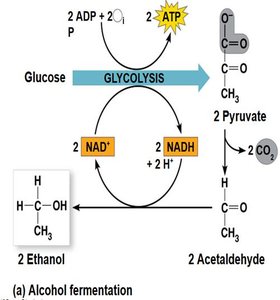
Alcohol fermentation: Pyruvate is converted to ethanol in two steps: first, CO2 is released from pyruvate, then acetaldehyde is reduced to ethanol by NADH.
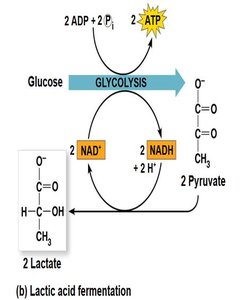
Lactic acid fermentation: Pyruvate is reduced directly by NADH to form lactate, with no release of CO2.
Alcohol Fermentation
Alcohol fermentation is carried out by yeast and some bacteria. It is used in brewing, winemaking, and baking. The process involves:
Conversion of glucose to pyruvate via glycolysis
Release of CO2 from pyruvate
Reduction of acetaldehyde to ethanol
Equation:
Lactic Acid Fermentation
Lactic acid fermentation is performed by some fungi, bacteria, and human muscle cells. It is important in the production of cheese and yogurt, and in muscle cells during intense exercise when oxygen is scarce.
Pyruvate is reduced by NADH to form lactate
No CO2 is released
Equation:
Applications of Fermentation
Fermentation is utilized in various industries and biological processes:
Alcohol fermentation by yeast is essential for brewing, winemaking, and baking.
Lactic acid fermentation by bacteria and fungi is used in cheese and yogurt production.
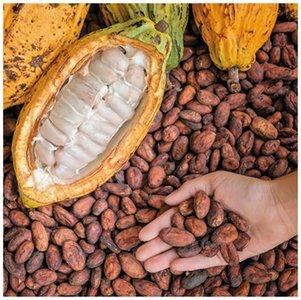
Fermentation and aerobic respiration by yeasts and bacteria are responsible for chocolate production from cacao beans.
Comparing Fermentation, Anaerobic, and Aerobic Respiration
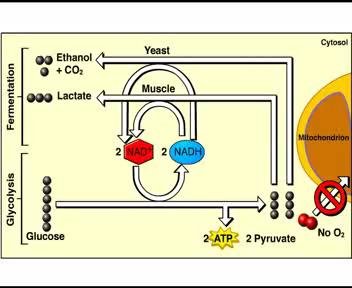
All three processes use glycolysis to oxidize glucose, but differ in their mechanisms for NADH oxidation and ATP yield.
Process | Final Electron Acceptor | ATP Yield (per glucose) | Key Products |
|---|---|---|---|
Fermentation | Organic molecule (e.g., pyruvate, acetaldehyde) | 2 | Ethanol, lactate |
Anaerobic Respiration | Inorganic molecule (e.g., sulfate) | Variable, less than aerobic | Depends on acceptor |
Aerobic Respiration | O2 | 32-38 | CO2, H2O |
The Evolutionary Significance of Glycolysis
Glycolysis is the most widespread metabolic pathway, suggesting it evolved early in Earth's history. Early prokaryotes likely relied on glycolysis due to low atmospheric oxygen. Its location in the cytosol and presence in both prokaryotes and eukaryotes indicate its ancient origins.
Obligate anaerobes carry out only fermentation or anaerobic respiration and cannot survive in oxygen.
Facultative anaerobes (e.g., yeast, many bacteria) can use either fermentation or cellular respiration depending on oxygen availability.
Pathways of Glucose Metabolism
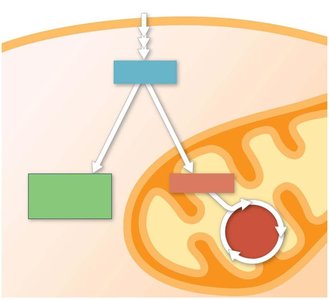
Glucose can be metabolized via fermentation or aerobic respiration, depending on the presence of oxygen. In the absence of oxygen, fermentation produces ethanol, lactate, or other products. In the presence of oxygen, pyruvate enters the mitochondrion and is further oxidized in the citric acid cycle.
Summary Table: Fermentation vs. Respiration
Feature | Fermentation | Anaerobic Respiration | Aerobic Respiration |
|---|---|---|---|
Electron Transport Chain | No | Yes | Yes |
Final Electron Acceptor | Organic molecule | Inorganic molecule (not O2) | O2 |
ATP Yield | 2 | Variable | 32-38 |
Location | Cytosol | Cytosol & membrane | Cytosol & mitochondria |
Example: Human muscle cells switch to lactic acid fermentation during strenuous exercise when oxygen is limited, producing lactate and 2 ATP per glucose.
Additional info: The diagrams and tables above summarize the key steps and differences between fermentation and respiration, reinforcing the importance of glycolysis as a universal pathway for energy production.
