 Indietro
Foundations of Biology: Scientific Method, Evolution, and Biological Organization
Guida di studio - Note intelligenti
 Appunti personalizzati basati sui tuoi materiali, ampliati con definizioni chiave, esempi e contesto.
Introduction to General Biology
Course Overview and Structure
General Biology I introduces students to the foundational concepts of biology, including biochemistry, cell structure, genetics, gene expression, and the scientific method. The course utilizes Campbell Biology in Focus as the primary textbook, and students are expected to engage with interactive learning platforms such as Mastering Biology. Assigned readings and homework are essential for exam preparation.


Course Topics
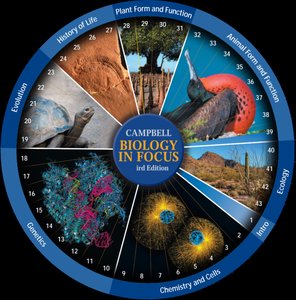
Chemistry and Cells: Understanding the chemical basis of life and cell structure.
Genetics: Principles of inheritance and gene function.
Gene Expression and Regulation: How genetic information is expressed and controlled.
Evolution: Mechanisms and evidence for evolution.
Ecology: Interactions between organisms and their environments.
History of Life: Major events in the evolution of life.
Plant and Animal Form and Function: Structure and function in multicellular organisms.
The Process of Science
Scientific Method and Experimental Design
The scientific method is a systematic approach to understanding natural phenomena. It involves making observations, forming hypotheses, conducting experiments, analyzing data, and drawing conclusions. Controlled experiments are essential for testing hypotheses by comparing an experimental group to a control group.
Observation: Gathering information about the natural world.
Hypothesis: A testable explanation for an observation.
Experiment: Manipulating variables to test the hypothesis.
Analysis: Interpreting data to support or refute the hypothesis.
Conclusion: Drawing inferences based on results.
Variables in Experiments
Independent Variable: The factor manipulated by the researcher.
Dependent Variable: The factor measured as the outcome.
Control Group: The group that does not receive the experimental treatment.
Experimental Group: The group that receives the treatment.
Case Study: Coat Color in Mouse Populations
Adaptation and Natural Selection
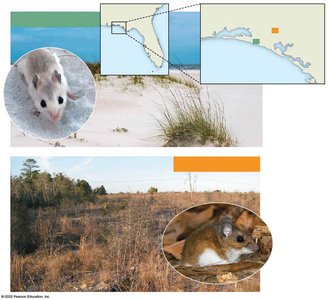
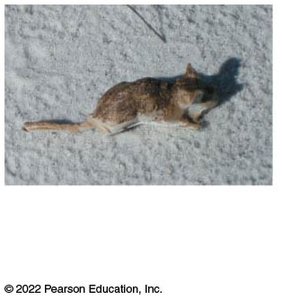
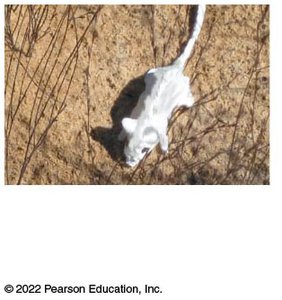
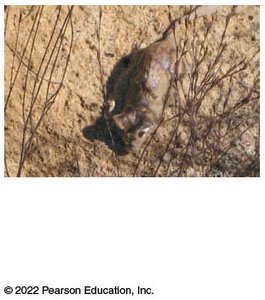
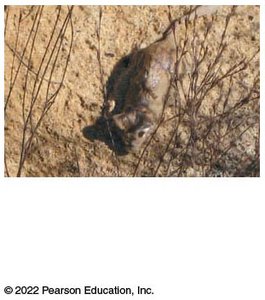
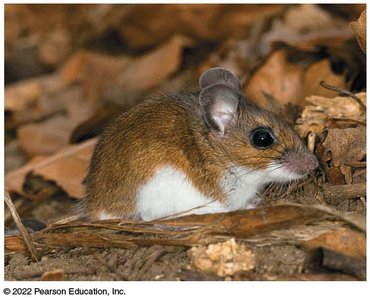
This case study examines how the coat color of Peromyscus polionotus mice is adapted to their environment. Beach mice have light fur, while inland mice have dark fur. Predators are visual hunters, and the hypothesis is that coloration evolved as an adaptation for camouflage.
Experimental Design
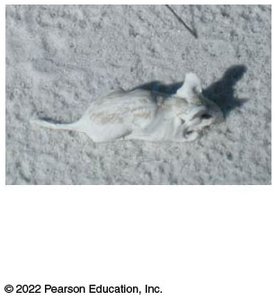
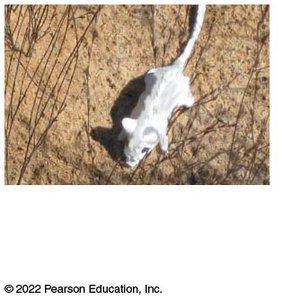
Mouse models were spray-painted to resemble beach or inland mice.
Models were placed in both habitats overnight.
Predation events were recorded the next morning.
Results and Interpretation
The results showed that camouflaged models were attacked less frequently than non-camouflaged models, supporting the hypothesis that camouflage reduces predation.
Unifying Themes of Biology
Five Unifying Themes
Biology is organized around five major themes that help make sense of complex information:
Organization: Structure fits function at all levels, from molecules to organisms.
Information: Genetic information encoded in DNA determines traits.
Energy and Matter: Energy flows through systems, while matter cycles.
Interactions: Organisms interact with each other and their environment.
Evolution: Populations evolve through natural selection and adaptation.
Biological Organization
Biological systems are structured hierarchically:
Molecule
Organelle
Cell
Tissue
Organ
Organism
Population
Community
Ecosystem
Biosphere
Metacognition and Study Strategies
Effective Learning Techniques
Metacognition involves reflecting on your own learning process. Strategies include previewing materials, attending class actively, reviewing notes, studying thoroughly, and assessing your understanding. Consistency and repetition are key to mastering biology concepts.
Summary Table: Experimental Design in Biology
Term | Definition | Example |
|---|---|---|
Independent Variable | Factor manipulated by researcher | Coat color of mouse models |
Dependent Variable | Factor measured as outcome | Predation rate |
Control Group | Group with standard conditions | Camouflaged models in native habitat |
Experimental Group | Group with altered conditions | Non-camouflaged models in native habitat |
Key Equations and Concepts
Natural Selection
Natural selection is the process by which organisms better adapted to their environment tend to survive and reproduce. The basic equation for fitness is:
Where W is fitness, Nsurvivors is the number of surviving individuals, and Ntotal is the total number of individuals.
Conclusion
General Biology I provides a comprehensive introduction to the scientific method, evolution, and the hierarchical organization of life. Understanding these foundational concepts is essential for further study in biology and related fields.
