 Indietro
Ch.29 Fungi Diversity d Biology: Structure, Function, and Ecological Roles
Guida di studio - Note intelligenti
 Appunti personalizzati basati sui tuoi materiali, ampliati con definizioni chiave, esempi e contesto.
Fungi Diversity and Classification
Major Lineages of Fungi
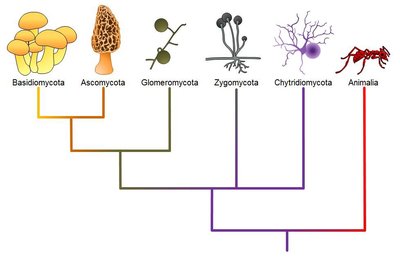
The Kingdom Fungi is a diverse group of eukaryotic organisms classified within the supergroup Opisthokonta. Fungi are primarily multicellular, though some are unicellular, and they share a common mode of nutrition. The main fungal phyla include Basidiomycota, Ascomycota, Glomeromycota, Zygomycota, and Chytridiomycota. Phylogenetic trees help biologists understand evolutionary relationships among these groups.
Basidiomycota: Includes mushrooms and puffballs, produces basidiospores.
Ascomycota: Includes yeasts and molds, produces spores in asci.
Glomeromycota: Forms arbuscular mycorrhizae with plants.
Zygomycota: Contains hyphae without septa, produces zygospores.
Chytridiomycota: Aquatic fungi with motile zoospores.
Fungal Structure and Morphology
Body Forms and Hyphal Structure
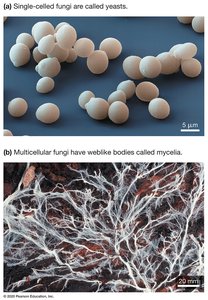
Fungi exhibit two main growth forms: single-celled yeasts and multicellular, filamentous mycelia. The mycelium consists of a network of thread-like hyphae. Hyphae may be septate (divided by cross walls called septa) or coenocytic (lacking septa, resulting in a continuous cytoplasm).
Yeasts: Unicellular fungi, reproduce by budding.
Mycelia: Multicellular, web-like bodies composed of hyphae.
Hyphae: Tubular structures; septate hyphae have cross walls, coenocytic hyphae do not.
Cell Wall: Composed of chitin, also found in insect exoskeletons.
Fungal Nutrition and Metabolism
Modes of Nutrition
Fungi are heterotrophic, obtaining nutrients by absorbing organic matter. Most are saprotrophic, releasing digestive enzymes to break down complex molecules and absorb the resulting nutrients. Some fungi are parasitic or form mutualistic relationships with other organisms.
Saprotrophic: Decompose dead organic matter.
Parasitic: Obtain nutrients from living hosts, often causing disease.
Mutualistic: Form beneficial associations, such as mycorrhizal fungi with plants.
Fungal Reproduction
Asexual Reproduction
Fungi reproduce asexually through several mechanisms:
Spore Production: Asexual spores are produced by mitosis from a single mycelium.
Fragmentation: Fragments of hyphae grow into new colonies.
Budding: Small cells form and pinch off, common in yeasts.
Sexual Reproduction
Sexual reproduction in fungi involves three main stages:
Plasmogamy: Fusion of cytoplasm from haploid hyphae of different mating types.
Heterokaryotic Stage: Nuclei from both parents coexist in the same mycelium, unfused (dikaryotic).
Karyogamy: Fusion of nuclei to form a diploid zygote, followed by meiosis to produce haploid spores.
Spores
Spores are reproductive cells that develop into new organisms without fusion with another cell. Fungi produce both asexual and sexual spores, which are typically haploid. Terrestrial fungi produce non-motile, windblown spores, while aquatic fungi (chytrids) produce motile zoospores.
Ecological and Economic Importance of Fungi
Economic Impacts
Fungi are important in food production and culinary applications. They are used in the preparation of various foods, such as mushrooms, truffles, bread, cheese, and fermented products.
Mushrooms: Edible fungi cultivated for food.
Truffles: Highly prized fungi used in gourmet cuisine.
Bread and Cheese: Fungi are essential in fermentation and flavor development.



Ecological Impacts
Fungi play crucial roles in ecosystems, particularly in nutrient cycling and symbiotic relationships.
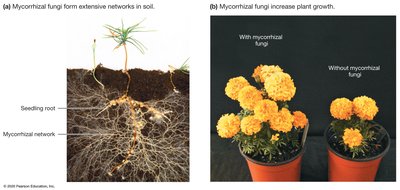
Mycorrhizal Fungi: Form symbiotic associations with plant roots, enhancing water and nutrient uptake for plants while receiving sugars in return.
Carbon Cycle: Fungi decompose organic matter, releasing carbon and facilitating nutrient cycling in terrestrial systems.
Fungal Phyla: Characteristics and Life Cycles
Basidiomycota
Basidiomycetes include mushrooms, puffballs, and shelf fungi. They produce basidiospores on basidia and are important decomposers of wood due to their ability to synthesize lignin peroxidase. Some are ectomycorrhizal fungi, improving forest health, while others are parasitic or poisonous.
Ascomycota
Ascomycetes include single-celled yeasts and molds. Many form mutualistic associations with cyanobacteria or green algae, creating lichens. They reproduce asexually via conidiophores and sexually in asci.
Glomeromycota
Glomeromycetes form arbuscular mycorrhizae, absorbing phosphorus, nitrogen, and water for host plants, which provide sugars and organic compounds in return.
Zygomycota
Zygomycetes are primarily soil-dwellers, with saprophytic and parasitic members responsible for rotting fruits and vegetables. They produce zygospores and have coenocytic hyphae.
Chytridiomycota
Chytrids are aquatic fungi with motile zoospores. They are important decomposers in wet environments and can be parasitic, contributing to the decline of amphibian populations.
Summary Table: Fungal Phyla Characteristics
Phylum | Key Features |
|---|---|
Basidiomycota | Fruiting bodies (mushrooms, puffballs), basidiospores, wood decomposition |
Ascomycota | Yeasts, molds, conidiophores, asci, lichens |
Glomeromycota | Arbuscular mycorrhizae, symbiosis with plants |
Zygomycota | Coenocytic hyphae, zygospores, soil-dwellers |
Chytridiomycota | Aquatic, motile zoospores, decomposers, parasites |
Symbiotic Relationships
Mycorrhizal Associations
Mycorrhizal fungi form extensive networks in soil, increasing plant growth and health by facilitating nutrient and water uptake. This mutualistic relationship is essential for most terrestrial plants.
Lichens
Lichens are formed by mutualistic associations between ascomycete fungi and photosynthetic partners (cyanobacteria or green algae). They are important in colonizing harsh environments and contributing to soil formation.
Fungi in Evolution and Phylogeny
Phylogenetic Relationships
Fungi are closely related to animals within the supergroup Opisthokonta. Phylogenetic trees illustrate the evolutionary relationships among fungal phyla and their connection to the animal kingdom.
Conclusion
Fungi are a diverse and essential group of organisms with significant roles in ecology, economy, and evolution. Their unique structures, reproductive strategies, and symbiotic relationships make them a key topic in general biology.
