Indietro
Fungi: Structure, Diversity, Ecology, and Importance
Guida di studio - Note intelligenti
 Appunti personalizzati basati sui tuoi materiali, ampliati con definizioni chiave, esempi e contesto.
Fungi: Introduction and Overview
Definition and Characteristics
Fungi are a distinct group of eukaryotic organisms, generally multicellular, with cell walls containing chitin and glucans. They are heterotrophic, obtaining nutrients by absorption, and are classified as a monophyletic lineage in Opisthokonta, closely related to Nucleariidae and animals.
Eukaryotic: Possess membrane-bound organelles and a true nucleus.
Cell wall composition: Chitin and glucans, unlike plants (cellulose) and animals (no cell wall).
Heterotrophic: Absorb nutrients from their environment.
Monophyletic lineage: Share a common ancestor, distinct from plants and animals.

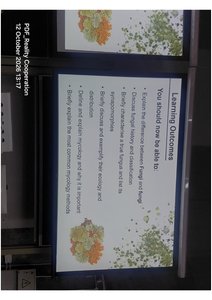
Learning Outcomes
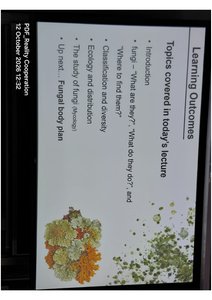
Topics Covered
This lecture covers the introduction to fungi, their classification and diversity, ecological roles, and their study methods. It also discusses fungal body plans and their importance as bioindicators.
Introduction to fungi: What are they? What do they do?
Classification and diversity
Ecology and distribution
The study of fungi (mycology)
Fungal body plan (up next)
Fungi vs. Plants vs. Animals
Comparative Table
Fungi, plants, and animals are three major eukaryotic groups with distinct characteristics. The table below summarizes their differences:
Feature | Fungi | Viridiplantae (Plants) | Metazoa (Animals) |
|---|---|---|---|
Cell wall | Chitin and glucans | Cellulose | Absent |
Nutrition | Absorptive heterotrophs | Photosynthetic autotrophs | Ingestive heterotrophs |
Storage | Glycogen | Starch | Glycogen |
Motility | Non-motile (except some spores) | Non-motile | Motile |
Primary cell type | Filamentous hyphae | Parenchyma | Muscle, nerve, etc. |

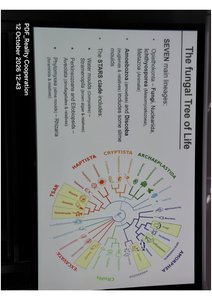
The Fungal Tree of Life
Phylogenetic Relationships
Fungi are part of the Opisthokonta supergroup, which also includes animals. The fungal tree of life is divided into several main lineages, each with unique characteristics. Seven main lineages are recognized, including Chytridiomycota, Fungi, Microsporidia, and others.
Opisthokonta: Supergroup containing fungi and animals.
Major fungal lineages: Chytridiomycota, Microsporidia, etc.
Phylogenetic tree: Shows evolutionary relationships among fungi and related groups.
Ecology: Habitats
Fungal Roles and Environments
Fungi occupy diverse habitats and play crucial ecological roles. They are most commonly decomposers, mutualists, pathogens, and symbionts. Fungi can live in water, soil, decaying matter, and within living organisms.
Decomposers: Break down organic matter, recycling nutrients.
Mutualists: Form symbiotic relationships (e.g., mycorrhizae, lichens).
Pathogens: Cause diseases in plants, animals, and humans.
Habitats: Water, soil, decaying matter, living tissues.

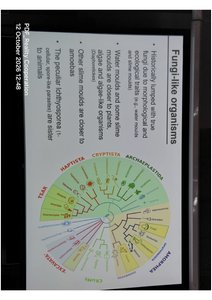
Fungi-like Organisms
Distinguishing True Fungi from Fungi-like Groups
Some organisms resemble fungi but are not true fungi. These include slime molds and water molds, which differ in their life cycles and cellular structures. True fungi are defined by their chitinous cell walls and absorptive nutrition.
Slime molds: Amoeboid, lack chitin cell walls.
Water molds: Cellulose cell walls, not true fungi.
True fungi: Chitin cell walls, absorptive nutrition.
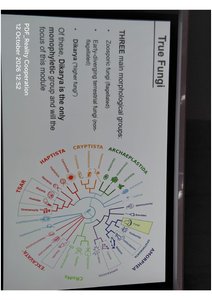
True Fungi: Morphological Groups
Main Morphological Types
True fungi are classified into three main morphological groups: Zygomycetes, Ascomycetes, and Basidiomycetes. Of these, Dikarya is the only monophyletic lineage and includes most familiar fungi.
Zygomycetes: Form zygospores during reproduction.
Ascomycetes: Produce spores in asci.
Basidiomycetes: Produce spores on basidia.
Dikarya: Includes Ascomycetes and Basidiomycetes.
Fungi as Bioindicators
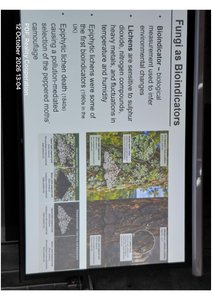
Environmental Monitoring
Fungi, especially lichens, are used as bioindicators to monitor environmental changes. Lichens are sensitive to air pollution and can indicate ecosystem health. Epiphytic lichens are used in studies of air quality and biodiversity.
Bioindicators: Organisms used to assess environmental quality.
Lichens: Symbiotic associations of fungi and algae, sensitive to pollutants.
Applications: Monitoring air quality, biodiversity, and ecosystem health.
Fungal Diversity
Major Groups and Abundance
Fungi are highly diverse, with over 93% of described species belonging to Ascomycota and Basidiomycota. Other groups include Chytridiomycota, Glomeromycota, and Zygomycota.
Ascomycota: Largest group, includes yeasts and molds.
Basidiomycota: Includes mushrooms and puffballs.
Other groups: Chytridiomycota, Glomeromycota, Zygomycota.

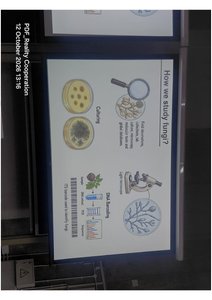
How We Study Fungi
Methods in Mycology
Fungi are studied using culturing, microscopy, DNA sequencing, and ecological surveys. Culturing allows observation of growth and morphology, while DNA sequencing reveals genetic diversity and relationships.
Culturing: Growing fungi in laboratory conditions.
Microscopy: Observing fungal structures.
DNA sequencing: Identifying species and phylogenetic relationships.
Ecological surveys: Assessing fungal diversity in natural habitats.
Why Fungi Matter
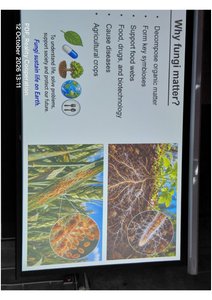
Ecological and Economic Importance
Fungi are essential decomposers, supporting key ecological cycles. They are important in food, drugs, biotechnology, and can cause diseases and agricultural losses.
Decomposers: Recycle organic matter.
Food and drugs: Used in bread, beer, antibiotics.
Biotechnology: Enzyme production, bioremediation.
Pathogens: Cause diseases in plants and animals.
Agricultural impact: Crop losses due to fungal diseases.
Fungi in South Africa
Distribution and Research
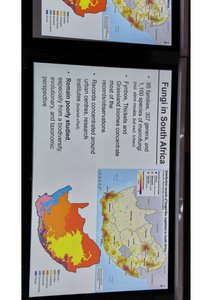
South Africa hosts diverse fungi, with 95 families, 307 genera, and 1,150 species. Research focuses on taxonomy, ecology, and conservation. Fungi are important in local ecosystems and agriculture.
Taxonomy: Classification and identification of species.
Ecology: Role in nutrient cycling and ecosystem functioning.
Conservation: Protecting fungal diversity.
Learning Outcomes: Summary
Key Takeaways
Students should be able to distinguish fungi from other eukaryotes, describe their ecological and economic roles, identify major groups, and explain their importance in environmental monitoring and biodiversity.
Distinguish fungi from plants and animals.
Describe fungal diversity and classification.
Explain ecological and economic importance.
Discuss fungi as bioindicators.
Briefly explain common methods for studying fungi.