 Indietro
Fungi: Structure, Function, and Ecological Roles
Guida di studio - Note intelligenti
 Appunti personalizzati basati sui tuoi materiali, ampliati con definizioni chiave, esempi e contesto.
Fungi: Phylogeny and General Characteristics
Fungi and Their Evolutionary Relationships
Fungi are a diverse group of eukaryotic organisms that are more closely related to animals than to land plants. This close evolutionary relationship is reflected in their cellular and molecular structures, which has important implications for medicine and biology.
Phylogenetic Relationship: Fungi and animals share a more recent common ancestor than fungi and plants.
Medical Relevance: Because of their similarity to animals, antifungal drugs can also harm human cells, making fungal infections harder to treat than bacterial infections.
What are Fungi?
Fungi are eukaryotes that can exist as single cells or as large, branching multicellular filaments. They are essential decomposers in ecosystems and can also form mutualistic or parasitic relationships with other organisms.
Decomposers: Fungi break down dead organic matter, recycling nutrients in ecosystems.
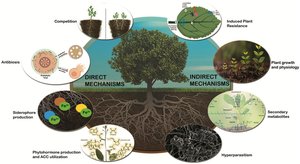
Mutualists: Many fungi form beneficial associations with plants, providing nutrients and water in exchange for sugars.
Specialization: Some fungi absorb nutrients from living organisms, while others defend plants from herbivores or are farmed by insects.
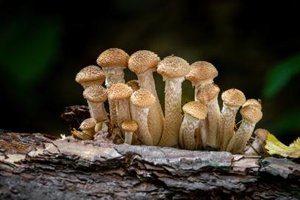
Fungal Morphology
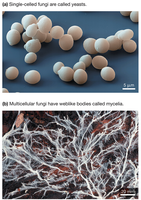
Growth Forms: Yeasts and Mycelia
Fungi exhibit two main growth forms: single-celled yeasts and multicellular mycelia. Some species can switch between these forms depending on environmental conditions.
Yeasts: Unicellular fungi that reproduce by budding or fission.
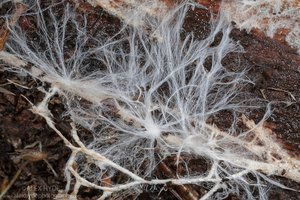
Mycelia: Networks of long, branching filaments called hyphae that form the main body of multicellular fungi.
Dynamic Growth: Mycelia grow toward food sources and die back where resources are depleted, allowing continuous adaptation to their environment.
Hyphae and Mycelial Structure
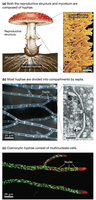
Hyphae are the thread-like filaments that make up the mycelium. They may be divided into cells by septa or be coenocytic (lacking septa), allowing rapid movement of nutrients and organelles.
Septa: Cross-walls that divide hyphae into compartments, with pores for cytoplasmic streaming.
Coenocytic Hyphae: Hyphae without septa, containing many nuclei in a continuous cytoplasm.
Surface Area: The extensive network of thin hyphae gives fungi the highest surface-area-to-volume ratio among multicellular organisms, maximizing nutrient absorption but making them prone to desiccation.
Fungi as Decomposers
Ecological Roles and Nutrient Cycling
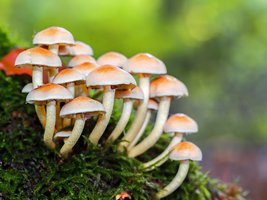
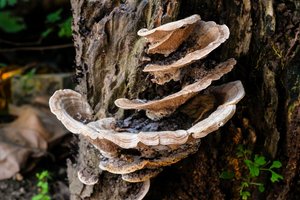
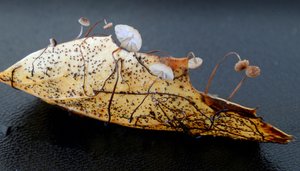
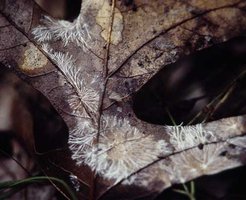
Fungi are essential decomposers and recyclers in terrestrial ecosystems. They break down complex organic materials, releasing nutrients that are reused by plants and other organisms.
Decomposition: Fungi release enzymes that digest lignin and cellulose, the two most abundant organic molecules in plant cell walls.
Extracellular Digestion: Digestion occurs outside the fungal body; simple compounds are then absorbed by hyphae.
Soil Formation: Over time, fungi can decompose even the hardest wood, contributing to soil formation and fertility.
Fungal Symbioses
Types of Symbiotic Relationships
Fungi form a variety of symbiotic relationships with plants, animals, and other organisms. These relationships can be mutualistic, parasitic, or commensal.
Mutualism: Both partners benefit (e.g., mycorrhizal fungi and plants).
Parasitism: One organism benefits at the expense of the other.
Commensalism: One organism benefits while the other is unaffected.
Mycorrhizal Fungi
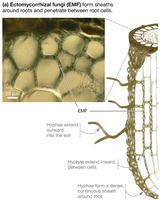
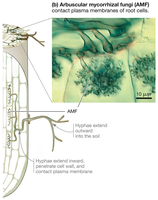
Mycorrhizal fungi form close associations with plant roots, enhancing nutrient and water uptake for the plant while receiving sugars in return. There are two main types:
Ectomycorrhizal Fungi (EMF): Form sheaths around roots and penetrate between root cells, providing amino acids and phosphate ions to the plant.
Arbuscular Mycorrhizal Fungi (AMF): Penetrate root cell walls, forming structures that increase surface area for nutrient exchange.
Endophytes and Lichens
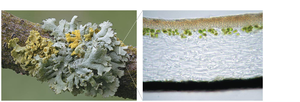
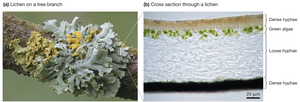
Endophytes are fungi that live inside plant tissues, often providing benefits such as increased drought tolerance or protection from herbivores. Lichens are mutualistic associations between fungi and photosynthetic organisms (algae or cyanobacteria).
Endophytes: Live within plant tissues, absorbing sugars and sometimes producing protective compounds.
Lichens: Consist of a fungal partner and a photosynthetic partner, capable of colonizing harsh environments.
Fungal Reproduction
Reproductive Strategies
Fungi have evolved diverse reproductive strategies, including both sexual and asexual reproduction. Spores are the primary means of dispersal and survival.
Spores: Fundamental reproductive cells produced in both sexual and asexual cycles; resistant to desiccation and can germinate in favorable conditions.
Sexual Reproduction: Involves fusion of hyphae (plasmogamy) and then fusion of nuclei (karyogamy), often between different mating types.
Asexual Reproduction: Haploid mycelia produce spores by mitosis, resulting in genetically identical offspring.
Key Terms:
Plasmogamy: Fusion of cytoplasm from two different fungal cells.
Heterokaryotic: Stage with multiple distinct nuclei in one mycelium.
Karyogamy: Fusion of nuclei to form a diploid cell.
The Good and Bad of Fungi
Benefits and Harms
Fungi have significant impacts on human society, agriculture, and health. They are sources of important medicines and foods, but also cause diseases and crop losses.
Benefits: Source of antibiotics (e.g., penicillin), food products (mushrooms, yeast for bread and alcohol), and fermentation processes (chocolate, cheese, soy sauce).
Harms: Cause human diseases (~300 species), spoil food, and are responsible for major agricultural losses (rusts, smuts, mildews, wilts, blights).
