 Indietro
Fungi: Structure, Function, and Ecological Roles
Guida di studio - Note intelligenti
 Appunti personalizzati basati sui tuoi materiali, ampliati con definizioni chiave, esempi e contesto.
Fungi: Structure, Function, and Ecological Roles
Introduction to Fungi
Fungi are a diverse kingdom of eukaryotic organisms that play essential roles in ecosystems as decomposers, mutualists, and pathogens. Their unique structures and life cycles enable them to efficiently absorb nutrients and interact with other organisms in a variety of ecological contexts.
Structure and Function in Fungi
Fungal Body Structure
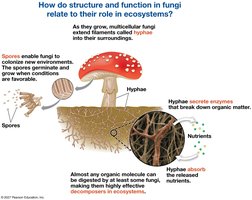
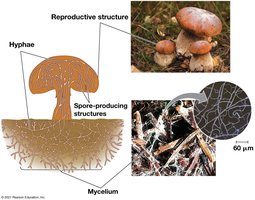
Most fungi are multicellular, forming networks of filaments called hyphae, while some, such as yeasts, are unicellular. The collective mass of hyphae is known as a mycelium, which provides a large surface area for nutrient absorption.
Hyphae: Tubular filaments that grow by elongation at their tips, allowing fungi to explore and exploit new food sources.
Chitin: A structural polysaccharide found in fungal cell walls, providing rigidity and protection against osmotic pressure.
Yeasts: Unicellular fungi that typically inhabit moist, nutrient-rich environments.
Types of Hyphae
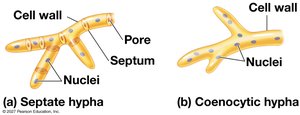
Fungal hyphae can be classified based on the presence or absence of septa (cross-walls):
Septate hyphae: Contain septa with pores, allowing cytoplasmic streaming and movement of organelles between compartments.
Coenocytic hyphae: Lack septa, forming a continuous cytoplasmic mass with many nuclei.
Mycelium and Growth
The mycelium is the main vegetative structure of fungi, consisting of an extensive network of hyphae. This structure maximizes surface area for absorption and allows fungi to efficiently decompose organic matter.
Specialized Hyphae
Some fungi develop specialized hyphae for nutrient acquisition:
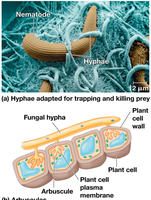
Trapping hyphae: Adapted to capture and digest small animals, such as nematodes.
Haustoria: Specialized structures in parasitic fungi that penetrate host tissues to absorb nutrients.
Mycorrhizal Associations
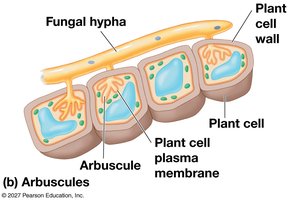
Mycorrhizae are mutualistic relationships between fungi and plant roots, crucial for plant nutrient uptake, especially phosphorus. Fungi receive organic carbon from the plant in return.
Ectomycorrhizae: Fungal hyphae surround root cells but do not penetrate cell walls.
Arbuscular mycorrhizae: Fungal hyphae penetrate root cell walls, forming branched arbuscules for nutrient exchange.
Fungal Nutrition and Ecology
Modes of Nutrition
Fungi are heterotrophs that feed by absorption. They secrete hydrolytic enzymes to break down complex organic molecules outside their bodies, then absorb the resulting smaller molecules.
Decomposers: Break down dead organic matter, recycling nutrients in ecosystems.
Parasites: Obtain nutrients from living hosts, often causing disease.
Mutualists: Form beneficial relationships with other organisms, such as plants and animals.
Fungal Reproduction
Generalized Life Cycle
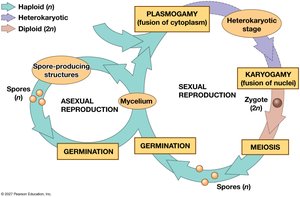
Fungi reproduce both sexually and asexually, producing spores that disperse via wind, water, or animals. Spores germinate under favorable conditions to form new mycelia.
Sexual Reproduction
Plasmogamy: Fusion of cytoplasm from two parent mycelia without immediate nuclear fusion.
Heterokaryotic stage: Cells contain two or more genetically distinct haploid nuclei.
Karyogamy: Fusion of haploid nuclei to form a diploid nucleus.
Meiosis: Restores the haploid state and generates genetic diversity in spores.
Asexual Reproduction
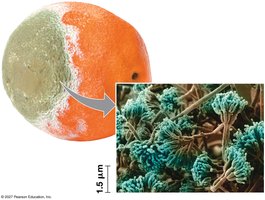
Molds: Filamentous fungi that produce haploid spores by mitosis, forming visible mycelia.
Yeasts: Unicellular fungi that reproduce by budding or cell division.
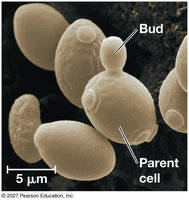
Evolution and Diversity of Fungi
Evolutionary Origins
Fungi, animals, and their close protistan relatives are grouped as Opisthokonts. Fungi and animals share a common unicellular, flagellated ancestor, but multicellularity evolved independently in each lineage.
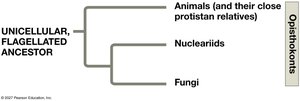
Major Fungal Lineages
Molecular evidence reveals several major evolutionary lineages within the kingdom Fungi. Over 145,000 species have been described, but many more remain undiscovered.
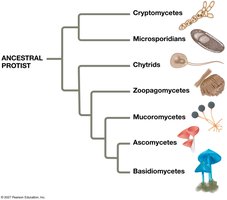
Chytrids (Phylum Chytridiomycota)
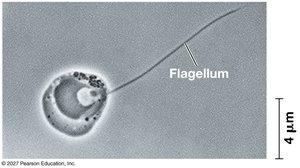
Chytrids are primarily aquatic or soil-dwelling fungi that produce flagellated zoospores. They function as decomposers, parasites, and mutualists. Some chytrids are responsible for amphibian population declines due to chytridiomycosis.
Ascomycetes (Sac Fungi)
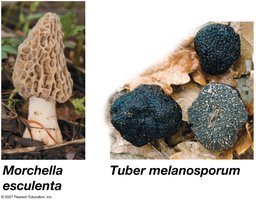
Ascomycetes include yeasts, molds, morels, truffles, and cup fungi. They reproduce sexually via saclike asci that produce haploid ascospores, and asexually via conidia formed on conidiophores.
Basidiomycetes (Club Fungi)
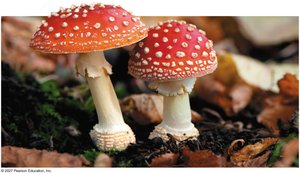
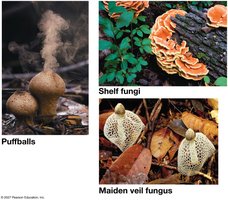
Basidiomycetes include mushrooms, puffballs, shelf fungi, and plant pathogens. They are important decomposers, especially of wood. Sexual reproduction involves basidiocarps (fruiting bodies) containing basidia, where karyogamy and meiosis produce basidiospores.
Fairy Rings
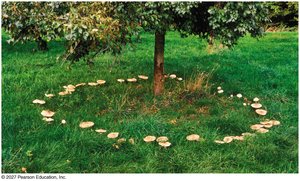
Fairy rings are circular patterns of mushrooms formed as an underground mycelium expands outward, producing fruiting bodies at the periphery.
Ecological Roles of Fungi
Fungi as Decomposers
Fungi decompose complex organic materials, such as cellulose and lignin, releasing nutrients back into the environment and playing a critical role in nutrient cycling.
Fungus-Plant Mutualisms: Endophytes
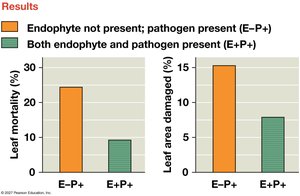
Endophytes are fungi that live within healthy plant tissues, often providing benefits such as increased resistance to herbivores and environmental stress. Many endophytes are ascomycetes.
Fungus–Animal Mutualisms
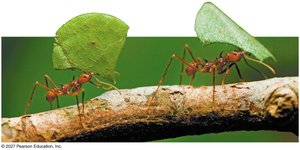
Some fungi form mutualistic relationships with animals. For example, leaf-cutter ants cultivate fungi as a food source, and in return, the fungi help digest plant material for the ants.
Lichens
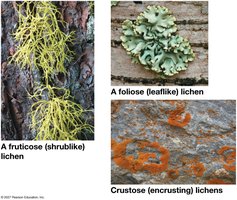
Lichens are symbiotic associations between fungi (usually ascomycetes) and photosynthetic partners (green algae or cyanobacteria). Lichens grow in three main forms: fruticose (shrub-like), foliose (leaf-like), and crustose (encrusting). The fungus provides structure and protection, while the photosynthetic partner supplies organic carbon and sometimes fixes nitrogen.
Ecological Importance of Lichens
Lichens are often pioneer species, colonizing bare rock and contributing to soil formation, thus facilitating the establishment of other organisms.
Fungi as Parasites and Pathogens
Many fungi are parasites or pathogens, causing diseases in plants and animals. Fungal pathogens can devastate crops and produce toxins that contaminate food supplies. Chytrid fungi, for example, have caused significant declines in amphibian populations worldwide.
Practical Uses of Fungi
Food: Edible mushrooms and fungi used in cheese production.
Fermentation: Yeasts are essential for making bread, beer, and wine.
Medicine: Penicillium produces penicillin, a widely used antibiotic.
Biotechnology: Genetically engineered yeasts produce proteins for medical and research applications.
