 Indietro
Fungi: Structure, Function, Diversity, and Ecological Roles
Guida di studio - Note intelligenti
 Appunti personalizzati basati sui tuoi materiali, ampliati con definizioni chiave, esempi e contesto.
Fungi: Structure, Function, Diversity, and Ecological Roles
Overview: Mighty Mushrooms
Fungi are a diverse kingdom of organisms that play essential roles in ecosystems, ranging from decomposers to mutualists and pathogens. They can be single-celled or multicellular, and their presence is often hidden beneath the surface, as in the case of the honey mushroom Armillaria ostoyae, whose mycelium covers vast areas and has persisted for centuries.
Species Diversity: Over 100,000 species described; estimates suggest up to 1.5 million species exist.
Ecological Importance: Fungi decompose organic matter, recycle nutrients, and form mutualistic relationships with plants.
Human Uses: Fungi are cultivated for food, antibiotics, bread, beer, and wine production.
Pathogenic Fungi: Some fungi cause diseases in plants and animals.
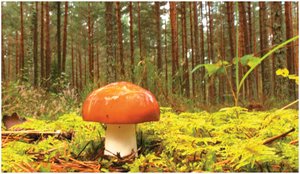
Figure: Mushrooms, such as the one shown, are the fruiting bodies of fungi and play a key role in nutrient cycling within forest ecosystems.
Concept 31.1: Fungi are Heterotrophs that Feed by Absorption
Fungi obtain nutrients by absorption, using enzymes to break down complex molecules outside their bodies and then absorbing the resulting simple compounds.
Absorptive Nutrition: Fungi secrete hydrolytic enzymes to digest food externally.
Ecological Roles:
Decomposers: Break down nonliving organic material.
Parasites: Absorb nutrients from living hosts; many are pathogenic.
Mutualists: Benefit their hosts, e.g., mycorrhizal fungi with plants.
Body Structure:
Hyphae: Filamentous structures forming a mycelium, maximizing surface area for absorption.
Cell Walls: Composed mainly of chitin.
Septa: Cross walls dividing hyphae into cells; coenocytic fungi lack septa.
Specialized Hyphae: Haustoria for feeding on hosts; mycorrhizae for mutualism with plants.
Mycorrhizae: Symbiotic relationships between fungi and plant roots, enhancing nutrient uptake.
Example: Foresters inoculate pine seedlings with ectomycorrhizal fungi to promote growth.
Concept 31.2: Fungi Produce Spores Through Sexual or Asexual Life Cycles
Fungi reproduce by producing spores, which can be generated sexually or asexually. Spores are dispersed by wind or water and germinate in suitable environments.
Sexual Reproduction:
Pheromones: Signal between genetically distinct mycelia.
Plasmogamy: Fusion of cytoplasm from two parent mycelia.
Heterokaryon: Mycelium with coexisting, genetically distinct nuclei.
Dikaryotic Stage: Cells with two nuclei, one from each parent.
Karyogamy: Fusion of nuclei to form diploid cells, followed by meiosis to produce spores.
Asexual Reproduction:
Molds: Filamentous fungi producing haploid spores by mitosis.
Yeasts: Single-celled fungi reproducing by cell division or budding.
Deuteromycetes: Fungi with no known sexual stage.
Example: Puffballs release trillions of spores; yeasts are used in bread and beer production.
Concept 31.3: The Ancestor of Fungi Was an Aquatic, Single-Celled, Flagellated Protist
Paleontological and molecular evidence suggests that fungi evolved from unicellular, flagellated protists and are more closely related to animals than to plants.
Opisthokonts: Clade including fungi, animals, and their protist relatives, characterized by a posterior flagellum.
Chytrids: Early-diverging fungi with flagellated spores.
Microsporidia: Unicellular parasites, possibly early-diverging fungi.
Adaptive Radiation: Fungi diversified as multicellular life colonized land, forming mycorrhizal relationships with early plants.
Example: Fossils of early vascular plants show evidence of mycorrhizae.
Concept 31.4: Fungi Have Radiated into a Diverse Set of Lineages
Fungi are classified into several major groups based on molecular and morphological evidence, each with unique reproductive and ecological characteristics.
Chytridiomycota (Chytrids): Flagellated spores, decomposers, parasites, and mutualists.
Zygomycota (Zygomycetes): Fast-growing molds, coenocytic hyphae, resistant zygosporangia.
Glomeromycota (Glomeromycetes): Form arbuscular mycorrhizae, mutualists with most plants.
Ascomycota (Ascomycetes): Sac fungi, produce spores in asci, important decomposers and pathogens, form lichens.
Basidiomycota (Basidiomycetes): Club fungi, mushrooms, puffballs, shelf fungi, long-lived dikaryotic mycelia, efficient wood decomposers.
Example: Neurospora crassa is a model organism for genetic research; basidiomycetes produce mushrooms and fairy rings.
Concept 31.5: Fungi Play Key Roles in Nutrient Cycling, Ecological Interactions, and Human Welfare
Fungi are essential for nutrient cycling, forming symbiotic relationships, and impacting human health and industry.
Decomposers: Break down cellulose and lignin, recycle nutrients.
Mutualists: Mycorrhizae with plants, endophytes in leaves, symbionts with animals.
Lichens: Symbiotic associations of fungi and photosynthetic partners, pioneers in ecological succession.
Pathogens: Cause diseases in plants and animals; some produce toxins harmful to humans.
Commercial Importance: Food production (mushrooms, cheeses, bread, beer), antibiotics (penicillin), biotechnology (genetically modified fungi).
Fungal Role | Example | Ecological/Commercial Impact |
|---|---|---|
Decomposer | Basidiomycetes breaking down wood | Recycling nutrients, soil formation |
Mutualist | Mycorrhizal fungi with plants | Enhanced plant growth, agriculture |
Pathogen | Ascomycete causing chestnut blight | Forest loss, crop damage |
Commercial | Yeast in bread and beer | Food production, biotechnology |
Example: Penicillium produces penicillin; Saccharomyces is used in genetic research and food production.
Additional info: Fungi are increasingly used in bioremediation and molecular biology, with ongoing research into their genomes and metabolic pathways.
