 Indietro
Fungi: Structure, Nutrition, Life Cycle, and Diversity
Guida di studio - Note intelligenti
 Appunti personalizzati basati sui tuoi materiali, ampliati con definizioni chiave, esempi e contesto.
Fungi: Structure, Nutrition, Life Cycle, and Diversity
Introduction to Fungi
Fungi are a diverse kingdom of eukaryotic organisms that play essential roles in ecosystems as decomposers, mutualists, and pathogens. They are more closely related to animals than to plants and are classified within the Opisthokonts clade.
Key Nutritional and Ecological Features of Fungi
Heterotrophic Nutrition: Fungi absorb nutrients from their environment by secreting enzymes that break down complex organic matter into smaller molecules.
Ecological Importance: Fungi are crucial decomposers, recycling nutrients in terrestrial ecosystems. They also form mutualistic relationships with plants (mycorrhizae), algae, cyanobacteria (lichens), and animals.
Diversity: About 145,000 species have been described, but estimates suggest there may be 2–3 million species.
Fungal Body Structure
Cell Walls: Fungal cell walls contain chitin, a strong, flexible polysaccharide.
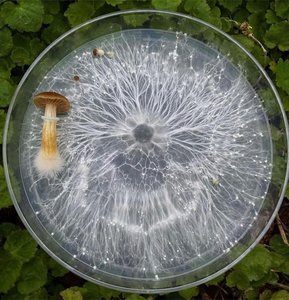
Growth Forms: Most fungi grow as multicellular filaments called hyphae, which form a network called a mycelium. Some fungi are unicellular (yeasts), and some can alternate between forms.
Hyphal Structure: Hyphae may be divided by cross-walls called septa (septate hyphae), or lack septa (coenocytic hyphae), resulting in a continuous cytoplasmic mass with many nuclei.
Specialized Hyphae and Mycorrhizae
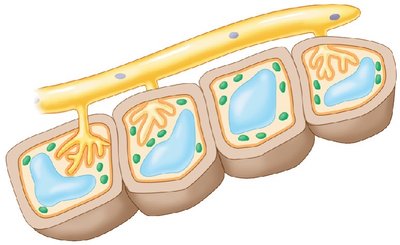
Mycorrhizal Fungi: These fungi form mutualistic associations with plant roots, enhancing nutrient and water uptake for the plant while receiving carbohydrates in return.
Arbuscules: Specialized hyphae called arbuscules penetrate plant cell walls to facilitate nutrient exchange.
Fungal Life Cycle
The fungal life cycle is complex and varies among groups, but generally includes both sexual and asexual reproduction.
Haploid Dominance: Most of the fungal life cycle is haploid, with a brief diploid stage during sexual reproduction.
Sexual Reproduction: Involves the fusion of hyphae from different mating types (plasmogamy), followed by nuclear fusion (karyogamy) and meiosis to produce genetically diverse spores.
Asexual Reproduction: Many fungi reproduce asexually by producing spores through mitosis. Yeasts reproduce by budding.
Key Terms:
Plasmogamy: Fusion of cytoplasm from two parent mycelia.
Karyogamy: Fusion of nuclei to form a diploid zygote.
Heterokaryotic Stage: Stage where cells contain two or more genetically distinct nuclei.
Origins and Evolution of Fungi
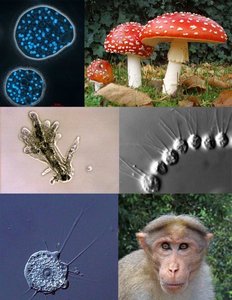
Evolutionary Relationships: Fungi are more closely related to animals than to plants. Both belong to the Opisthokonts clade, sharing a common ancestor with unicellular, flagellated protists.
Multicellularity: DNA evidence suggests that multicellularity evolved independently in fungi and animals.
Fungal Diversity
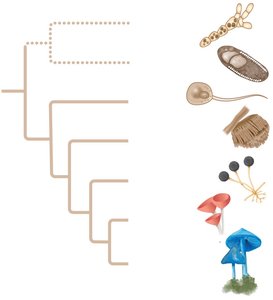
Molecular analyses have clarified the evolutionary relationships among major fungal groups. The main phyla include:
Chytrids: Aquatic fungi with flagellated spores (zoospores); can be decomposers, parasites, or mutualists.
Zoopagomycetes: Mostly parasites or commensals of animals.
Mucoromycetes: Fast-growing molds and mycorrhizal fungi.
Ascomycetes: "Sac fungi" producing spores in sac-like asci; includes morels, truffles, and many yeasts.
Basidiomycetes: "Club fungi" with basidia; includes mushrooms, puffballs, and shelf fungi.
Key Roles of Fungi in Ecosystems and for Humans
Decomposers: Fungi break down complex organic materials, recycling nutrients such as carbon and nitrogen.
Mutualists: Mycorrhizal fungi and lichens (fungus + photosynthetic partner) are essential for plant health and ecosystem stability.
Pathogens: About 30% of fungi are parasites or pathogens, affecting plants, animals, and humans (e.g., mycoses).
Human Uses: Fungi are used in food production (yeast in bread and beer), antibiotics (Penicillium), and biotechnology.
Examples and Applications
Morels and Truffles: Edible ascomycetes highly valued in cuisine.
Penicillium: Source of the antibiotic penicillin.
Yeast: Saccharomyces cerevisiae is used in baking and brewing.
Lichens: Symbiotic associations important for soil formation and as bioindicators of air quality.
Summary Table: Major Fungal Groups
Phylum | Key Features | Examples |
|---|---|---|
Chytridiomycota | Flagellated spores (zoospores), aquatic | Chytrids |
Zoopagomycota | Animal parasites/commensals | Entomophthora |
Mucoromycota | Fast-growing molds, mycorrhizae | Rhizopus |
Ascomycota | Sac-like asci, ascocarps, diverse habitats | Morels, truffles, yeasts |
Basidiomycota | Basidia, basidiocarps, decomposers | Mushrooms, puffballs |
Additional info: Fungi are essential for the health of terrestrial ecosystems, and their study provides insights into evolution, ecology, and biotechnology.
