 Indietro
Gene Expression: Transcription and Translation
Guida di studio - Note intelligenti
 Appunti personalizzati basati sui tuoi materiali, ampliati con definizioni chiave, esempi e contesto.
Gene Expression: The Central Dogma
Overview of the Central Dogma
The Central Dogma of molecular biology describes the flow of genetic information within a cell: DNA is transcribed into RNA, which is then translated into protein. This process is fundamental to all living organisms and explains how genes direct the synthesis of proteins, which carry out cellular functions.
DNA serves as the genetic blueprint.
RNA acts as the intermediary, carrying instructions from DNA to the ribosome.
Proteins are the functional products, synthesized according to the RNA sequence.
Some genes code for RNA molecules that are not translated into proteins (e.g., rRNA, tRNA).
Transcription: DNA to RNA
Mechanism of Transcription
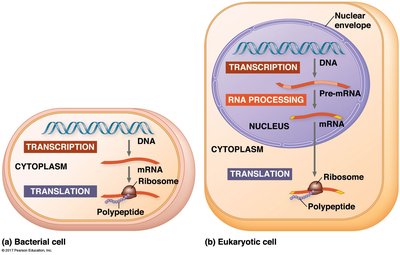
Transcription is the process by which a segment of DNA is copied into RNA by the enzyme RNA polymerase. In eukaryotes, this occurs in the nucleus, while in prokaryotes it occurs in the cytoplasm.
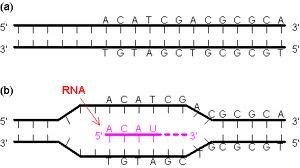
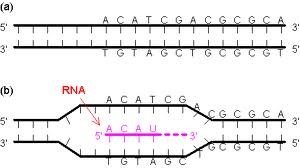
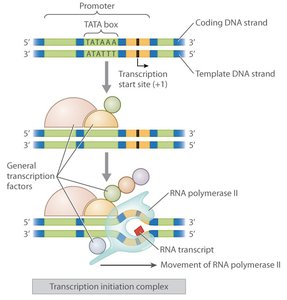
Template strand: Only one strand of DNA is used as the template for RNA synthesis.
Coding strand: The non-template strand has the same sequence as the RNA (except T is replaced by U).
RNA polymerase synthesizes RNA in the 5' → 3' direction, moving along the template strand in the 3' → 5' direction.
Three phases: Initiation, Elongation, Termination.
Regulation of Transcription
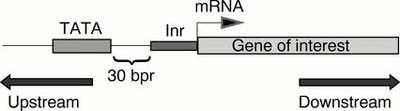
Transcription is tightly regulated to ensure genes are expressed only when needed. Promoters and transcription factors play key roles in this regulation.
Promoter: DNA sequence where RNA polymerase binds to initiate transcription.
TATA box: Common promoter element in eukaryotes.
Transcription factors: Proteins that help RNA polymerase recognize and bind to the promoter.
Terminator: Sequence signaling the end of transcription.
RNA Processing in Eukaryotes
mRNA Processing
In eukaryotes, the initial RNA transcript (pre-mRNA) undergoes several modifications before becoming mature mRNA. These modifications are essential for stability, export, and translation.
5' cap: Modified guanine added to the 5' end.
Poly-A tail: 50-250 adenine nucleotides added to the 3' end.
Splicing: Removal of introns (non-coding regions) and joining of exons (coding regions).
These modifications protect mRNA from degradation and facilitate export from the nucleus.

Translation: RNA to Protein
Mechanism of Translation
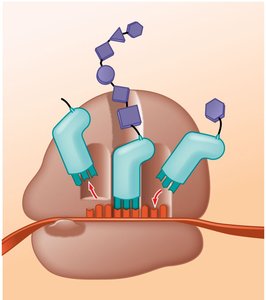
Translation is the process by which the sequence of an mRNA is decoded to produce a polypeptide (protein). This occurs in the cytoplasm at the ribosome.
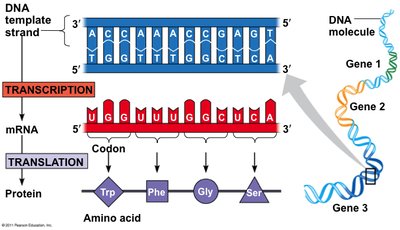
mRNA: Provides the codon sequence.
Ribosome: Site of protein synthesis, composed of rRNA and proteins.
tRNA: Transfers amino acids to the ribosome, matching codons with anticodons.
Three stages: Initiation, Elongation, Termination.
The Genetic Code
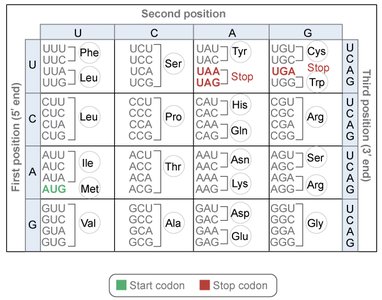
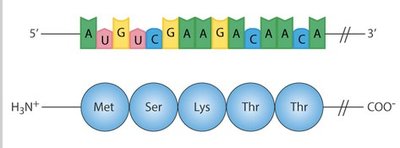
The genetic code is a set of rules by which information encoded in mRNA is translated into proteins. It is universal, degenerate, and non-ambiguous.
Codon: Sequence of three mRNA nucleotides that codes for an amino acid.
There are 64 possible codons for 20 amino acids.
Start codon: AUG (methionine), sets the reading frame.
Stop codons: UAA, UAG, UGA, signal termination of translation.
Degeneracy: Multiple codons can code for the same amino acid.
Non-ambiguity: Each codon specifies only one amino acid.
Mutations and Their Effects
Types of Mutations
Mutations are permanent changes in the DNA sequence. They can affect gene expression and protein function in various ways.
Point mutation: Change in a single base pair.
Silent mutation: Does not change the amino acid.
Missense mutation: Changes one amino acid to another.
Nonsense mutation: Creates a premature stop codon.
Insertion/Deletion: Adds or removes bases, often causing frameshifts.
Mutations are heritable only if they occur in germ cells.
Comparison of Prokaryotic and Eukaryotic Gene Expression
Key Differences
Gene expression differs between prokaryotes and eukaryotes in terms of genome structure, regulation, and processing.
Prokaryotes: One main circular chromosome, DNA is naked, compact genome, transcription and translation occur simultaneously.
Eukaryotes: Multiple linear chromosomes, DNA wrapped around histones, large genome with less coding DNA, transcription in nucleus, translation in cytoplasm, mRNA processing required.
Summary Table: Types of RNA
Type of RNA | Function | Unique Feature |
|---|---|---|
mRNA | Carries genetic code from DNA to ribosome | Only RNA translated into protein; has codons |
rRNA | Structural and catalytic component of ribosome | Forms ribosome structure; not translated |
tRNA | Transfers amino acids to ribosome | Has anticodon; not translated |
Summary Table: Types of Mutations
Mutation Type | Description | Effect |
|---|---|---|
Silent | Base change does not alter amino acid | No effect on protein |
Missense | Base change alters amino acid | Protein may be altered |
Nonsense | Base change creates stop codon | Protein truncated |
Insertion/Deletion | Adds/removes bases | Frameshift, often drastic effect |
Key Equations and Concepts
Transcription direction: RNA is synthesized 5' → 3', template strand is read 3' → 5'.
Translation direction: mRNA is read 5' → 3', polypeptide is built N-terminus to C-terminus.
Base pairing rules: A-U, G-C in RNA; A-T, G-C in DNA.
Example equation:
