 Indietro
Lecture 26: Gene Expression: Transcription and Translation
Guida di studio - Note intelligenti
 Appunti personalizzati basati sui tuoi materiali, ampliati con definizioni chiave, esempi e contesto.
Gene Expression: Transcription and Translation
Introduction to Gene Expression
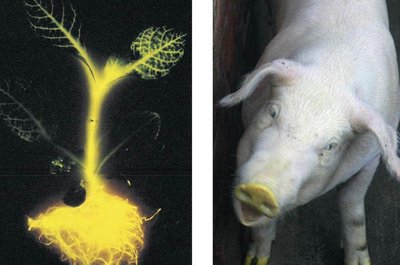
Gene expression is the process by which information from a gene is used to synthesize functional gene products, typically proteins. This process involves two main stages: transcription (the synthesis of RNA from DNA) and translation (the synthesis of proteins from RNA). The genetic code is nearly universal, allowing genes from one organism to be expressed in another.
Genetic code: The set of rules by which information encoded in genetic material (DNA or RNA sequences) is translated into proteins by living cells.
Universality: The genetic code is shared by almost all organisms, from bacteria to animals.
Transgenic organisms: Genes can be transplanted between species, as demonstrated by organisms expressing foreign genes (e.g., a pig expressing a jellyfish gene).
Transcription: DNA-Directed Synthesis of RNA
Mechanism of Transcription
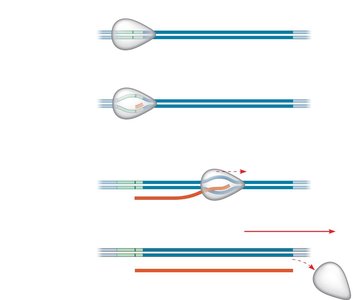
Transcription is the process by which a segment of DNA is used as a template to generate a complementary RNA strand. This process is catalyzed by the enzyme RNA polymerase.
RNA polymerase: Enzyme that separates DNA strands and synthesizes RNA without the need for a primer.
Base-pairing rules: RNA synthesis follows the same base-pairing rules as DNA, except uracil (U) replaces thymine (T).
Stages of transcription: Initiation, elongation, and termination.
Transcription Initiation
Transcription begins at a specific DNA sequence called the promoter. RNA polymerase binds to the promoter, unwinds the DNA, and starts RNA synthesis at the start point.
Promoter: DNA sequence where RNA polymerase attaches and initiates transcription.
Template strand: The DNA strand that is transcribed into RNA.
RNA Processing in Eukaryotes
In eukaryotes, the primary RNA transcript (pre-mRNA) undergoes several modifications before becoming mature mRNA:
5' cap: A modified guanine nucleotide added to the 5' end of the pre-mRNA.
Poly-A tail: A string of 50–250 adenine nucleotides added to the 3' end.
Functions: These modifications facilitate mRNA export from the nucleus, protect mRNA from degradation, and help ribosomes attach for translation.
Translation: RNA-Directed Synthesis of Polypeptides
Overview of Translation
Translation is the process by which the sequence of bases in mRNA is decoded to produce a specific sequence of amino acids, forming a polypeptide. This process occurs in the cytoplasm and involves ribosomes, tRNA, and various protein factors.
mRNA: Carries the genetic code from DNA to the ribosome.
tRNA: Transfers specific amino acids to the growing polypeptide chain.
Ribosome: The molecular machine that facilitates the coupling of tRNA anticodons with mRNA codons.
The Structure and Function of tRNA
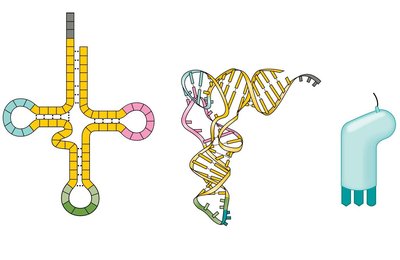
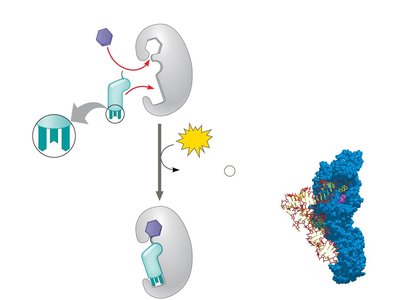
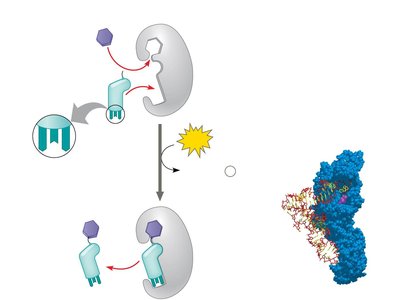
Transfer RNA (tRNA) molecules are adapters that match amino acids to codons in mRNA. Each tRNA has a specific anticodon and carries a corresponding amino acid.
Anticodon: A sequence of three bases on tRNA that pairs with a complementary mRNA codon.
Aminoacyl-tRNA synthetase: Enzyme that attaches the correct amino acid to its tRNA.
Wobble: Flexible base pairing at the third position of the codon, allowing some tRNAs to recognize multiple codons.
Ribosomes and Their Role in Translation
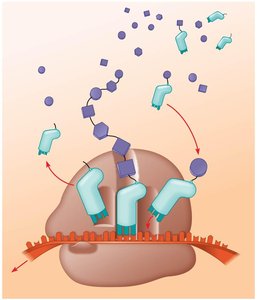
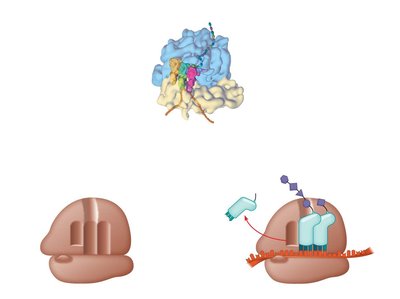
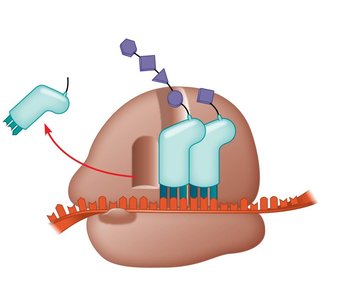
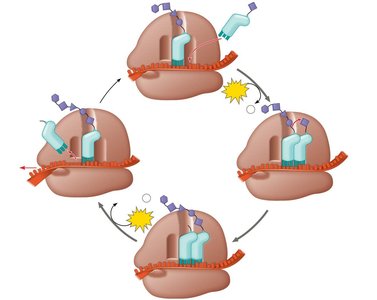
Ribosomes are composed of two subunits (large and small) and are made of proteins and ribosomal RNA (rRNA). They have three binding sites for tRNA:
P site: Holds the tRNA carrying the growing polypeptide chain.
A site: Holds the tRNA carrying the next amino acid to be added.
E site: Exit site for discharged tRNAs.

Stages of Translation
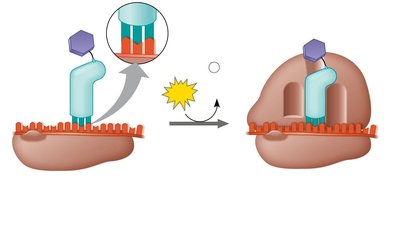
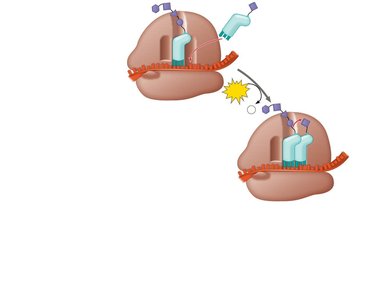
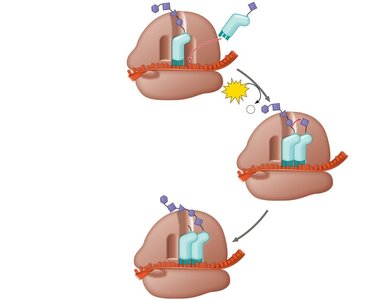
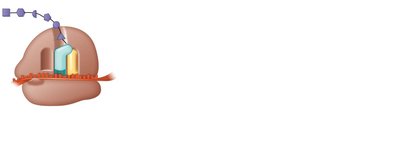
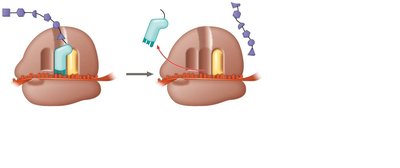
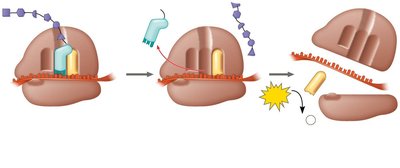
Translation occurs in three main stages: initiation, elongation, and termination. Each stage requires specific protein factors and, in some steps, energy in the form of GTP.
Initiation: Assembly of the translation initiation complex (mRNA, initiator tRNA, and ribosomal subunits).
Elongation: Addition of amino acids to the growing polypeptide chain through codon recognition, peptide bond formation, and translocation.
Termination: Release of the completed polypeptide when a stop codon is reached.
Mutations and Their Effects on Gene Expression
Types of Mutations
Mutations are changes in the genetic material of a cell. They can affect protein structure and function, sometimes resulting in genetic disorders or hereditary diseases.
Point mutations: Chemical changes in a single base pair of a gene.
Nucleotide-pair substitutions: Replacement of one nucleotide and its partner with another pair.
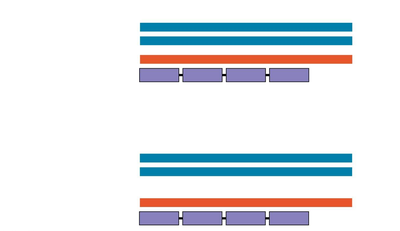
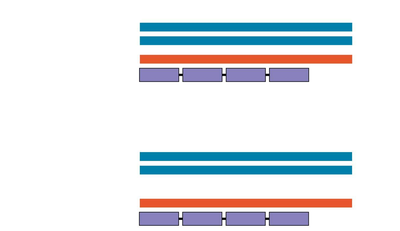
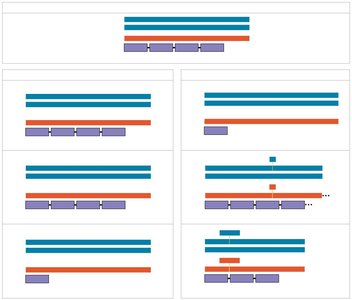
Insertions and deletions: Additions or losses of nucleotide pairs, often causing frameshift mutations.

Consequences of Mutations
Silent mutations: No effect on the amino acid sequence due to redundancy in the genetic code.
Missense mutations: Change one amino acid to another, possibly altering protein function.
Nonsense mutations: Change an amino acid codon to a stop codon, leading to a truncated, usually nonfunctional protein.
Frameshift mutations: Result from insertions or deletions that alter the reading frame, often producing nonfunctional proteins.
Sources of Mutations
Mutations can arise spontaneously during DNA replication, recombination, or repair, or be induced by mutagens (physical, chemical, or biological agents).
Physical mutagens: Radiation (UV, X-ray, gamma rays).
Chemical mutagens: Substances like asbestos or ethidium bromide (EtBr).
Biological mutagens: Certain bacteria (e.g., Helicobacter pylori) and viruses.
Summary Table: Types of Point Mutations and Their Effects
Mutation Type | Definition | Effect on Protein |
|---|---|---|
Silent | Change in nucleotide that does not alter amino acid | No effect |
Missense | Change in nucleotide that changes one amino acid | May alter protein function |
Nonsense | Change in nucleotide that creates a stop codon | Usually produces nonfunctional protein |
Frameshift | Insertion or deletion that shifts the reading frame | Usually produces nonfunctional protein |
Key Equations and Concepts
Central Dogma of Molecular Biology:
Codon-Anticodon Pairing:
Example: If the DNA coding sequence is TCT, the mRNA codon is AGA, and the tRNA anticodon is UCU.
Additional info: This guide covers the core concepts of gene expression, including the molecular mechanisms of transcription and translation, the structure and function of tRNA and ribosomes, and the impact of mutations on protein synthesis. Understanding these processes is fundamental to molecular biology and genetics.
