 Indietro
General Biology Exam 1 Study Guide: Chapters 1–6
Guida di studio - Note intelligenti
 Appunti personalizzati basati sui tuoi materiali, ampliati con definizioni chiave, esempi e contesto.
Chapter 1: Evolution, Themes of Biology, and Scientific Inquiry
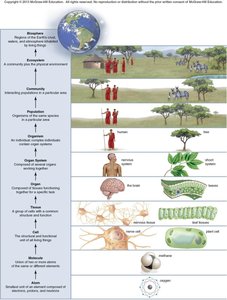
Levels of Biological Organization
The study of biology encompasses a hierarchy of structural levels, from the smallest atoms to the entire biosphere. Understanding these levels is fundamental to grasping biological complexity.
Atom: The smallest unit of matter.
Molecule: Two or more atoms bonded together.
Organelle: Specialized structures within cells.
Cell: Basic unit of life; can be prokaryotic or eukaryotic.
Tissue: Groups of similar cells performing a function.
Organ: Structure composed of tissues working together.
Organ System: Group of organs performing major body functions.
Organism: Individual living entity.
Population: Group of organisms of the same species.
Community: Multiple populations interacting.
Ecosystem: Community plus its physical environment.
Biosphere: All ecosystems on Earth.
Homeostasis and Feedback Mechanisms
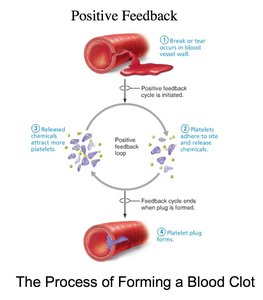
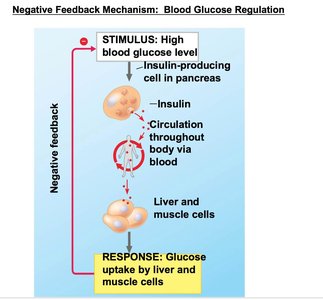
Homeostasis is the maintenance of stable internal conditions. Biological systems use feedback mechanisms to self-regulate.
Negative Feedback: The process slows or stops as the product accumulates. Example: Blood glucose regulation by insulin.
Positive Feedback: The process speeds up as more product accumulates. Example: Blood clotting.
Scientific Method
The scientific method is a systematic approach to inquiry in biology.
Observation: Gathering information.
Question: Formulating testable questions.
Hypothesis: Testable and falsifiable statement.
Experiment: Testing hypothesis with controlled variables.
Data Collection: Gathering qualitative or quantitative data.
Analysis: Interpreting results.
Conclusion: Accepting or rejecting hypothesis.
Variables in Experimental Design
Experiments involve manipulating and measuring variables.
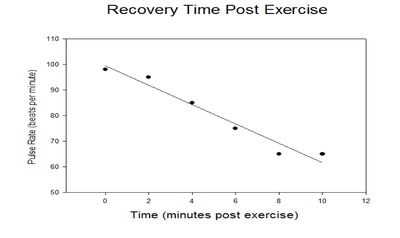
Independent Variable: Manipulated by the scientist; graphed on x-axis.
Dependent Variable: Measured response; graphed on y-axis.
Control Variable: Kept constant to ensure fair testing.
Data Types
Biological data can be qualitative (descriptive) or quantitative (numerical).
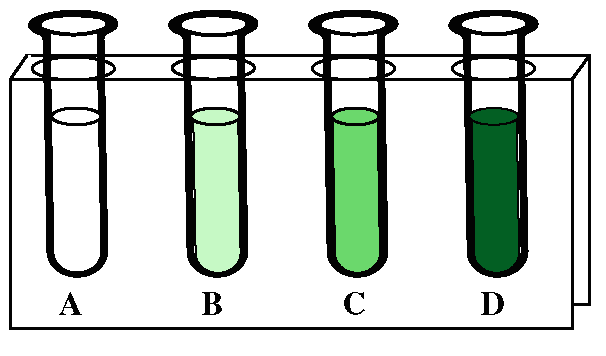
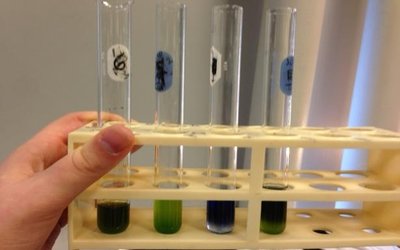
Qualitative Data: Descriptions, e.g., color intensity.
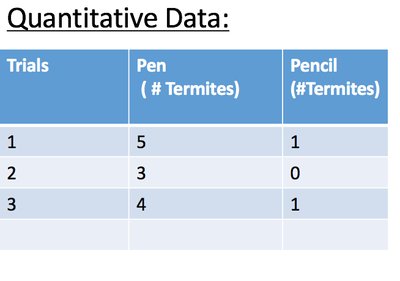
Quantitative Data: Measurements, e.g., height, weight.
Trials | Pen (# Termites) | Pencil (# Termites) |
|---|---|---|
1 | 5 | 1 |
2 | 3 | 0 |
3 | 4 | 1 |
Laws, Theories, and Hypotheses
Biological knowledge is organized into hypotheses, theories, and laws.
Hypothesis: Tentative explanation; must be testable and falsifiable.
Theory: Broad explanation supported by evidence.
Law: Describes observed patterns, often mathematical.
Chapter 2: The Chemical Context of Life
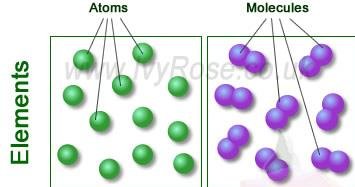
Atoms, Elements, and Molecules
All matter is composed of atoms, which combine to form elements and molecules.
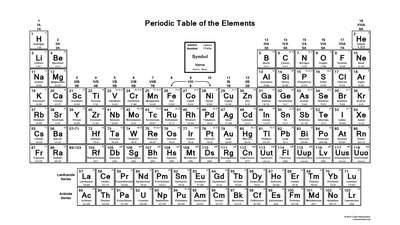
Atom: Smallest unit of an element.
Element: Substance that cannot be broken down chemically.
Molecule: Two or more atoms bonded together.
Compound: Molecule with atoms from different elements.
Atomic Structure
Atoms consist of protons, neutrons, and electrons.
Protons: Positive charge, in nucleus.
Neutrons: Neutral, in nucleus.
Electrons: Negative charge, orbit nucleus.
Atomic Number: Number of protons.
Atomic Mass: Protons + Neutrons.
Isotopes: Atoms with different neutron numbers.
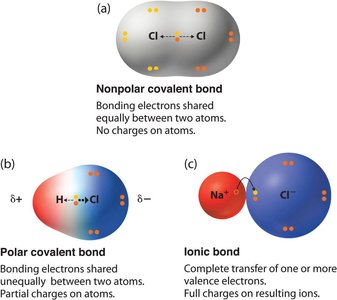
Chemical Bonds
Atoms form bonds to achieve stable electron configurations.
Covalent Bonds: Electron pairs shared; can be nonpolar or polar.
Nonpolar Covalent: Electrons shared equally.
Polar Covalent: Electrons shared unequally.
Ionic Bonds: Transfer of electrons; attraction between cation and anion.
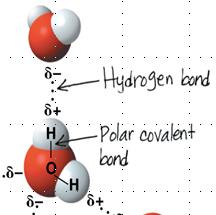
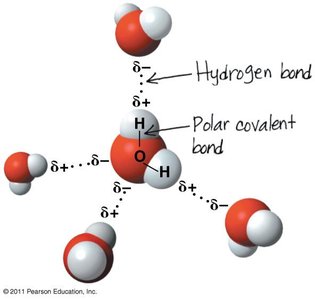
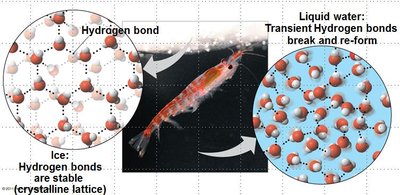
Hydrogen Bonds: Weak attraction between hydrogen and electronegative atom.
Van der Waals Forces: Weak interactions between molecules.
Chapter 3: Water and Life
Structure and Properties of Water
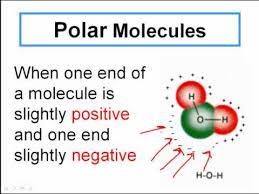
Water is a polar molecule, enabling hydrogen bonding and unique properties essential for life.
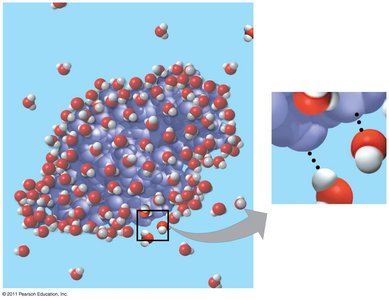
Cohesion: Water molecules stick together.
Adhesion: Water molecules stick to other substances.
Surface Tension: Cohesion at the surface.
Moderation of Temperature: High specific heat and heat of vaporization.
Expansion upon Freezing: Ice is less dense than liquid water.
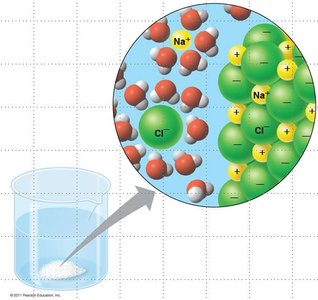
Versatility as a Solvent: Dissolves polar and ionic substances.
Acids, Bases, and pH
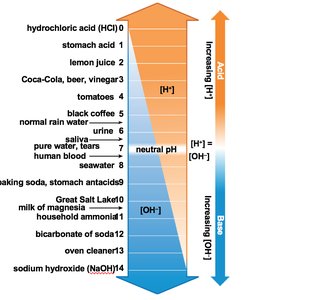
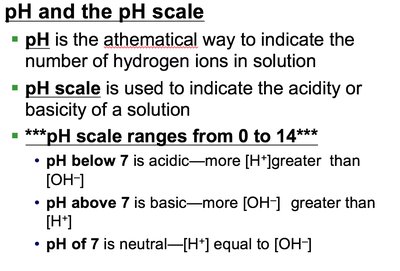
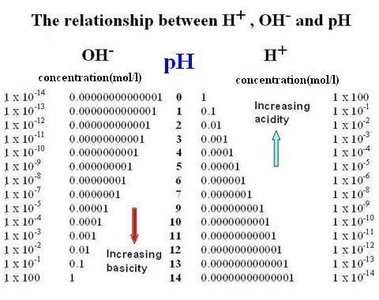
The pH scale measures the concentration of hydrogen ions in solution.
Acid: Increases [H+]; pH < 7.
Base: Decreases [H+]; pH > 7.
Neutral: pH = 7.
Buffer: Minimizes changes in pH.
Key Equations:
Ocean Acidification
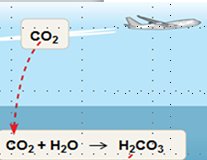
Burning fossil fuels increases atmospheric CO2, which dissolves in oceans, forming carbonic acid and reducing carbonate availability for marine organisms.
Chapter 4: Carbon and the Molecular Diversity of Life
Isomers and Enantiomers
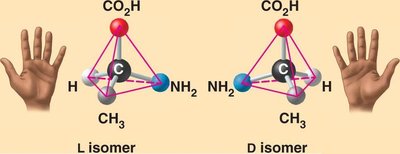
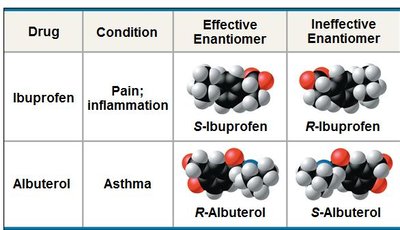
Isomers are compounds with the same formula but different structures. Enantiomers are mirror-image isomers, important in pharmaceuticals.
Functional Groups
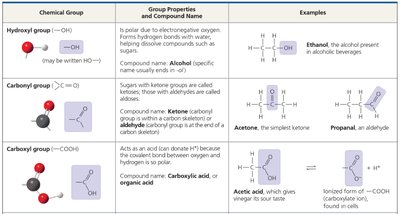
Functional groups are specific groups of atoms within molecules that determine their chemical properties.
Hydroxyl
Carbonyl
Carboxyl
Amino
Sulfhydryl
Phosphate
Methyl
Chapter 5: The Structure and Function of Large Biological Molecules
Macromolecules and Polymers
Living organisms are composed of four major classes of macromolecules: carbohydrates, lipids, proteins, and nucleic acids.
Carbohydrates: Energy storage and structural support.
Lipids: Energy storage, membrane structure; not polymers.
Proteins: Enzymes, structure, transport, defense.
Nucleic Acids: Genetic information storage and transfer.
Carbohydrates
Carbohydrates are polymers of monosaccharides. They are formed by dehydration synthesis and broken down by hydrolysis.
Monosaccharide: Simple sugar.
Disaccharide: Two monosaccharides.
Polysaccharide: Many monosaccharides.
Alpha vs Beta Linkages: Alpha (starch), Beta (cellulose).
Lipids
Lipids are hydrophobic molecules, including fats, phospholipids, and steroids. They do not form polymers.
Saturated Fats: No double bonds; solid at room temperature.
Unsaturated Fats: Double bonds; liquid at room temperature.
Amphipathic: Both hydrophobic and hydrophilic regions.
Proteins
Proteins are polymers of amino acids, joined by peptide bonds. They have diverse functions and complex structures.
Amino Acids: 20 types, classified as nonpolar, polar, acidic, or basic.
Peptide Bond: Covalent bond between amino acids.
Levels of Structure: Primary, secondary, tertiary, quaternary.
Denaturation: Loss of structure due to environmental changes.
Chaperonins: Assist in protein folding.
Nucleic Acids
Nucleic acids (DNA and RNA) are polymers of nucleotide monomers. They store and transmit genetic information.
Nucleotide: Phosphate + pentose sugar + nitrogenous base.
Complementary Base Pairing: A-T, C-G in DNA.
Antiparallel Structure: Two strands run in opposite directions.
Chapter 6: A Tour of the Cell
Basic Features of All Cells
All cells share certain features, including cytosol, chromosomes, ribosomes, and a plasma membrane.
Cytosol: Semifluid substance inside cells.
Chromosomes: Carry genetic information.
Ribosomes: Synthesize proteins.
Plasma Membrane: Selective barrier for transport.
Prokaryotes vs Eukaryotes
Cells are classified as prokaryotic or eukaryotic based on their internal structure.
Prokaryotes: No nucleus, no membrane-bound organelles. Examples: Bacteria, Archaea.
Eukaryotes: True nucleus, membrane-bound organelles. Examples: Protists, Fungi, Plants, Animals.
Plant vs Animal Cells
Both are eukaryotic, but have distinct features.
Plant Cells: Cell wall, central vacuole, chloroplasts, lack centrosomes.
Animal Cells: Lack cell wall, lack central vacuole, lack chloroplasts, have centrosomes.
Cell Organelles
Organelles perform specialized functions within eukaryotic cells.
Nucleus: Contains DNA.
Mitochondria: Energy production.
Chloroplasts: Photosynthesis (plants).
Endoplasmic Reticulum: Protein and lipid synthesis.
Golgi Apparatus: Protein modification and sorting.
Lysosomes: Digestion of macromolecules.
Vacuoles: Storage and structure (plants).
Additional info: These notes expand on brief review points to provide a comprehensive, exam-focused summary of the main concepts from Chapters 1–6 in General Biology, including definitions, examples, and relevant diagrams.
