 Indietro
General Biology Exam I Study Guide: Foundations, Chemistry, Macromolecules, and Cells
Guida di studio - Note intelligenti
 Appunti personalizzati basati sui tuoi materiali, ampliati con definizioni chiave, esempi e contesto.
Introduction to Biology and Cell Theory
Cell Theory
The cell theory is a fundamental concept in biology that describes the properties of cells, the basic unit of life.
All living organisms are composed of one or more cells.
All cells arise from pre-existing cells.
This theory disproved earlier ideas such as spontaneous generation, which suggested that life could arise from non-living matter.
Spontaneous Generation and Pasteur's Experiment
Spontaneous generation was the hypothesis that living organisms could arise from non-living matter. Louis Pasteur's experiment using swan-neck flasks demonstrated that microorganisms do not spontaneously arise, but come from other microorganisms, supporting the cell theory.
The Central Dogma of Molecular Biology
The central dogma describes the flow of genetic information within a biological system:
DNA is transcribed into RNA.
RNA is translated into protein.
This process explains how genetic information is expressed as cellular function.

Theory vs. Hypothesis
Theory: A broad, well-supported explanation for a wide range of phenomena (e.g., cell theory, evolution).
Hypothesis: A specific, testable prediction about the outcome of an experiment or observation.
Basic Chemistry for Biology
Atoms, Elements, and Compounds
Understanding the chemical context of life is essential for biology.
Atom: The smallest unit of an element, consisting of protons, neutrons, and electrons.
Element: A substance made of only one kind of atom (e.g., O2).
Compound: A substance formed from two or more elements in fixed ratios (e.g., H2O).
Molecule: Two or more atoms held together by covalent bonds.
Chemical Bonds and Interactions
Chemical bonds are the forces holding atoms together in molecules and compounds. Electronegativity differences between atoms influence bond type.
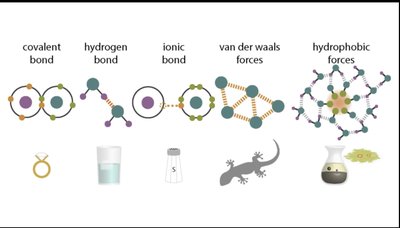
Covalent Bonds: Atoms share electrons. Can be non-polar (equal sharing) or polar (unequal sharing).
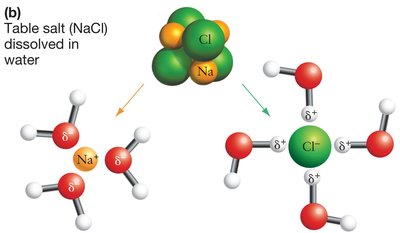
Ionic Bonds: Electrons are transferred from one atom to another, creating charged ions.
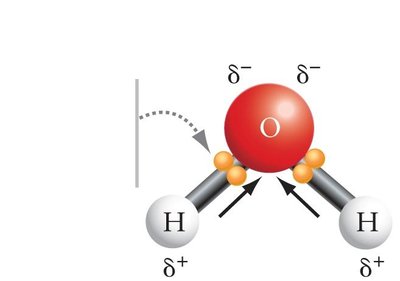
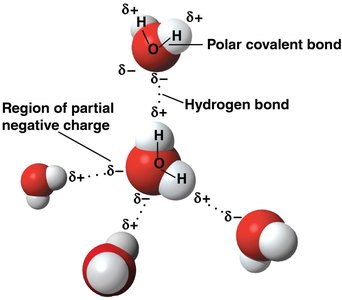
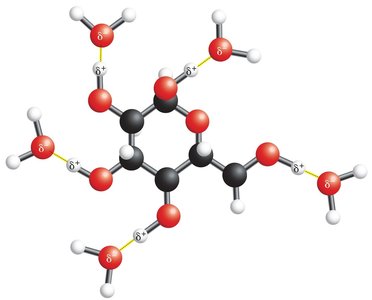
Hydrogen Bonds: Weak attractions between a hydrogen atom and an electronegative atom (e.g., O or N).
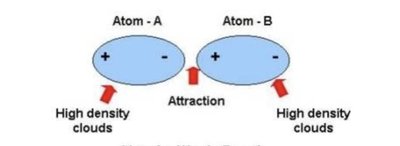
Van der Waals Interactions: Weak attractions due to transient charge differences.
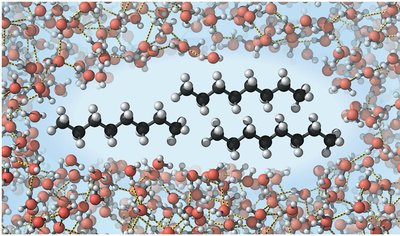
Hydrophobic Interactions: Nonpolar molecules aggregate to avoid water.

Electronegativity and Polarity
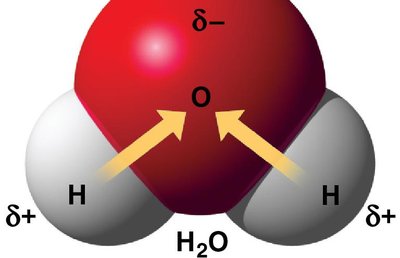
Electronegativity is an atom's ability to attract electrons. Differences in electronegativity create polar covalent bonds, as seen in water (H2O).
Properties of Water
Hydrophilic and Hydrophobic Substances
Hydrophilic: "Water-loving"; ions and polar molecules dissolve in water due to electrostatic attraction or hydrogen bonding.
Hydrophobic: "Water-fearing"; nonpolar molecules do not dissolve in water.
Cohesion, Adhesion, and Water Transport in Plants
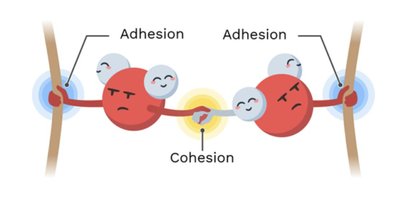
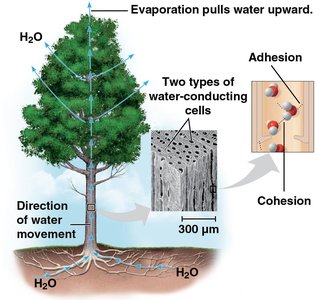
Cohesion is the attraction between water molecules, while adhesion is the attraction between water and other substances. These properties enable water transport from roots to leaves in plants.
Specific Heat and Heat of Vaporization
Specific Heat: The amount of heat required to change the temperature of 1 gram of a substance by 1°C.
Water has a high specific heat, meaning it resists temperature changes, stabilizing environments.
Heat of Vaporization: The energy required to convert 1 gram of liquid to gas.
Density of Ice vs. Liquid Water
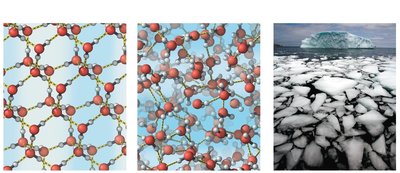
Ice is less dense than liquid water due to the formation of a crystal lattice, causing ice to float.

Summary Table: Properties of Water
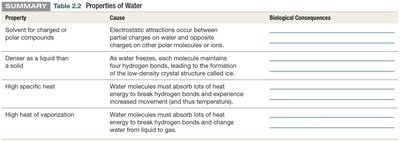
Property | Cause | Biological Consequences |
|---|---|---|
Solvent for charged or polar compounds | Electrostatic attractions between partial charges on water and opposite charges on other molecules or ions | Facilitates chemical reactions in cells |
Denser as a liquid than a solid | Crystal lattice in ice; more hydrogen bonds | Ice floats, insulating aquatic environments |
High specific heat | Hydrogen bonds absorb heat energy | Stabilizes temperature in organisms and environments |
High heat of vaporization | Lots of energy needed to break hydrogen bonds | Evaporative cooling (e.g., sweating) |
Macromolecules: Carbohydrates, Proteins, Nucleic Acids, and Lipids
Carbohydrates
Carbohydrates are polymers made of monosaccharide monomers. They serve as energy sources and structural materials.
Monosaccharides: Simple sugars (e.g., glucose, fructose).
Disaccharides: Two monosaccharides joined by a glycosidic bond.
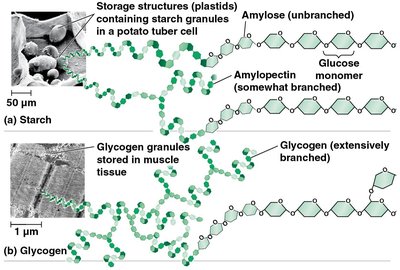
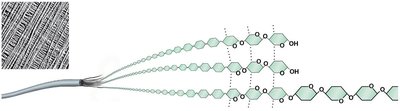
Polysaccharides: Long chains of monosaccharides (e.g., starch, glycogen, cellulose, peptidoglycan).
Polysaccharide function depends on the type of glycosidic linkage (alpha or beta).
Proteins
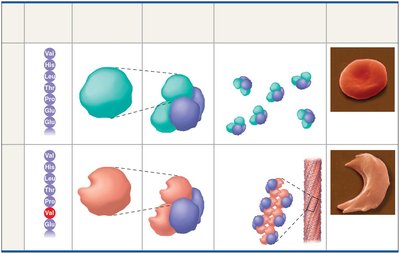
Proteins are polymers of amino acids. Their structure determines their function.
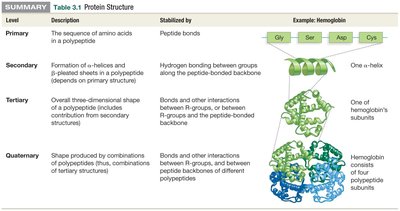
Primary structure: Linear sequence of amino acids (peptide bonds).
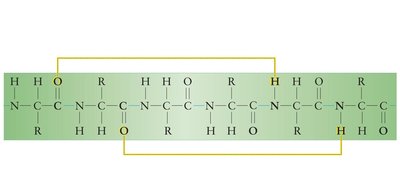
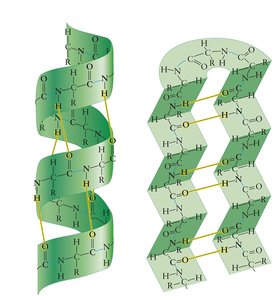
Secondary structure: Alpha helices and beta sheets (hydrogen bonds).
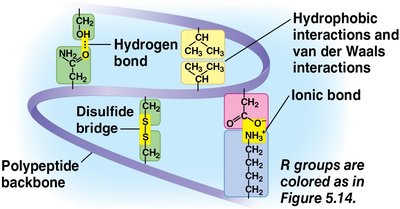
Tertiary structure: 3D folding due to R-group interactions (hydrogen, ionic, disulfide, hydrophobic, van der Waals).
Quaternary structure: Association of multiple polypeptide chains.
Nucleic Acids (DNA and RNA)
Nucleic acids are polymers of nucleotides. They store and transmit genetic information.
Nucleotide: Composed of a phosphate group, a five-carbon sugar, and a nitrogenous base.
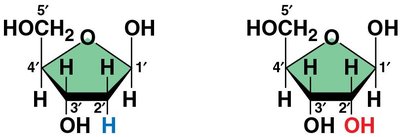
DNA: Double-stranded, deoxyribose sugar, bases A, T, G, C.
RNA: Single-stranded, ribose sugar, bases A, U, G, C.
Phosphodiester bond: Links nucleotides between 3' hydroxyl and 5' phosphate.
Base pairing: A-T (or A-U in RNA), C-G.

Lipids, Membranes, and Transport
Lipids and Membrane Structure
Lipids are hydrophobic molecules, including fats, phospholipids, and steroids. Phospholipids are amphipathic, forming bilayers in water, which are the basis of cell membranes.
Saturated fatty acids: No double bonds; straight chains; pack tightly; less fluid.
Unsaturated fatty acids: One or more double bonds; kinks; more fluid.
Fluid Mosaic Model
The plasma membrane is a fluid mosaic of lipids and proteins. Proteins can be integral (span the membrane) or peripheral (attached to the surface).
Membrane Transport
Simple diffusion: Movement of small, nonpolar molecules across the bilayer.
Facilitated diffusion: Movement of molecules via membrane proteins (no energy required).
Active transport: Movement against a concentration gradient, requiring energy (usually ATP).
Osmosis: Diffusion of water across a selectively permeable membrane.
Tonicity and Cell Volume
Hypotonic solution: Lower solute concentration outside; water enters cell; cell swells.
Isotonic solution: Equal solute concentration; no net water movement.
Hypertonic solution: Higher solute concentration outside; water leaves cell; cell shrinks.
Cell Structure and Function
Features Common to All Cells
Plasma membrane: Selectively permeable boundary of phospholipids and proteins.
Cytoplasm: Watery internal environment.
Ribosomes: Sites of protein synthesis (not membrane-bound).
Genetic material (DNA): Hereditary information.
Prokaryotic vs. Eukaryotic Cells
Prokaryotes (Bacteria & Archaea): No nucleus, no membrane-bound organelles, DNA in nucleoid, cell wall (peptidoglycan in bacteria).
Eukaryotes (Animals, Plants, Fungi, Protists): Nucleus, membrane-bound organelles, cell wall in plants/fungi (cellulose/chitin), generally larger.
Plant vs. Animal Cells
Plant cells: Chloroplasts, cell wall, large central vacuole, plasmodesmata for communication.
Animal cells: No cell wall, extracellular matrix (ECM), specialized junctions (tight, desmosomes, gap junctions).
Organelles and Their Functions
Nucleus: Contains DNA, site of transcription.
Endomembrane system: Includes rough and smooth ER, Golgi apparatus, lysosomes; involved in protein and lipid synthesis, modification, and transport.
Mitochondria: Site of cellular respiration; double membrane; own DNA and ribosomes.
Chloroplasts: Site of photosynthesis in plants; double membrane; own DNA and ribosomes.
Cytoskeleton: Provides structure, aids in transport and cell division (focus on microtubules).
Theory of Endosymbiosis
Mitochondria and chloroplasts likely originated from prokaryotic cells engulfed by ancestral eukaryotes. Evidence includes double membranes, own DNA, and ribosomes.
Surface Area to Volume Ratio
As cells increase in size, volume increases faster than surface area, limiting cell size due to the need for efficient exchange of materials. Surface area to volume ratio is calculated as:
Large organisms are multicellular to maintain a high SA:V ratio for efficient transport.
