 Indietro
General Biology Exam I Study Guide: Foundations, Chemistry, Macromolecules, and Cells
Guida di studio - Note intelligenti
 Appunti personalizzati basati sui tuoi materiali, ampliati con definizioni chiave, esempi e contesto.
Introduction to Biology
Cell Theory
The cell theory is a fundamental concept in biology that describes the properties of cells, the basic unit of life.
All living organisms are composed of one or more cells.
All cells arise from pre-existing cells.
This theory disproved earlier ideas such as spontaneous generation, which suggested that life could arise from non-living matter.
Spontaneous Generation and Pasteur's Experiment
Spontaneous generation was the hypothesis that living organisms could arise from non-living matter. Louis Pasteur's experiment using swan-neck flasks demonstrated that microorganisms do not spontaneously arise, but come from other microorganisms, supporting the cell theory.
The Central Dogma of Molecular Biology
The central dogma describes the flow of genetic information within a biological system:
DNA is transcribed into RNA.
RNA is translated into protein.

This process explains how genetic information is expressed as cellular function.
Theory vs. Hypothesis
A theory is a broad, well-supported explanation for a wide range of phenomena, while a hypothesis is a specific, testable prediction derived from a theory or observation.
Basic Chemistry of Life
Atoms, Elements, and Compounds
Understanding the chemical context of life requires knowledge of atoms, elements, and compounds:
Atom: The smallest unit of an element, consisting of protons, neutrons, and electrons.
Element: A substance made of only one kind of atom (e.g., O2).
Compound: A substance formed from two or more elements in fixed ratios (e.g., H2O).
Molecule: Two or more atoms held together by covalent bonds.
Chemical Bonds and Interactions
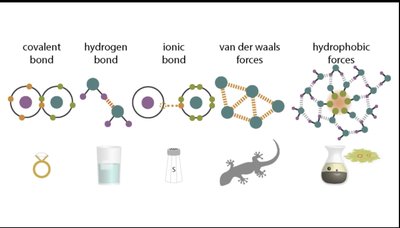
Chemical bonds are forces that hold atoms together. The main types include:
Covalent Bonds: Atoms share electrons. Can be non-polar (equal sharing) or polar (unequal sharing due to electronegativity differences).
Ionic Bonds: Electrons are transferred from one atom to another, creating charged ions that attract each other.
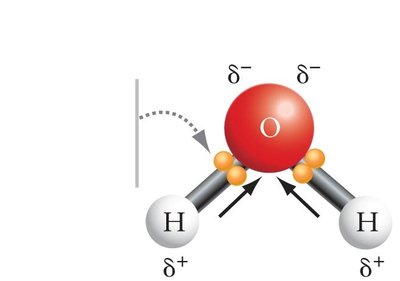
Hydrogen Bonds: Weak attractions between a hydrogen atom in one molecule and an electronegative atom in another.
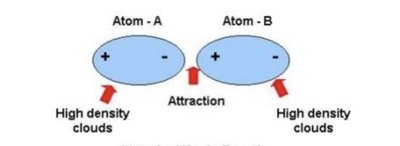
Van der Waals Interactions: Weak attractions due to transient charge differences.
Hydrophobic Interactions: Nonpolar molecules aggregate to avoid water.

Electronegativity and Polarity
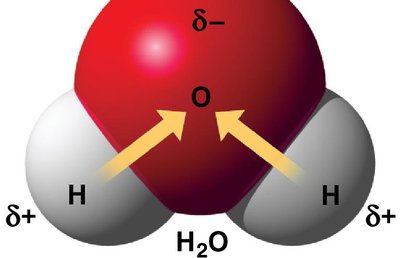
Electronegativity is an atom's ability to attract electrons. Differences in electronegativity determine bond polarity:
Polar covalent bonds: Electrons are shared unequally (e.g., in H2O).
Non-polar covalent bonds: Electrons are shared equally (e.g., in O2).
Properties of Water
Water's unique properties are essential for life and arise from its polarity and hydrogen bonding:
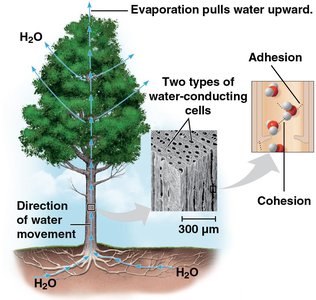
Cohesion: Water molecules stick to each other via hydrogen bonds.
Adhesion: Water molecules stick to other substances.
High Specific Heat: Water resists temperature changes.
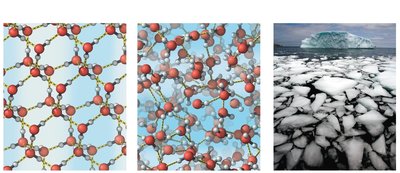
Ice Floats: Solid water is less dense than liquid water due to hydrogen bond arrangement.
Solvent Properties: Water dissolves ions and polar molecules (hydrophilic), but not nonpolar molecules (hydrophobic).
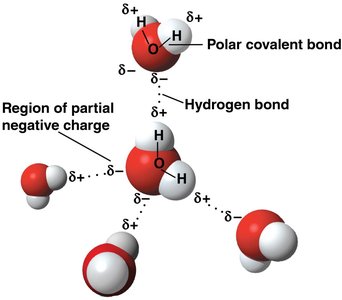
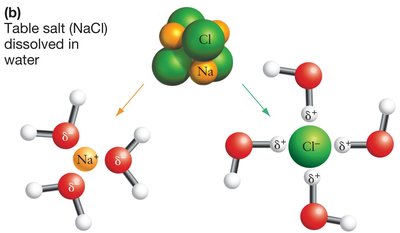
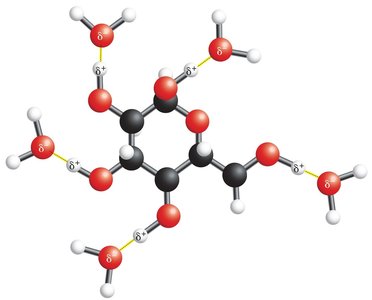
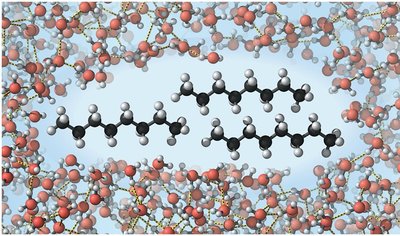

Property | Cause | Biological Consequence |
|---|---|---|
Solvent for charged or polar compounds | Electrostatic attractions between partial charges on water and opposite charges on other molecules or ions | Facilitates chemical reactions in cells |
Denser as a liquid than a solid | Hydrogen bonds form a crystal lattice in ice | Ice floats, insulating aquatic environments |
High specific heat | Hydrogen bonds absorb heat energy | Stabilizes temperature in organisms and environments |
High heat of vaporization | Hydrogen bonds must be broken for water to evaporate | Evaporative cooling (e.g., sweating) |
Macromolecules: Structure and Function
Carbohydrates
Carbohydrates are organic molecules composed of carbon, hydrogen, and oxygen. They serve as energy sources and structural components.
Monosaccharides: Simple sugars (e.g., glucose, fructose).
Disaccharides: Two monosaccharides joined by a glycosidic bond.
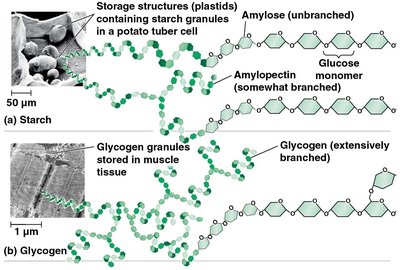
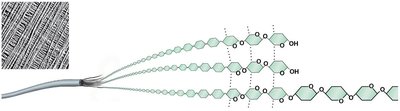
Polysaccharides: Long chains of monosaccharides (e.g., starch, glycogen, cellulose, peptidoglycan).
Monomers are joined by dehydration reactions (water is removed) and broken by hydrolysis (water is added).
Proteins
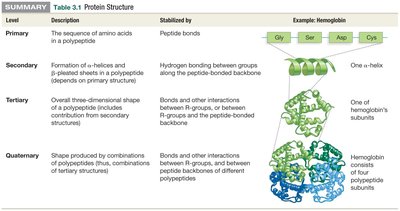
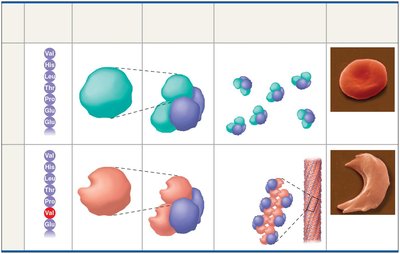
Proteins are polymers of amino acids, each with a unique R group that determines its properties. Protein structure is hierarchical:
Primary structure: Sequence of amino acids linked by peptide bonds.
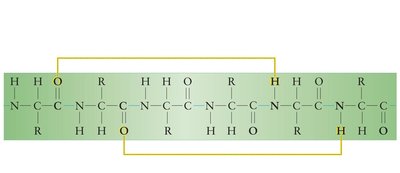
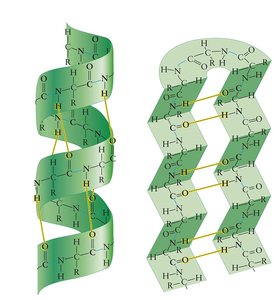
Secondary structure: Alpha helices and beta sheets formed by hydrogen bonds along the backbone.
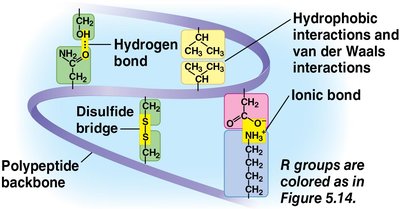
Tertiary structure: 3D folding due to R group interactions (hydrogen bonds, ionic bonds, disulfide bridges, hydrophobic interactions).
Quaternary structure: Association of multiple polypeptide chains.
Nucleic Acids
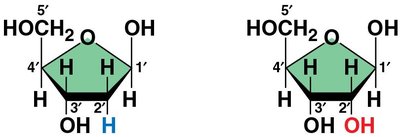
Nucleic acids (DNA and RNA) are polymers of nucleotides. Each nucleotide consists of a phosphate group, a five-carbon sugar, and a nitrogenous base.
DNA: Double-stranded, deoxyribose sugar, bases A, T, G, C.
RNA: Single-stranded, ribose sugar, bases A, U, G, C.
Nucleotides are joined by phosphodiester bonds between the 3' hydroxyl and 5' phosphate, forming a sugar-phosphate backbone. DNA strands are antiparallel and held together by hydrogen bonds between complementary bases (A-T, C-G).

Lipids, Membranes, and Transport
Lipids and Membrane Structure
Lipids are hydrophobic molecules, including fats, phospholipids, and steroids. Phospholipids are amphipathic, with hydrophilic heads and hydrophobic tails, forming bilayers in water (cell membranes).
Saturated fatty acids: No double bonds, straight chains, pack tightly (solid at room temperature).
Unsaturated fatty acids: One or more double bonds, kinked chains, less tightly packed (liquid at room temperature).
The fluid mosaic model describes membranes as a fluid bilayer with proteins embedded throughout.
Membrane Transport
Simple diffusion: Movement of small, nonpolar molecules across the bilayer without energy input.
Facilitated diffusion: Movement of molecules via membrane proteins, down their concentration gradient, without energy input.
Active transport: Movement of molecules against their concentration gradient, requiring energy (often from ATP).
Osmosis: Diffusion of water across a selectively permeable membrane.
Membrane permeability is affected by lipid composition (saturation, length of fatty acid tails) and temperature.
Cells: Structure and Function
Features Common to All Cells
Plasma membrane: Selectively permeable boundary made of phospholipids and proteins.
Cytoplasm: Watery internal environment.
Ribosomes: Sites of protein synthesis (not membrane-bound, so not organelles).
Genetic material: DNA (hereditary molecule).
Prokaryotic vs. Eukaryotic Cells
Prokaryotes (Bacteria & Archaea): No membrane-bound organelles, DNA in nucleoid, cell wall (peptidoglycan in bacteria), usually single-celled.
Eukaryotes (Animals, Plants, Fungi, Protists): Membrane-bound organelles, DNA in nucleus, cell walls in plants/fungi (cellulose/chitin), single or multicellular, generally larger.
Plant vs. Animal Cells
Plant cells: Have chloroplasts, cell wall (cellulose), large central vacuole, plasmodesmata for communication.
Animal cells: Lack cell wall, have extracellular matrix (ECM), specialized junctions (tight, desmosomes, gap junctions).
Organelles and Their Functions
Nucleus: Contains DNA, site of transcription.
Endomembrane system: Includes rough and smooth ER, Golgi apparatus, lysosomes; involved in protein and lipid synthesis, modification, and transport.
Mitochondria: Site of cellular respiration, energy production.
Chloroplasts: Site of photosynthesis in plants.
Cytoskeleton: Provides structure, aids in transport and cell division (focus on microtubules).
Theory of Endosymbiosis
Mitochondria and chloroplasts are thought to have originated from free-living prokaryotes engulfed by ancestral eukaryotic cells. Evidence includes:
Double membranes
Own DNA (circular)
Own ribosomes
Surface Area to Volume Ratio
Cell size is limited by the surface area to volume ratio. As cells grow, volume increases faster than surface area, limiting transport efficiency. Large organisms are multicellular to maintain efficient exchange with the environment.
Formula:
