 Indietro
General Biology I: Foundations, Chemistry, Cells, and Biological Molecules
Guida di studio - Note intelligenti
 Appunti personalizzati basati sui tuoi materiali, ampliati con definizioni chiave, esempi e contesto.
Memory and Learning
Neuronal Plasticity and Memory Formation
The nervous system is composed of circuits of neurons and supporting cells, which can be modified after birth—a property known as neuronal plasticity. Most remodeling occurs at synapses, the junctions between neurons where signals are transmitted. Memory formation is an anatomical and physiological event at synapses, dependent on neuronal plasticity and activity.
Short-term memory (STM): Stores information for seconds to minutes, with limited capacity (~7 items). Information is released if not used.
Long-term memory (LTM): Retains information for an indefinite period and has a much larger capacity. Information must be retrieved to STM for use.
Memory formation: High activity at synapses strengthens connections; low activity leads to loss of connections.
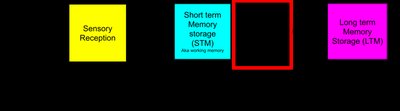
Learning is the use of knowledge or experiences (memory) to decrease the likelihood of negative outcomes. For example, learning which parts of a fence are electrified and not attacking the same spot twice.
Long-Term Potentiation
Long-term potentiation is a lasting increase in the strength of synaptic transmission, facilitating memory and retrieval. It is activity-dependent: information that is used is retained, while unused information is discarded.
Organization: Chunking related information aids memory formation and retrieval.
Practice: Active practice and usage of information enhance learning.
Foundations of Biology
Themes in Biology
Biology is unified by several major themes, including evolution, emergent properties, and levels of biological organization.
Evolution: All living organisms are modified descendants of common ancestors. Evolution explains the unity and diversity of life.
Emergent Properties: New properties arise at each level of biological organization due to the arrangement and interaction of parts.
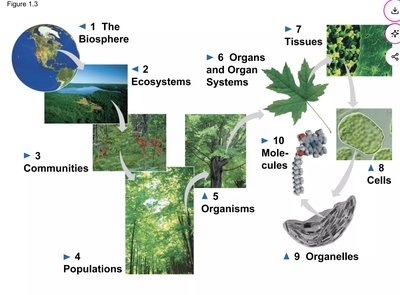
Levels of Biological Organization
The biosphere
Ecosystems
Communities
Populations
Organisms
Organs and organ systems
Tissues
Cells
Organelles
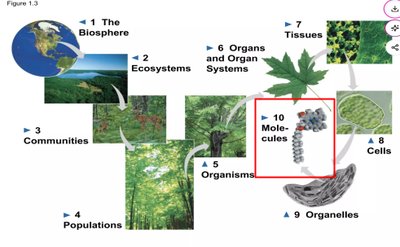
Molecules
Methods of Investigating Biology
The Scientific Method
Science is a systematic method of inquiry, limited to observable and measurable phenomena. The scientific method involves:
Making observations
Formulating hypotheses (testable explanations)
Making predictions
Testing predictions through experiments
Drawing conclusions and revising hypotheses as needed
Key terms:
Hypothesis: A testable explanation for observations.
Prediction: The expected outcome if the hypothesis is correct.
Theory: A broad explanation supported by significant evidence.
Law: A descriptive statement of what always occurs under certain conditions.
Basic Elements of Chemistry
Elements in the Human Body
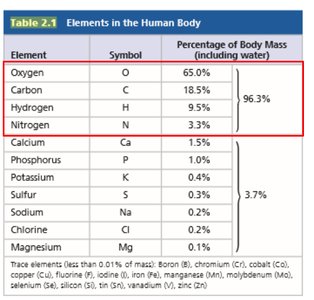
Living organisms are composed primarily of a few key elements. The four most abundant elements in the human body are oxygen, carbon, hydrogen, and nitrogen, making up about 96% of body mass.
Element | Symbol | Percentage of Body Mass |
|---|---|---|
Oxygen | O | 65.0% |
Carbon | C | 18.5% |
Hydrogen | H | 9.5% |
Nitrogen | N | 3.3% |
Other elements | - | ~4% |
Atomic Structure and Energy
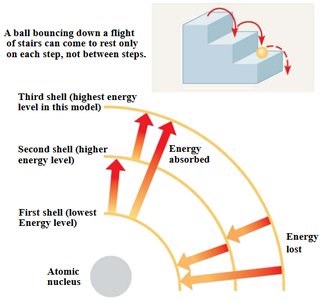
Atoms are composed of protons, neutrons, and electrons. Electrons occupy distinct energy levels (shells) around the nucleus. The further an electron is from the nucleus, the higher its potential energy. Electrons can absorb energy to move to higher shells and release energy when falling to lower shells.
Chemical Bonds and Interactions
Covalent Bonds
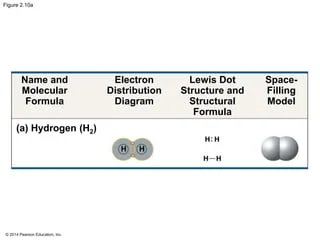
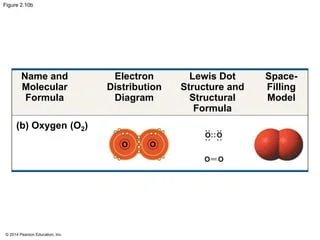
Covalent bonds involve the sharing of electrons between atoms. They are the strongest type of bond under biological conditions.
Nonpolar covalent bonds: Electrons are shared equally (e.g., H2).
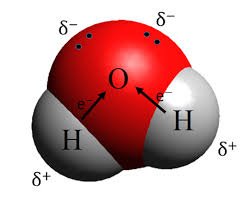
Polar covalent bonds: Electrons are shared unequally, resulting in partial charges (e.g., H2O).
Ionic Bonds
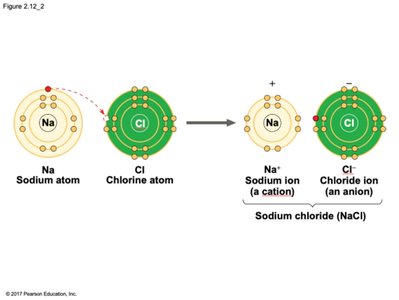
Ionic bonds form when electrons are transferred from one atom to another, creating charged ions (cations and anions) that attract each other. For example, sodium chloride (NaCl) forms from Na+ and Cl-.
Hydrogen Bonds and Van der Waals Interactions
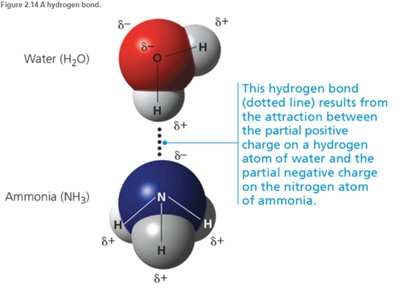
Hydrogen bonds are weak interactions between a hydrogen atom with a partial positive charge and an electronegative atom (such as O or N) with a partial negative charge. Van der Waals interactions are even weaker, resulting from transient partial charges.
Biological Molecules
Functional Groups
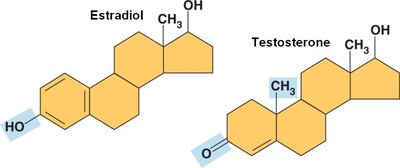
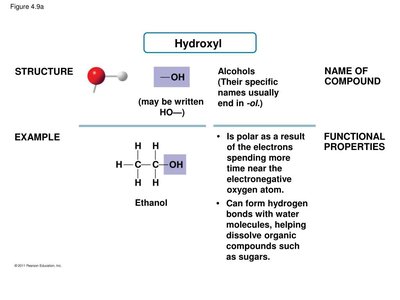
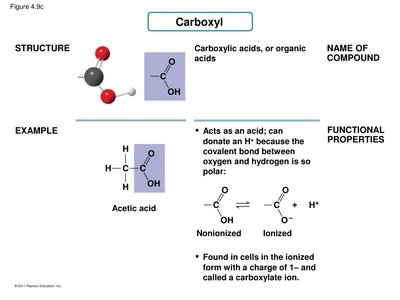
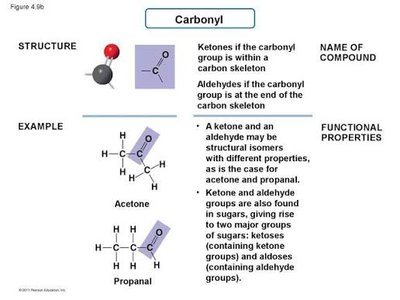
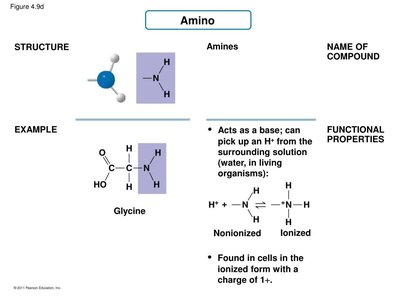
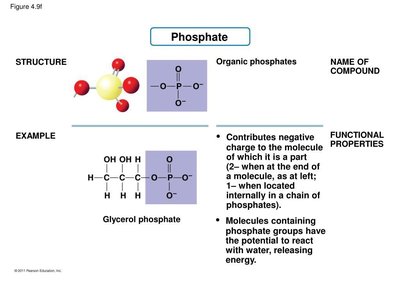
Functional groups are specific groups of atoms attached to carbon skeletons that determine the properties and functions of organic molecules. Key functional groups include:
Hydroxyl (-OH): Polar, hydrophilic, found in alcohols.
Carbonyl (=O): Polar, found in ketones and aldehydes.
Carboxyl (-COOH): Acidic, found in amino acids and fatty acids.
Amino (-NH2): Basic, found in amino acids.
Phosphate (-PO4H2): Acidic, found in nucleic acids and phospholipids.
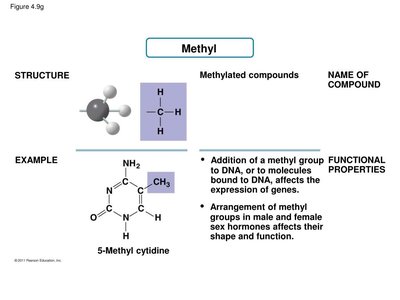
Methyl (-CH3): Nonpolar, affects gene expression.
Macromolecules and Polymerization
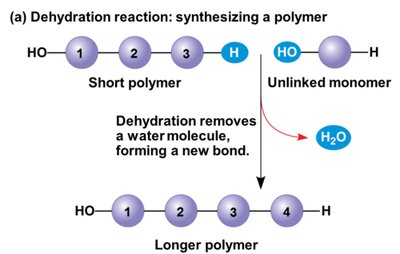
Macromolecules are large molecules composed of thousands of atoms. Most biological macromolecules are polymers, made by linking monomers through dehydration reactions (removal of water). Hydrolysis reactions break polymers into monomers by adding water.
Carbohydrates: Polymers of monosaccharides; used for energy and structure.
Lipids: Hydrophobic molecules, not true polymers; include fats, phospholipids, and steroids.
Proteins: Polymers of amino acids; perform most cellular functions.
Nucleic acids: Polymers of nucleotides; store and transmit genetic information.
Cell Structure and Function
Prokaryotic vs. Eukaryotic Cells
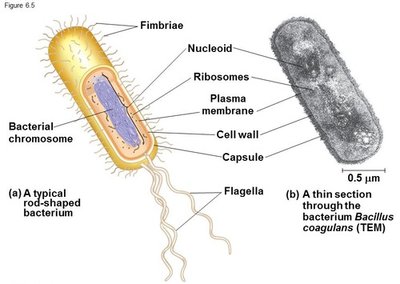
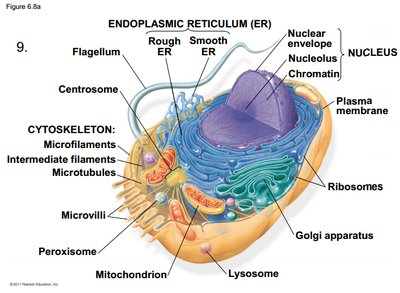
Cells are the basic units of life. They can be classified as prokaryotic (no nucleus, smaller, simpler) or eukaryotic (nucleus, larger, more complex, with membrane-bound organelles).
Prokaryotes: DNA in nucleoid region, no internal compartmentalization, cell wall present.
Eukaryotes: DNA in nucleus, membrane-bound organelles, larger size, compartmentalization allows for specialized functions.
Endosymbiosis and Organelles
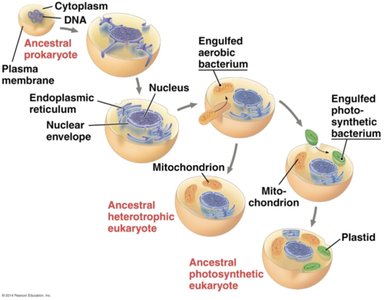
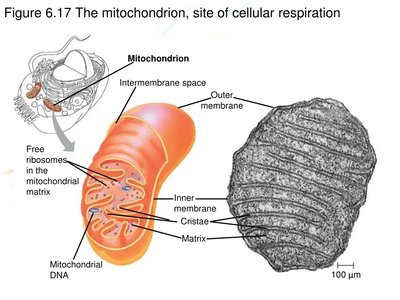
Mitochondria and chloroplasts are believed to have originated via endosymbiosis, where ancestral eukaryotic cells engulfed prokaryotic cells that became integrated as organelles.
Membrane Structure and Transport
Fluid Mosaic Model
Biological membranes are composed of a phospholipid bilayer with embedded proteins and carbohydrates. The membrane is fluid, allowing lateral movement of components.
Phospholipids: Amphipathic molecules with hydrophilic heads and hydrophobic tails.
Proteins: Integral or peripheral; involved in transport, signaling, and structure.
Carbohydrates: Attached to proteins or lipids; involved in cell recognition.
Membrane Transport
Passive transport: Does not require energy; includes simple diffusion, facilitated diffusion, and osmosis.
Active transport: Requires ATP; moves substances against their concentration gradient.
Bulk transport: Movement of large quantities via vesicles (endocytosis and exocytosis).
Metabolism and Energy
Metabolic Pathways
Metabolism is the sum of all chemical reactions and energy transformations in an organism. Pathways can be anabolic (building molecules, requiring energy) or catabolic (breaking down molecules, releasing energy).
First Law of Thermodynamics: Energy cannot be created or destroyed, only transformed.
Second Law of Thermodynamics: Every energy transfer increases entropy (disorder).
ATP: The Energy Currency
ATP (adenosine triphosphate) stores and provides energy for cellular work. Energy is released by hydrolysis of ATP and used to drive endergonic reactions.
Enzymes and Redox Reactions
Enzymes
Enzymes are biological catalysts that speed up chemical reactions by lowering activation energy. They are specific to their substrates and are not consumed in the reaction.
Redox Reactions
Redox (oxidation-reduction) reactions involve the transfer of electrons. Oxidation is the loss of electrons; reduction is the gain of electrons. These reactions are essential for energy transfer in cells.
Photosynthesis and Cellular Respiration
Photosynthesis
Photosynthesis converts light energy into chemical energy, producing glucose and oxygen from carbon dioxide and water. It involves light-dependent reactions (producing ATP and NADPH) and the Calvin cycle (carbon fixation).
Cellular Respiration
Cellular respiration breaks down glucose to produce ATP, using oxygen and releasing carbon dioxide and water. It includes glycolysis, pyruvate oxidation, the citric acid cycle, and oxidative phosphorylation.
Additional info: This guide covers foundational topics in General Biology, including memory and learning, the scientific method, chemistry of life, cell structure, biological molecules, metabolism, and energy transformations. Images included are directly relevant to the explanations and reinforce key concepts.
