 Indietro
General Biology I: Foundations of Life, Chemistry, and Cells
Guida di studio - Note intelligenti
 Appunti personalizzati basati sui tuoi materiali, ampliati con definizioni chiave, esempi e contesto.
Chapter 1: Evolution, the Themes of Biology, and Scientific Inquiry
Properties of Life
Living organisms share several fundamental properties that distinguish them from non-living matter. These properties are essential for the maintenance and perpetuation of life.
Order: Organisms exhibit highly ordered structures, from molecules to organ systems.
Evolutionary Adaptation: Populations evolve over generations through adaptations that enhance survival and reproduction.
Regulation: Organisms regulate internal conditions (homeostasis) to maintain a stable environment.
Reproduction: Living things reproduce, passing genetic information to offspring.
Response to Environment: Organisms detect and respond to environmental stimuli.
Growth and Development: Organisms grow and develop according to instructions encoded in their DNA.
Energy Processing: Organisms obtain and use energy to power activities and chemical reactions.
Unifying Themes in Biology
Biology is organized around several unifying themes that help explain the complexity of life:
Organization: Life is structured in a hierarchy from molecules to the biosphere.
Information: Genetic information is stored in DNA and governs cellular processes.
Energy and Matter: Life requires the transfer and transformation of energy and matter.
Interactions: Organisms interact with each other and their environment.
Evolution: The core theme that explains both the unity and diversity of life.
Classification of Life
All living organisms are classified into three domains:
Archaea: Prokaryotic, no nucleus, often found in extreme environments.
Bacteria: Prokaryotic, no nucleus, diverse and widespread.
Eukarya: Eukaryotic, have a nucleus, includes protists, fungi, plants, and animals.
Protists are mostly unicellular eukaryotes, primarily aquatic and often motile.
Natural Selection and Evolution
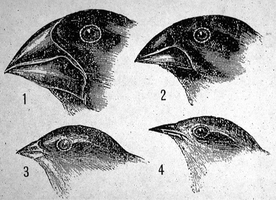
Charles Darwin's theory of natural selection explains how evolution occurs in populations:
Variation: Individuals in a population vary in their traits, many of which are heritable.
Overproduction and Competition: More offspring are produced than can survive, leading to competition for resources.
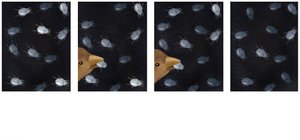
Adaptation: Traits that enhance survival and reproduction become more common in the population over time.
Requirements for evolution by natural selection:
Overproduction of offspring
Heritable variation in traits
Selective pressure from the environment
Time for changes to accumulate
Note: Mutations are random, but natural selection is not.
Chapter 2: The Chemical Context of Life
Elements and Atoms
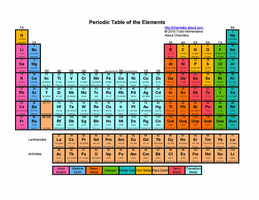
All matter is composed of elements, substances that cannot be broken down by chemical means. Atoms are the smallest units of elements, consisting of protons, neutrons, and electrons.
Atomic Number: Number of protons in the nucleus.
Atomic Mass: Sum of protons and neutrons.
Electron Configuration and Chemical Bonds
Electrons are arranged in shells around the nucleus. The arrangement of electrons determines how atoms interact and bond with each other.
Valence Electrons: Electrons in the outermost shell, important for chemical reactivity.
Octet Rule: Atoms tend to gain, lose, or share electrons to achieve a full outer shell (usually 8 electrons).
Types of Chemical Bonds
Covalent Bonds: Sharing of electrons between atoms. Can be non-polar (equal sharing) or polar (unequal sharing).
Ionic Bonds: Transfer of electrons from one atom to another, resulting in charged ions (cations and anions).
Weak Bonds: Includes hydrogen bonds and Van der Waals interactions, important for molecular interactions.
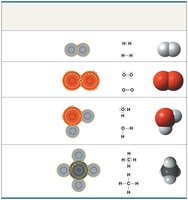
Electronegativity and Bond Polarity
Electronegativity is an atom's ability to attract shared electrons in a covalent bond. Differences in electronegativity lead to polar covalent bonds, where electrons are shared unequally.
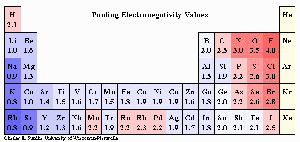
Chapter 3: Water and Life
Structure and Properties of Water
Water is a polar molecule, with oxygen being more electronegative than hydrogen. This leads to hydrogen bonding between water molecules, giving water its unique properties.
Cohesion: Water molecules stick together due to hydrogen bonding.
High Specific Heat: Water can absorb a lot of heat before changing temperature.
Ice Floats: Solid water is less dense than liquid water due to hydrogen bond arrangement.
Solvent of Life: Water dissolves many substances, facilitating chemical reactions in cells.
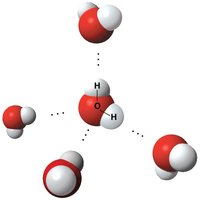
Water as a Solvent
Many biological reactions occur in aqueous solutions. The concentration of solutes is often measured in molarity (moles of solute per liter of solution).
Avogadro's Number: molecules per mole.
Molarity (M):
pH and the Chemistry of Life
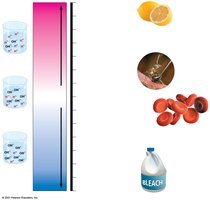
The pH scale measures the concentration of hydrogen ions () in a solution. It is defined as:
Acidic solutions: pH < 7
Neutral solutions: pH = 7
Basic solutions: pH > 7
Each pH unit represents a tenfold difference in concentration.
Chapter 4: Carbon and the Molecular Diversity of Life
Carbon's Versatility
Carbon atoms can form four covalent bonds, allowing for a diversity of stable organic molecules. Variations in carbon skeletons (length, branching, double bonds, rings) lead to molecular diversity.
Functional Groups
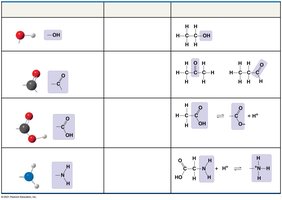
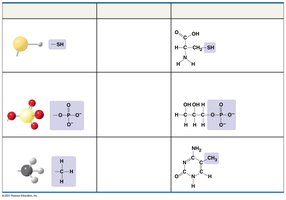
Chemical groups attached to carbon skeletons determine the properties and functions of organic molecules. The most important functional groups in biology are:
Hydroxyl (—OH): Alcohols
Carbonyl (C=O): Ketones and aldehydes
Carboxyl (—COOH): Carboxylic acids
Amino (—NH2): Amines
Sulfhydryl (—SH): Thiols
Phosphate (—PO4): Organic phosphates
Methyl (—CH3): Methylated compounds (not reactive)
Chapter 5: The Structure and Function of Large Biological Molecules
Classes of Biological Molecules
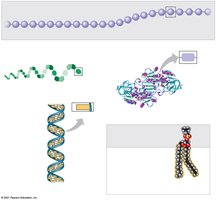
There are four major classes of biological macromolecules:
Carbohydrates: Sugars and polymers of sugars (e.g., starch, glycogen, cellulose, chitin).
Lipids: Hydrophobic molecules, including fats, phospholipids, and steroids. Not true polymers.
Proteins: Polymers of amino acids with diverse functions (enzymes, structure, transport, etc.).
Nucleic Acids: Polymers of nucleotides (DNA and RNA) that store and transmit genetic information.
Polymer Formation and Breakdown
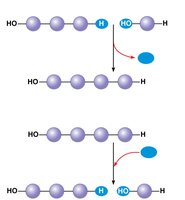
Macromolecules (except lipids) are formed by dehydration reactions (removal of water) and broken down by hydrolysis (addition of water).
Dehydration Reaction: Joins monomers by removing water.
Hydrolysis: Breaks polymers into monomers by adding water.
Carbohydrates
Carbohydrates include monosaccharides (simple sugars), disaccharides, and polysaccharides. Polysaccharides serve as energy storage (starch in plants, glycogen in animals) or structural components (cellulose in plants, chitin in animals).
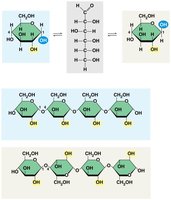
Lipids
Lipids are hydrophobic molecules that include fats (energy storage), phospholipids (membranes), and steroids (hormones). Fats can be saturated (solid at room temperature, animal origin) or unsaturated (liquid at room temperature, plant origin).
Proteins
Proteins have up to four levels of structure:
Primary: Sequence of amino acids.
Secondary: Coils and folds (alpha helices, beta sheets) due to hydrogen bonding.
Tertiary: Overall 3D shape due to interactions among R groups.
Quaternary: Association of multiple polypeptide chains (not all proteins have this level).
Chapter 6: A Tour of the Cell
Prokaryotic vs. Eukaryotic Cells
Cells are the basic units of life. There are two main types:
Prokaryotic Cells: No nucleus, smaller, domains Bacteria and Archaea.
Eukaryotic Cells: Have a nucleus, larger, domain Eukarya (protists, fungi, plants, animals).
Animal and Plant Cell Structure
Eukaryotic cells contain membrane-bound organelles with specialized functions:
Nucleus: Contains genetic material (DNA).
Endoplasmic Reticulum (ER): Rough ER synthesizes proteins and phospholipids; Smooth ER synthesizes lipids and detoxifies chemicals.
Golgi Apparatus: Modifies, sorts, and packages proteins and lipids.
Mitochondria: Site of cellular respiration and energy production.
Chloroplasts (plants): Site of photosynthesis.
Lysosomes: Digestive organelles.
Peroxisomes: Break down fatty acids and detoxify harmful substances.
Cytoskeleton: Provides structural support and facilitates movement.
Plant cells also have a cell wall, central vacuole, and chloroplasts, which are absent in animal cells.
