 Indietro
General Biology I Lab: Lab Equipment, Safety, and Metric Measurement
Guida di studio - Note intelligenti
 Appunti personalizzati basati sui tuoi materiali, ampliati con definizioni chiave, esempi e contesto.
Lab Equipment and Lab Safety
Introduction to Lab Equipment
Understanding laboratory equipment is essential for conducting experiments safely and accurately in biology. Each piece of equipment has a specific function and is designed to facilitate various laboratory tasks.
Beaker: Cylindrical glassware with a flat bottom and spout, used for mixing, stirring, and heating chemicals. Not ideal for precise volume measurements.
Erlenmeyer Flask: Conical flask with a narrow neck, suitable for heating and storing liquids, and for mixing by swirling without risk of spillage.
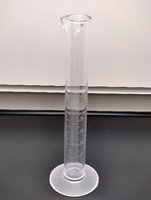
Graduated Cylinder: Tall, narrow cylinder with volume graduations, used for accurately measuring liquid volumes.
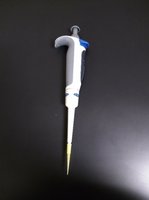
Pipettes: Tools for transferring small volumes of liquid. Types include transfer pipettes (approximate volumes), volumetric pipettes (precise volumes), and micropipettes (very small, precise volumes).
Test Tubes: Small glass cylinders for holding small samples during experiments.
Microfuge Tubes: Small plastic tubes with lids, used for very small samples, often in centrifuges.
Petri Dishes: Flat, circular dishes with lids, used for culturing microorganisms.
Common Lab Equipment
In addition to glassware, several other pieces of equipment are commonly used in biology labs:
Hot Plate: Used for heating samples; some have magnetic stirrers for mixing.
Water Bath: Maintains samples at a constant temperature.
Incubator: Maintains constant temperature and humidity for growing cultures.
Bunsen Burner: Produces a flame for heating or sterilizing.
Balance: Measures mass of objects precisely.
Centrifuge/Microfuge: Separates substances by density using rapid spinning.
Microscope: Magnifies small objects for observation.
Chemical Safety and GHS
Proper handling and storage of chemicals are critical for lab safety. The Globally Harmonized System (GHS) standardizes chemical labeling and hazard communication worldwide.
Storage Codes: Color-coded to indicate storage requirements (e.g., red for flammable, white for corrosive).
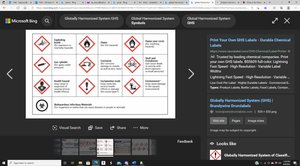
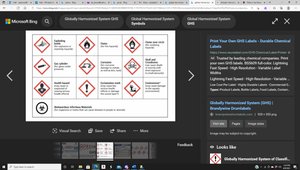
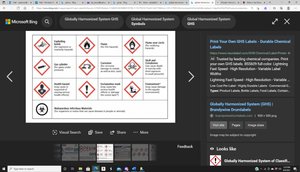
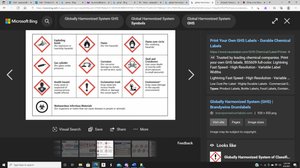
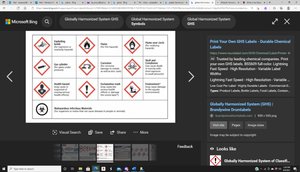
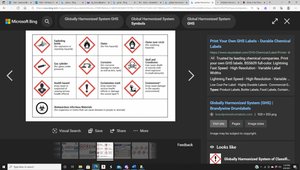
GHS Pictograms: Standardized symbols indicating hazards such as flammability, toxicity, corrosiveness, and environmental danger.
Pictogram | Meaning |
|---|---|
Flame | Flammable, self-reactive, emits flammable gas |
Exploding Bomb | Explosive, self-reactive |
Corrosion | Corrosive to metals, skin, eyes |
Skull & Crossbones | Severe toxicity |
Health Hazard | Carcinogen, mutagen, reproductive toxicity |
Environment | Toxic to aquatic life |
Lab Safety Protocols
To ensure safety in the laboratory, follow these protocols:
Wear appropriate personal protective equipment (PPE): gloves, goggles, lab coats as required.
Never eat, drink, or apply cosmetics in the lab.
Know the location and use of safety equipment: eyewash, safety shower, fire extinguisher, first aid kit.
Dispose of chemicals and broken glassware properly.
Report all accidents and injuries immediately.
Metric Measurement in Biology
Metric System Basics
The metric system is the standard system of measurement in science, based on powers of ten. It is used for measuring length, mass, volume, and temperature.
Type of Measurement | Metric Unit |
|---|---|
Length | Meter (m) |
Mass | Gram (g) |
Volume | Liter (L) |
Temperature | Degrees Celsius (°C) |
Metric Prefixes
Prefix | Value |
|---|---|
Kilo- (k) | 1000 |
Centi- (c) | 0.01 |
Milli- (m) | 0.001 |
Micro- (µ) | 0.000001 |
Nano- (n) | 0.000000001 |
Metric Conversion Methods
Stair-Step Method: Move the decimal point left or right depending on the direction of conversion between units.
Exponential Method: Use powers of ten to convert between units.
Unit Cancellation Method: Multiply by conversion factors to cancel out units and arrive at the desired unit.
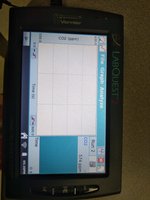
Measuring Length, Mass, Volume, and Temperature
Length: Measured in meters, centimeters, millimeters, micrometers, and nanometers. Use a metric ruler for measurement.
Mass: Measured in grams and milligrams using an electronic balance.
Volume: Measured in liters and milliliters, often using a graduated cylinder. Read the bottom of the meniscus at eye level for accuracy.
Temperature: Measured in degrees Celsius. Water freezes at 0°C and boils at 100°C.
Key Formulas
Temperature Conversion:
Summary Table: Common Lab Equipment and Their Uses
Equipment | Purpose |
|---|---|
Beaker | Mixing, heating, and transferring liquids |
Erlenmeyer Flask | Heating and storing liquids |
Graduated Cylinder | Accurate measurement of liquid volume |
Pipette | Transferring small volumes of liquid |
Test Tube | Holding small samples |
Microfuge Tube | Holding very small samples |
Petri Dish | Culturing microorganisms |
Hot Plate | Heating samples |
Water Bath | Maintaining constant temperature |
Incubator | Growing cultures at controlled temperature/humidity |
Bunsen Burner | Heating/sterilizing |
Balance | Measuring mass |
Centrifuge | Separating substances by density |
Microscope | Magnifying small objects |
