 Indietro
General Biology I Laboratory Practical I Study Guide: Modules 1–7
Guida di studio - Note intelligenti
 Appunti personalizzati basati sui tuoi materiali, ampliati con definizioni chiave, esempi e contesto.
Laboratory Safety
Safety Rules and Procedures
Laboratory safety is essential for preventing accidents and ensuring a productive learning environment. Students must follow all safety rules, including correct responses to spills, broken glass, accidents, and emergencies.
Personal Protective Equipment (PPE): Always wear a lab coat and protective goggles.
Safe Handling: Handle glassware, chemicals, and equipment as instructed.
Food and Drink: No eating or drinking in the laboratory; store food/drinks away before entering.
Clean Workspace: Keep benches and walkways clear; store bags safely.
Disposal: Dispose of materials properly and know the location of safety equipment.
Phones: Phones must be turned off and put away during lab.
Scientific Method
Key Concepts and Application
The scientific method is a systematic approach to inquiry in biology. Understanding its steps and terminology is crucial for designing and interpreting experiments.
Observation: Noting and recording phenomena.
Scientific Question: Formulating a question based on observations.
Hypothesis: A testable statement predicting an outcome.
Prediction: Expected result if the hypothesis is correct.
Experiment: Procedure to test the hypothesis.
Model: Representation of a system or process.
Control/Control Group: Standard for comparison; receives no experimental treatment.
Variable: Any factor that can change.
Independent Variable: The factor manipulated by the experimenter.
Dependent Variable: The factor measured as a response.
Controlled Variables: Factors kept constant to ensure a fair test.
It is important to keep conditions constant, record observations, collect data, and distinguish evidence from conclusions.
Measurement and Laboratory Equipment
Metric Units and Equipment Usage
Accurate measurement is fundamental in biology labs. Familiarity with metric units and laboratory equipment ensures reliable data collection.
Metric Units: Length (m, cm, mm), Volume (L, mL, µL), Mass (g, mg).
Unit Conversions: Practice converting between units and using scientific notation.
Graduated Cylinder: Used to measure liquid volume; read the meniscus at eye level.
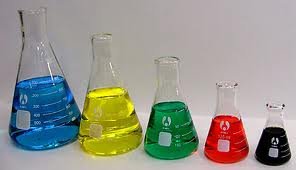
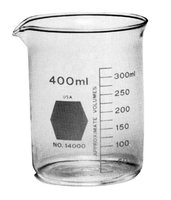
Beaker/Erlenmeyer Flask: Used to hold, mix, or prepare liquids; not for precise volume measurement.
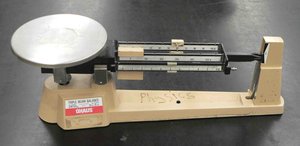
Laboratory Scale/Triple-Beam Balance: Used to measure mass; use a weigh boat for solids.
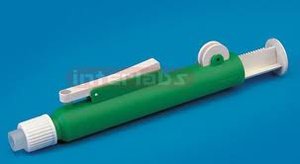
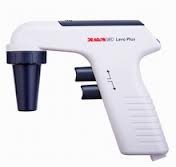
Pipet Aid/Serological Pipette: Used to draw up and dispense liquids.
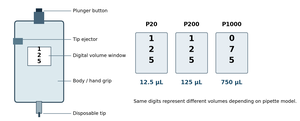
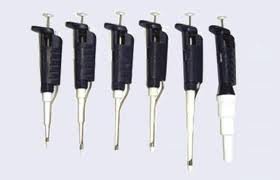
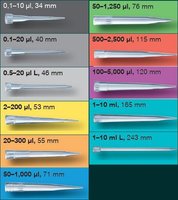
Micropipette/Disposable Tips: Used to transfer small measured volumes (µL).
Spectrophotometer/Cuvette: Used to measure light absorbance of a sample.
Proper identification and handling of labware is essential for accurate experimentation.
Labware Identification
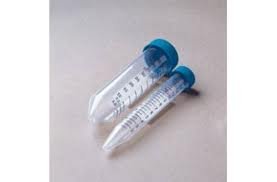
Conical Tubes: Used for centrifugation and sample storage.
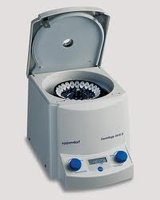
Centrifuge: Separates substances by spinning samples at high speed.
Spectrophotometer: Measures absorbance of light by samples.
Cuvettes: Hold samples for spectrophotometric analysis.

Inoculating Loops: Used to transfer microorganisms.

Petri Dish: Used for culturing microorganisms.
Agar Plate: Petri dish containing agar medium for microbial growth.
Erlenmeyer Flasks: Used for mixing and heating liquids.
Graduated Cylinders: Used for precise measurement of liquid volumes.
Beaker: Used for holding and mixing liquids.
Weigh Boats: Used to hold samples for weighing.
Scientific Literature and Lab Reports
Structure and Interpretation
Understanding scientific literature is vital for interpreting research and writing lab reports. Manuscripts are organized into distinct sections, each serving a specific purpose.
Title: Identifies the study.
Abstract: Summarizes the study.
Introduction: Provides background and states the hypothesis.
Methods: Describes procedures for reproducibility.
Results: Presents findings, often with tables/figures.
Discussion: Interprets findings and relates them to the hypothesis.
Works Cited/References: Lists sources.
Types of scientific literature:
Primary: Original research/data, peer-reviewed.
Secondary: Reviews/syntheses of primary studies.
Tertiary: General summaries (textbooks, encyclopedias).
Gray: Reports outside traditional publishing (e.g., government reports).
Peer review ensures quality and reliability. Citations and appropriate sources are essential for academic integrity.
Spectrophotometry
Principles and Procedures
Spectrophotometry is used to measure the absorbance of light by a sample, which is related to concentration. A blank/reference is used to calibrate the instrument.
Absorbance: Amount of light absorbed by the sample.
Percent Transmittance (%T): Percentage of light passing through the sample.
Inverse Relationship: As absorbance increases, transmittance decreases.
Standard Curve: Plot of concentration (independent variable) vs. absorbance (dependent variable).
Procedure: Handle cuvettes properly, calibrate with a blank, and take readings as demonstrated.
To estimate the concentration of an unknown, use the standard curve and interpolate based on absorbance.
pH and Buffers
Definitions and Laboratory Application
pH is a measure of hydrogen-ion concentration in a solution. Buffers are substances that resist changes in pH when small amounts of acid or base are added.
Acidic Solution: pH < 7; higher hydrogen-ion concentration.
Neutral Solution: pH = 7.
Basic Solution: pH > 7; lower hydrogen-ion concentration.
Logarithmic Scale: Each unit change in pH represents a tenfold change in hydrogen-ion concentration.
Buffer: Maintains stable pH by neutralizing added acids or bases.
Laboratory exercises involve measuring pH, comparing buffer effectiveness, and interpreting results from tables or graphs.
Enzymes
Structure, Function, and Experimental Analysis
Enzymes are biological catalysts that speed up chemical reactions without being consumed. They are specific to their substrates and operate under optimal conditions.
Enzyme: Protein that catalyzes reactions.
Substrate: Molecule upon which the enzyme acts.
Active Site: Region where substrate binds.
Product: Result of the enzymatic reaction.
Enzyme–Substrate Complex: Temporary association during catalysis.
Specificity: Enzymes bind only specific substrates.
Factors affecting enzyme activity include temperature, pH, enzyme/substrate concentration, and inhibitors. Experimental results are interpreted using absorbance measurements and reaction rates.
Peroxidase Lab: Experimental Design and Interpretation
The peroxidase lab investigates how peroxidase catalyzes the oxidation of guaiacol by hydrogen peroxide, producing a brown product measured by absorbance at 500 nm.
Reaction:
Procedure: Prepare tubes with varying enzyme, pH, temperature, and inhibitor conditions. Add H₂O₂ last and record absorbance every 30 seconds.
Interpretation: Plot time vs. absorbance; a steeper slope indicates a faster reaction rate.
Variables: Independent (enzyme amount, pH, temperature, inhibitor), Dependent (rate of change in absorbance).
Enzyme activity is affected by denaturation (high heat), pH changes, and inhibitors. Controls and constant conditions are essential for valid comparisons.
Applied Review: Practical Skills and Questions
Micropipette Identification and Usage
Micropipettes are used for precise measurement and transfer of small liquid volumes. Proper identification and technique are crucial for accuracy.
Parts: Plunger button, tip-ejector button, volume-setting control, digital volume indicator, body, tip cone, disposable tip.
Volume Readout: Digit place values differ by pipette model (P20, P200, P1000).
Technique: Attach tip, set volume, aspirate to first stop, dispense to first and second stop, eject tip.
Volume Conversion: 1 mL = 1,000 µL; 0.25 mL = 250 µL; 20 µL = 0.020 mL.
Scientific Literature Assignment: Key Terms
Allelopathy: Inhibition of one plant species’ growth by chemicals produced by another.
Arbuscular Mycorrhizal Fungi (AMF): Root-associated fungi involved in nutrient exchange.
Invasive Species: Introduced species causing harm.
Mesic: Habitat with moderate moisture.
Mutualism: Interaction benefiting both species.
Recognize the journal, year, publication process, first author, and countries represented in the assigned article.
Self-Test: Application Questions
Identify instruments and explain their functions.
Determine controls and variables in experiments.
Read and interpret graphs and standard curves.
Distinguish primary research from review articles.
Explain buffer function and enzyme activity using lab results.
Additional info: Topics such as macromolecule identification/testing, microscopy, diffusion/osmosis, mitosis, and genetics are scheduled for later practicals and are not included in this review.
