Indietro
General Biology II Syllabus and Course Structure Study Notes
Guida di studio - Note intelligenti
 Appunti personalizzati basati sui tuoi materiali, ampliati con definizioni chiave, esempi e contesto.
General Biology II: Course Overview and Structure
Course Description and Objectives
General Biology II is a continuation of introductory biology, focusing on the principles of evolution, biological diversity, and ecology. Students are expected to have foundational knowledge from General Biology I. The course aims to deepen understanding of evolutionary processes, adaptations in plants and animals, and ecological dynamics.
Biological Evolution: Discuss the concept and evidence for evolution, explaining the diversity of life.
Plant Adaptations: Compare and contrast evolutionary adaptations in plants, including anatomy, development, and physiology.
Animal Adaptations: Compare and contrast evolutionary adaptations in animals, including anatomy, development, and physiology.
Ecology and Ecosystems: Describe population, community, and ecosystem dynamics, and their relationship to conservation and human impacts.
Prerequisites: Completion of General Introduction to Biology (BIO 1080 and BIO 1090) with a grade of C or better.
Corequisite: BIO 1091: General Biology 2 Lab
Course Structure and Requirements
The course is delivered online with a linked laboratory component. Students are responsible for keeping up with deadlines and attending lab sessions. Course materials are accessed via Canvas, and lectures are supplemented with knowledge checks and review questions.
Quizzes and Exams: Three mid-semester quizzes and a cumulative final quiz.
Homework Assignments: Four assignments throughout the semester.
Knowledge Checks: Multiple choice questions based on lecture content.
Lecture Review Questions: Open-ended questions to reinforce lecture material.
Quiz Retakes: Group retakes in lab, using any resources.
Grading and Assessment
Grades are determined by the total points earned from various assessments. The grading scale is as follows:
Letter Grade | Percent |
|---|---|
A | 90.5 - 100 |
A- | 89.5 - 90.4 |
B+ | 87.5 - 89.4 |
B | 82.5 - 87.4 |
B- | 79.5 - 82.4 |
C+ | 77.5 - 79.4 |
C | 72.5 - 77.4 |
C- | 69.5 - 72.4 |
D+ | 67.5 - 69.4 |
D | 62.5 - 67.4 |
D- | 59.5 - 62.4 |
F | < 59.4 |
Course Schedule and Topics
The course is organized into four main units, each covering essential chapters from the Campbell Biology textbook:
Unit 1: Evolution (Chapters 22-26) – Evidence for evolution, evolution of populations, origin of species, classification.
Unit 2: Protists and Plants (Chapters 28-39) – Protist diversity, plant diversity, plant reproduction and structure, defense and sensory systems.
Unit 3: Fungi and Animals (Chapters 31-34) – Fungi, animal diversity, invertebrate and vertebrate diversity.
Unit 4: Ecology and Conservation Biology (Chapters 52-56) – Introduction to ecology, population and community ecology, conservation biology.
Academic Integrity and Professionalism
Students are expected to adhere to university policies regarding academic integrity, including restrictions on the use of generative AI and plagiarism. Professional conduct and respect for diversity are emphasized in all classroom and laboratory interactions.
Generative AI: Only permitted when explicitly allowed by the instructor.
Plagiarism: Strictly prohibited; violations result in severe academic consequences.
Professionalism: Respect for all individuals and maintenance of a positive learning environment.
Access and Accommodations
The university is committed to providing accessible learning environments for all students, including those with disabilities or temporary health conditions. Students should contact the Access Center for support and accommodations.
Participation and Attendance
Active participation is required, especially in laboratory sessions. Failure to attend the first week of lab may result in administrative withdrawal or a failing grade.
Land and Labor Acknowledgment
MSU Denver recognizes the indigenous peoples and the labor of enslaved and exploited individuals who contributed to the history and development of the land and campus. The acknowledgment encourages reflection on historical and contemporary injustices and the importance of inclusivity.
Visual Representation of Biology and Ecology
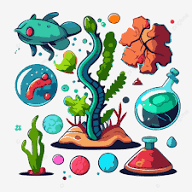
The following image illustrates key concepts in biology and ecology, including aquatic life, plant diversity, and laboratory research, which are central themes in General Biology II.