 Indietro
General Biology Midterm Review: Scientific Investigation, Cells, Diffusion & Osmosis, Enzymes, Photosynthesis, and Mitosis
Guida di studio - Note intelligenti
 Appunti personalizzati basati sui tuoi materiali, ampliati con definizioni chiave, esempi e contesto.
Scientific Investigation
The Scientific Method
The scientific method is a systematic approach used to investigate natural phenomena, formulate hypotheses, and test predictions. It is foundational to biological research and inquiry.
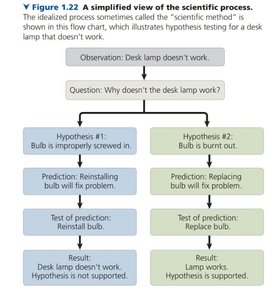
Observation: Noticing a phenomenon or problem (e.g., "Desk lamp doesn't work").
Question: Asking why the phenomenon occurs (e.g., "Why doesn't the desk lamp work?").
Hypothesis: A testable and falsifiable statement that proposes a possible explanation (e.g., "Bulb is burnt out").
Prediction: A logical outcome if the hypothesis is true (e.g., "Replacing bulb will fix problem").
Experiment: Testing the prediction by manipulating variables.
Result: Data collected to support or refute the hypothesis.
Variables:
Independent Variable: Manipulated by the experimenter.
Dependent Variable: Measured or counted as the outcome.
Controlled Variables: Kept constant between groups.
Groups:
Experimental Group: Receives the treatment.
Control Group: Receives standard or no treatment.
Example: Butterfly experiments testing preferences for anti-parasitic milkweed in infected vs. uninfected individuals.
Microscopes and Cells
Microscope Concepts
Microscopes are essential tools for visualizing cells and their structures. Compound microscopes use multiple lenses and visible light to magnify specimens.
Objective Lenses: Low (4x), Medium (10x), High (40x).
Total Magnification: Product of objective and ocular lens magnifications.
Field of View (FOV): Area visible at one time; decreases with higher magnification.
Depth of Field (DOF): Thickness of specimen in focus; decreases with higher magnification.
Resolution: Smallest distance at which two objects are distinguishable.
Resolution Formula
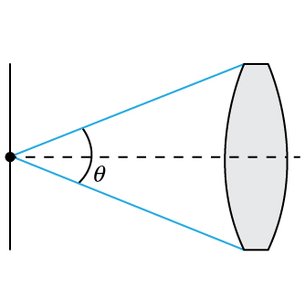
Resolution depends on the wavelength of light and the numerical aperture (N.A.) of the lens:
Resolution (d):
Numerical Aperture (N.A.):
Smaller d means higher resolution; shorter wavelength and larger N.A. improve resolution.
Diffusion and Osmosis
Concepts
Diffusion and osmosis are fundamental processes for movement of molecules and water across membranes.
Diffusion: Spontaneous movement of molecules down a concentration gradient.
Osmosis: Diffusion of water across a selectively permeable membrane, from higher to lower free water concentration.
Tonicity:
Isotonic: No net change in cell volume.
Hypotonic: Cells gain water.
Hypertonic: Cells lose water (shrivel in animals, plasmolyze in plants).
Water Potential ()
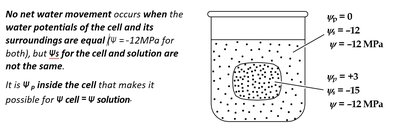
Water potential () measures water's capacity to do work, moving from higher to lower potential. It is measured in megapascals (MPa).
(solute potential): Effect of solutes (0 or negative).
(pressure potential): Effect of physical pressure (positive or negative).
Pure water: MPa.
Example: Potato cells in isotonic sucrose solution: mass does not change, indicating equal water potential inside and outside.
Diffusion Exercise
Dialysis bag with starch and glucose in beaker with iodine.
Iodine moved into bag (purple color), starch did not move out, glucose moved out (positive Benedict's test).
Benedict's Test: Glucose reduces Cu2+ to Cu+, causing color change.
Controls: Negative (DI water), Positive (bag sample).
Enzymes
Concepts
Enzymes are mainly proteins that catalyze biological reactions. Example: α-amylase breaks down starch into maltose and maltotriose.
Substrate: Molecule acted upon (e.g., starch).
Product: Resulting molecules (e.g., maltose).
Optimal conditions: Neutral pH (~7) and body temperature (37°C).
Enzyme Exercises
Temperature: Fastest starch breakdown at ideal temperature; slow/no breakdown means low/no activity.
pH: Fastest breakdown at optimal pH; slow/no breakdown means low/no activity.
Troubleshooting: No purple (no starch), always purple (no enzyme).
Photosynthesis
Concepts
Photosynthesis is the process by which plants use light energy to convert carbon dioxide and water into carbohydrates and oxygen.
Equation:
Absorption Spectrum: Measures light absorbance at different wavelengths.
Spectrophotometer: Measures absorbance; uses blank for calibration.
Paper Chromatography: Separates pigments based on polarity; nonpolar pigments move faster.
Photosynthesis Exercises
Paper Chromatography: Isolates pigments for absorbance measurements.
Absorbance Spectrum: Measures pigment absorbance; blue and red light drive photosynthesis, green is less efficient.
The Mitotic Cell Cycle
Concepts
Mitosis is a type of cell division that produces two identical daughter cells, important for growth and repair in somatic cells.
Phases:
Interphase: G1, S (DNA replication), G2
Prophase: DNA condenses, nuclear envelope dissolves
Metaphase: Chromosomes align in the middle
Anaphase: Sister chromatids separate
Telophase/Cytokinesis: Chromosomes de-condense, cell plate forms in plants, cells separate
Chromatid: Half of a duplicated chromosome.
Chromosome: Structure containing DNA and proteins.
Cell Cycle Numbers
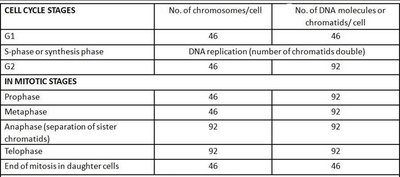
The number of chromosomes and DNA molecules changes during the cell cycle and mitosis. See table below:
Cell Cycle Stages | No. of chromosomes/cell | No. of DNA molecules or chromatids/cell |
|---|---|---|
G1 | 46 | 46 |
S-phase or synthesis phase | DNA replication (number of chromatids double) | |
G2 | 46 | 92 |
Prophase | 46 | 92 |
Metaphase | 46 | 92 |
Anaphase (separation of sister chromatids) | 92 | 92 |
Telophase | 92 | 92 |
End of mitosis in daughter cells | 46 | 46 |
Calculating Cell Cycle Phase Length
The length of each cell cycle phase can be estimated by multiplying the frequency of cells in that stage by the total cell cycle time.
Formula: Frequency of cells in stage × 960 minutes (total cell cycle time)

Example: If 25% of cells are in metaphase, then time spent in metaphase = 0.25 × 960 = 240 minutes.
General Test Tips
Study the reasoning behind experiments and procedures.
Review PowerPoints and textbook sections.
Answer confident questions first, then revisit others.
Write concisely and legibly; only first two sentences graded per answer.
Bring pencil, calculator, photo ID; do not bring phones, notebooks, lab book, or smart watches.
Expect a paper test, sign-in/out sheet, and random seat assignment.
