 Indietro
General Biology Review: Chemistry, Water, Macromolecules, and Cell Structure
Guida di studio - Note intelligenti
 Appunti personalizzati basati sui tuoi materiali, ampliati con definizioni chiave, esempi e contesto.
Chemistry Fundamentals
Atoms and Elements
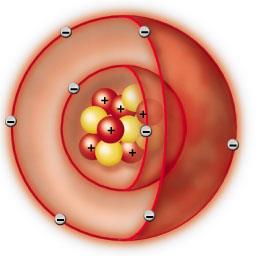
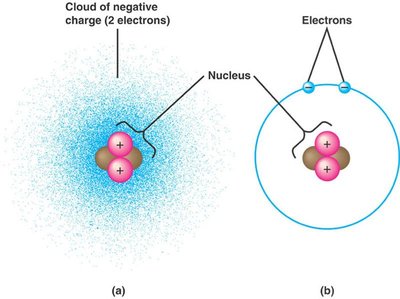
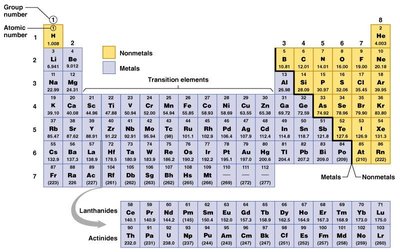
Atoms are the smallest functional units of matter, composed of protons, neutrons, and electrons. Elements are substances consisting of only one type of atom, defined by their atomic number (number of protons).
Protons: Positively charged particles found in the nucleus.
Neutrons: Neutral particles also located in the nucleus.
Electrons: Negatively charged particles with negligible mass, orbiting the nucleus in shells.
Atomic number: Number of protons in an atom.
Atomic mass: Sum of protons and neutrons.
Isotopes: Atoms of the same element with different numbers of neutrons.
Electron Shells and Orbitals
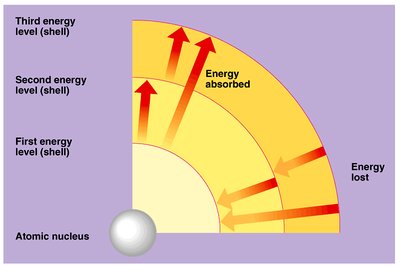
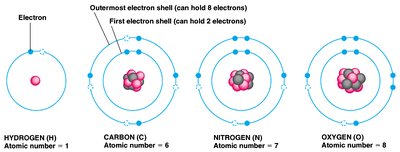
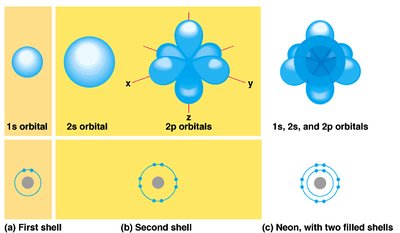
Electrons occupy energy levels called shells, and within these shells, specific orbitals. Atoms are most stable when their outermost shell (valence shell) is filled.
Valence electrons: Electrons in the outermost shell, important for chemical bonding.
Electron orbitals: Regions where electrons are likely to be found; include s, p, d, and f orbitals.
Electrons in outer shells have more potential energy.
Chemical Bonds and Molecular Interactions
Types of Chemical Bonds
Chemical bonds form when atoms share or transfer electrons to achieve stable electron configurations.
Nonpolar covalent bonds: Equal sharing of electrons; atoms have no charge.
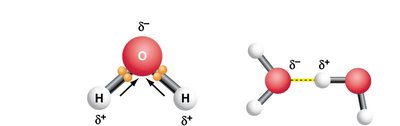
Polar covalent bonds: Unequal sharing; atoms have partial charges.
Ionic bonds: Complete transfer of electrons; atoms have full charges.
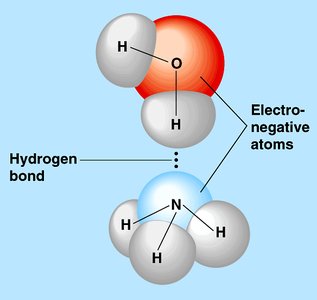
Hydrogen bonds: Weak bonds between polar molecules, especially involving hydrogen.
Electronegativity: The tendency of an atom to attract electrons.
Water and pH
Properties of Water
Water is a polar molecule, enabling hydrogen bonding and unique properties essential for life.
Polarity: Oxygen attracts electrons more strongly than hydrogen, creating partial charges.
Hydrogen bonds: Responsible for cohesion, adhesion, and high specific heat.
pH and Buffers
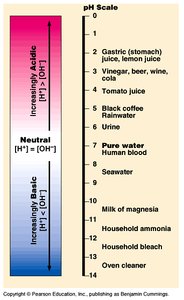
pH measures the concentration of hydrogen ions (H+) in a solution, indicating its acidity or basicity.
pH scale: Ranges from 0 (acidic) to 14 (basic); 7 is neutral.
Buffers: Substances that minimize changes in pH by absorbing or releasing H+ ions.
Example: Carbonic acid and bicarbonate buffer blood pH.
Macromolecules
Carbohydrates
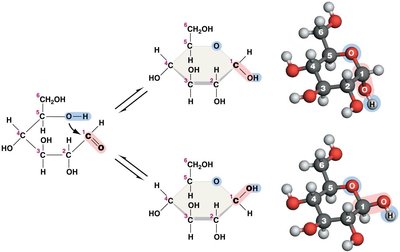
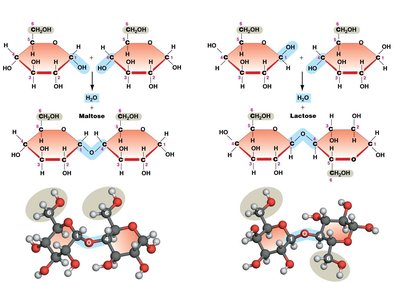
Carbohydrates are organic molecules composed of monosaccharide monomers, which can form polymers through glycosidic linkages.
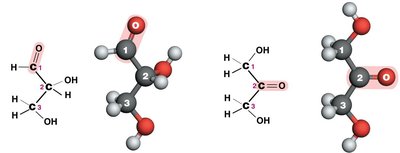
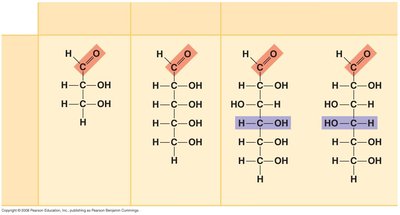
Monomers: Monosaccharides (simple sugars), classified as aldoses or ketoses.
Bonds: Glycosidic linkages connect monomers.
Polymers: Disaccharides, oligosaccharides, and polysaccharides (e.g., starch, cellulose, glycogen, chitin).
Polysaccharide | Chemical Structure | Three-dimensional Structure |
|---|---|---|
Starch | α-glucose, α-1,4-glycosidic linkage | Unbranched helix (amylose), branched helices (amylopectin) |
Glycogen | α-glucose, α-1,4-glycosidic linkage | Highly branched helices |
Cellulose | β-glucose, β-1,4-glycosidic linkage | Parallel strands joined by hydrogen bonds |
Chitin | β-N-acetylglucosamine, β-1,4-glycosidic linkage | Parallel strands joined by hydrogen bonds |
Peptidoglycan | Chains of amino acids and sugars | Parallel strands joined by peptide bonds |
Lipids
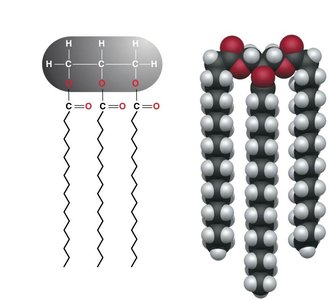
Lipids are hydrophobic molecules, including fats, phospholipids, and steroids. Their structure and function depend on their monomers and linkages.
Monomers: Glycerol and fatty acids (for fats), steroids (for steroid hormones).
Bonds: Ester linkages connect fatty acids to glycerol.
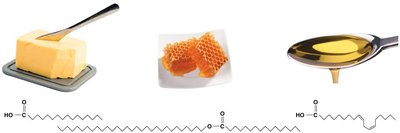
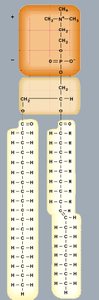
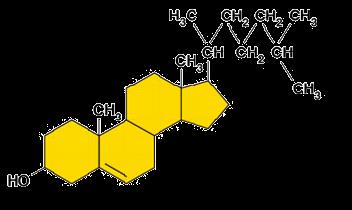
Types: Triacylglycerides (energy storage), phospholipids (membrane structure), steroids (signaling).
Saturated vs. Unsaturated: Saturated fats have no double bonds; unsaturated fats have one or more double bonds.
Proteins
Proteins are polymers of amino acids, joined by peptide bonds. Their structure determines their function.
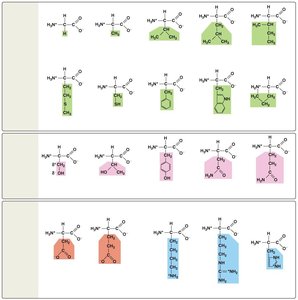
Monomers: Amino acids (20 types, each with a unique side chain).
Bonds: Peptide bonds link amino acids.
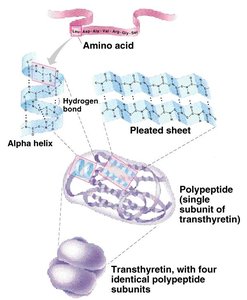
Levels of structure: Primary (sequence), secondary (α-helix, β-sheet), tertiary (3D folding), quaternary (multiple polypeptides).
Nucleic Acids
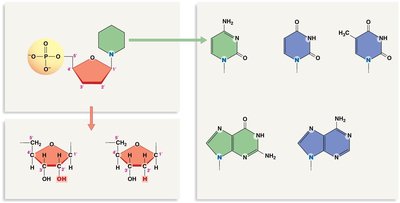
Nucleic acids (DNA and RNA) are polymers of nucleotides, which consist of a sugar, phosphate group, and nitrogenous base.
Monomers: Nucleotides (purines: adenine, guanine; pyrimidines: cytosine, thymine, uracil).
Bonds: Phosphodiester linkages (between sugar and phosphate), N-glycosidic bonds (between sugar and base).
Polymers: DNA and RNA strands.
Cell Structure
Cell Types and Organelles
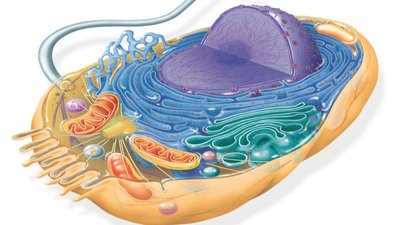
Cells are the basic units of life, classified as prokaryotic or eukaryotic. Eukaryotic cells contain membrane-bound organelles, each with specific functions.
Organelles: Nucleus, mitochondria, endoplasmic reticulum, Golgi apparatus, lysosomes, chloroplasts (in plants), etc.
Functions: Protein production, secretion, energy conversion, genetic information storage.
Cytoskeleton: Provides structural support and facilitates movement.
Cell Membranes and Transport
Phospholipid Bilayer
The cell membrane is composed of a phospholipid bilayer, with embedded proteins, glycolipids, and glycoproteins. It regulates the movement of substances in and out of the cell.
Phospholipids: Have hydrophilic heads and hydrophobic tails.
Membrane proteins: Integral and peripheral proteins serve various functions, including transport and signaling.
Cholesterol: Modifies membrane fluidity and permeability.
Transport Mechanisms
Cells use various mechanisms to transport molecules across membranes.
Diffusion: Passive movement from high to low concentration.
Osmosis: Diffusion of water across a selectively permeable membrane.
Facilitated diffusion: Passive transport via channel or carrier proteins.
Active transport: Movement against concentration gradient, requiring energy (ATP).
Bulk transport: Exocytosis and endocytosis move large quantities of material.
Osmotic Conditions
Hypotonic: Lower solute concentration outside the cell.
Hypertonic: Higher solute concentration outside the cell.
Isotonic: Equal solute concentration inside and outside.
Condition | Animal Cell | Plant Cell |
|---|---|---|
Hypotonic | Lysed | Turgid (normal) |
Isotonic | Normal | Flaccid |
Hypertonic | Shriveled | Plasmolyzed |
Sodium-Potassium Pump
The sodium-potassium pump is an example of active transport, moving Na+ and K+ ions against their gradients to maintain cellular electrochemical balance.
Electrogenic pump: Creates an electrochemical gradient across the membrane.
Cotransport: Uses the gradient of one molecule to drive the transport of another.
Bulk Transport
Exocytosis: Vesicles fuse with the membrane to release contents.
Endocytosis: Membrane engulfs material to bring it into the cell.
Additional info: Academic context was added to clarify the structure and function of macromolecules, cell organelles, and membrane transport mechanisms.
