 Indietro
General Biology Study Guidance: Biological Molecules, Cell Structure, Genetics, and Scientific Inquiry
Guida di studio - Note intelligenti
 Appunti personalizzati basati sui tuoi materiali, ampliati con definizioni chiave, esempi e contesto.
Q1. Name 3 of the properties (or characteristics) of life and briefly describe each property.
Background
Topic: Characteristics of Life
This question tests your understanding of what defines living organisms and the essential features that distinguish them from non-living things.
Key Terms:
Organization
Metabolism
Homeostasis
Growth
Reproduction
Response to stimuli
Adaptation
Step-by-Step Guidance
Recall the seven main characteristics of life as described in your textbook.
Choose three distinct properties from the list.
For each property, write a brief description explaining what it means and why it is important for living organisms.
Think of an example organism or process that illustrates each property.
Try solving on your own before revealing the answer!
Final Answer:
Organization: Living things are made up of cells, which are organized into tissues, organs, and systems.
Metabolism: Living organisms carry out chemical reactions to obtain and use energy.
Homeostasis: Living things maintain stable internal conditions despite changes in their environment.
Each property is essential for life and helps distinguish living organisms from non-living matter.
Q2. For the following, indicate the correct Domain:
A. An oak tree
B. A bacteria (like E. coli)
C. A very ancient bacteria that lives in hot springs
Background
Topic: Domains of Life
This question tests your knowledge of the three domains of life and your ability to classify organisms based on their characteristics.
Key Terms:
Domain: The highest taxonomic rank in biological classification.
Bacteria, Archaea, Eukarya
Step-by-Step Guidance
Recall the three domains of life: Bacteria, Archaea, and Eukarya.
Think about the characteristics of each organism listed.
Match each organism to the appropriate domain based on its cellular structure and evolutionary history.
Try solving on your own before revealing the answer!
Final Answer:
A. Oak tree: Eukarya
B. E. coli: Bacteria
C. Ancient bacteria in hot springs: Archaea
These domains reflect fundamental differences in cell structure and genetics.
Q3. Classification of a mushroom: What Domain does a mushroom belong to? To what Kingdom does a mushroom belong?
Background
Topic: Biological Classification
This question tests your understanding of the classification hierarchy and the placement of fungi within it.
Key Terms:
Domain: Eukarya
Kingdom: Fungi
Step-by-Step Guidance
Recall that mushrooms are eukaryotic organisms.
Identify the domain for eukaryotic organisms.
Determine the kingdom that includes mushrooms.
Try solving on your own before revealing the answer!
Final Answer:
Domain: Eukarya
Kingdom: Fungi
Mushrooms are classified as eukaryotes and belong to the kingdom Fungi.
Q4. Hierarchies of Life: Fill in the missing hierarchies (or levels).
A. Organism, ____, Community, ____, Biosphere
B. Organelles, ____, Tissues, ____, Organ Systems
C. Atoms, ____, ____, Cells, ____
Background
Topic: Levels of Biological Organization
This question tests your ability to recall and sequence the hierarchical levels of biological organization from smallest to largest.
Key Terms:
Hierarchy: Arrangement of biological structures in order of complexity.
Population, Ecosystem, Cells, Molecules, Organs
Step-by-Step Guidance
Review the levels of biological organization in your textbook.
Identify the missing levels between the ones provided.
Fill in the blanks with the correct terms, making sure the sequence makes sense.
Try solving on your own before revealing the answer!
Final Answer:
A. Organism, Population, Community, Ecosystem, Biosphere
B. Organelles, Cells, Tissues, Organs, Organ Systems
C. Atoms, Molecules, Macromolecules, Cells, Tissues
These levels show the increasing complexity of biological systems.
Q5. Science as a Process: Experimental Design for a Weight-Loss Drug
Background
Topic: Scientific Method and Experimental Design
This question tests your understanding of hypothesis formulation, variables, controls, and interpretation of experimental data.
Key Terms:
Experimental Hypothesis
Null Hypothesis
Independent Variable
Dependent Variable
Control Group
Step-by-Step Guidance
Formulate an experimental hypothesis based on the expected effect of the drug.
Write a null hypothesis stating there will be no effect.
Identify the dependent variable (what is measured) and the independent variable (what is manipulated).
Determine which group serves as the control.
Review the data table and compare the results between the two groups.
Think about whether the data supports or refutes the experimental hypothesis, and explain your reasoning.
Try solving on your own before revealing the answer!
Final Answer:
Experimental Hypothesis: The weight-loss drug will cause greater weight loss than the sugar pill.
Null Hypothesis: The weight-loss drug will not cause greater weight loss than the sugar pill.
Dependent Variable: Weight loss (measured in pounds).
Independent Variable: Type of pill (weight-loss drug vs. sugar pill).
Control Group: Group 2 (sugar pill).
The data does not support the experimental hypothesis because the control group lost more weight than the drug group.
Careful analysis of experimental data is essential for scientific inquiry.
Q6. What is the definition of evolution?
Background
Topic: Evolution
This question tests your understanding of the fundamental concept of evolution in biology.
Key Terms:
Evolution: Change in the genetic composition of a population over time.
Step-by-Step Guidance
Recall the definition of evolution as described in your textbook.
Think about how evolution involves changes in allele frequencies within a population.
Write a concise definition that captures the essence of evolutionary change.
Try solving on your own before revealing the answer!
Final Answer:
Evolution is the change in the genetic composition of a population over successive generations, often resulting in adaptation to the environment.
This process is central to understanding the diversity and unity of life.
Q7. Evolution is a scientific theory. Explain WHY it is a theory (and not just a hypothesis).
Background
Topic: Scientific Theories vs. Hypotheses
This question tests your understanding of the difference between a scientific theory and a hypothesis.
Key Terms:
Theory: A well-substantiated explanation of some aspect of the natural world.
Hypothesis: A testable statement or prediction.
Step-by-Step Guidance
Recall the definition of a scientific theory and how it differs from a hypothesis.
Think about the evidence and repeated testing that supports the theory of evolution.
Explain why evolution is considered a theory in science.
Try solving on your own before revealing the answer!
Final Answer:
Evolution is a scientific theory because it is supported by extensive evidence, has been repeatedly tested, and explains a wide range of biological phenomena. It is not just a hypothesis, which is a single testable prediction.
Theories are broader and more comprehensive than hypotheses.
Q8. In developing the idea of evolution, what two observations did Darwin make in his study of organisms?
Background
Topic: Darwin's Observations
This question tests your knowledge of the foundational observations that led Darwin to propose the theory of evolution by natural selection.
Key Terms:
Variation
Overproduction
Step-by-Step Guidance
Recall Darwin's two key observations during his travels.
Think about how these observations relate to variation and reproduction in populations.
Write a brief summary of each observation.
Try solving on your own before revealing the answer!
Final Answer:
Organisms produce more offspring than can survive.
There is variation among individuals in a population.
These observations led to the idea of natural selection.
Q9. Which evolutionary agent is most consistent at causing populations to become better suited to their environments?
Background
Topic: Evolutionary Agents
This question tests your understanding of the mechanisms of evolution and their effects on adaptation.
Key Terms:
Natural Selection
Gene Flow
Genetic Drift
Genetic Variation
Step-by-Step Guidance
Review the four main evolutionary agents.
Consider which agent directly leads to adaptation.
Choose the agent that consistently improves fitness in populations.
Try solving on your own before revealing the answer!
Final Answer:
Natural selection is the agent most consistent at causing populations to become better adapted to their environments.
It favors traits that increase survival and reproduction.
Q10. Which statement best describes the evolution of pesticide resistance in a population of insects?
Background
Topic: Evolution of Resistance
This question tests your understanding of how natural selection operates in populations exposed to pesticides.
Key Terms:
Resistance
Natural Selection
Step-by-Step Guidance
Review the statements provided.
Think about how resistance arises through genetic variation and selection.
Choose the statement that accurately reflects the process of natural selection.
Try solving on your own before revealing the answer!
Final Answer:
Offspring of insects that are genetically resistant to the pesticide become more abundant as the susceptible insects die off.
This is an example of natural selection favoring resistant individuals.
Q11. Your textbook identifies “Five Themes of Biology.” For each description, identify the correct “theme.”
Background
Topic: Themes of Biology
This question tests your ability to recognize and apply the major themes that unify biological study.
Key Terms:
Structure and Function
Evolution
Energy and Matter
Information
Emergent Properties
Step-by-Step Guidance
Read each description carefully.
Match the description to the appropriate theme of biology.
Review the five themes in your textbook for reference.
Try solving on your own before revealing the answer!
Final Answer:
A. Structure and Function
B. Evolution
C. Energy and Matter
D. Information
E. Emergent Properties
These themes help organize and connect concepts across biology.
Q12. Draw 3 water molecules using their structural formula, showing covalent bonds, partial charges, and two hydrogen bonds between these molecules.
Background
Topic: Water Structure and Hydrogen Bonding
This question tests your understanding of the molecular structure of water and the nature of hydrogen bonding.
Key Terms:
Covalent Bond
Partial Charge
Hydrogen Bond
Step-by-Step Guidance
Draw the structural formula for a water molecule (), showing the covalent bonds between hydrogen and oxygen.
Indicate partial charges: oxygen is partially negative (), hydrogens are partially positive ().
Arrange three water molecules so that the hydrogen of one is near the oxygen of another.
Draw dashed lines to represent hydrogen bonds between the molecules.

Try solving on your own before revealing the answer!
Final Answer:
The structural formula should show each water molecule with covalent bonds, partial charges, and two hydrogen bonds connecting the molecules. Hydrogen bonds are shown as dashed lines between the hydrogen of one molecule and the oxygen of another.
This illustrates the polar nature of water and its ability to form hydrogen bonds.
Q13. Classify each structure as belonging to one of the four major classes of biological molecules.
Background
Topic: Biological Molecules
This question tests your ability to recognize and classify carbohydrates, lipids, proteins, and nucleic acids based on their structure.
Key Terms:
Carbohydrate
Lipid
Protein
Nucleic Acid
Step-by-Step Guidance
Examine each molecular structure provided.
Identify key features that distinguish each class (e.g., ring structure for carbohydrates, long hydrocarbon chains for lipids).
Match each structure to its corresponding class of biological molecule.
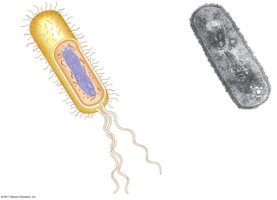

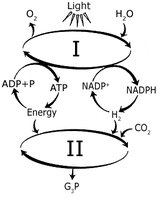

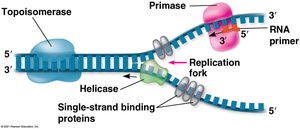


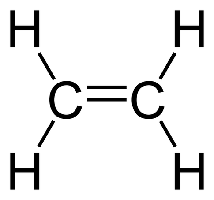
Try solving on your own before revealing the answer!
Final Answer:
Glucose, fructose, sucrose: Carbohydrates
Amino acid, enzyme: Proteins
Phospholipid, steroid, triglyceride: Lipids
Nucleotide: Nucleic acid
Recognizing structural features is key to classifying biological molecules.
Q14. Identify the function of dehydration synthesis reactions and hydrolysis reactions.
Background
Topic: Polymer Formation and Breakdown
This question tests your understanding of how biological polymers are built and broken down.
Key Terms:
Dehydration Synthesis
Hydrolysis
Monomer
Polymer
Step-by-Step Guidance
Recall that dehydration synthesis joins monomers by removing water.
Hydrolysis breaks polymers into monomers by adding water.
Think about examples in carbohydrates, proteins, and nucleic acids.
Try solving on your own before revealing the answer!
Final Answer:
Dehydration synthesis forms polymers by joining monomers and releasing water.
Hydrolysis breaks polymers into monomers by adding water.
These reactions are essential for building and breaking down biological molecules.
Q15. What are the major functions of fats, phospholipids, and steroids?
Background
Topic: Lipid Functions
This question tests your understanding of the roles of different types of lipids in biological systems.
Key Terms:
Fats: Energy storage
Phospholipids: Membrane structure
Steroids: Signaling molecules
Step-by-Step Guidance
Recall the structure and function of each lipid type.
Think about where each is found in cells and organisms.
Write a brief summary of the function for each lipid.
Try solving on your own before revealing the answer!
Final Answer:
Fats: Store energy
Phospholipids: Form cell membranes
Steroids: Act as hormones and signaling molecules
Each lipid type has a unique and essential role in biology.
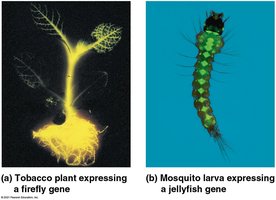
Q16. Explain what is meant by gene expression.
Background
Topic: Gene Expression
This question tests your understanding of how genetic information is used to produce proteins.
Key Terms:
Gene Expression: The process by which information from a gene is used to synthesize a functional product (protein).
Transcription
Translation
Step-by-Step Guidance
Recall the steps involved in gene expression: transcription and translation.
Think about how DNA is transcribed into mRNA and then translated into protein.
Write a concise explanation of gene expression.
Try solving on your own before revealing the answer!
Final Answer:
Gene expression is the process by which a gene's DNA sequence is transcribed into mRNA and then translated into a protein, resulting in a functional product.
This process allows organisms to use genetic information to build structures and carry out functions.
