 Indietro
General Biology Study Guidance: Key Concepts and Practice
Guida di studio - Note intelligenti
 Appunti personalizzati basati sui tuoi materiali, ampliati con definizioni chiave, esempi e contesto.
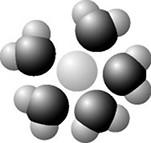
Q31. Based on your knowledge of the polarity of water molecules, the solute molecule depicted is most likely ________.
Background
Topic: Water Polarity and Solute Interaction
This question tests your understanding of how water molecules interact with solutes based on their polarity. Water is a polar molecule, meaning it has a partial positive and partial negative charge, which affects how it dissolves other substances.
Key Terms and Concepts:
Polarity: A molecule with uneven distribution of charge (like water).
Hydration shell: The arrangement of water molecules around a solute.
Solute: The substance being dissolved.
Electrostatic interaction: Attraction between opposite charges.
Step-by-Step Guidance
Examine the image: Notice how water molecules (with their partial charges) are oriented around the central solute.
Recall that water's oxygen atom is partially negative, and its hydrogen atoms are partially positive.
Consider how water molecules arrange themselves around ions or polar molecules: The oxygen ends face positive solutes, and the hydrogen ends face negative solutes.
Analyze the orientation in the image: Are the oxygen atoms (larger, darker spheres) facing the solute, or are the hydrogen atoms (smaller, lighter spheres) facing it?
Based on this arrangement, deduce whether the solute is likely to be positively or negatively charged.
Try solving on your own before revealing the answer!
Final Answer: Positively charged
The image shows water molecules with their oxygen atoms (negative ends) facing the solute, indicating the solute is positively charged. Water's polarity allows it to surround and stabilize positive ions by orienting the negative ends toward them.
