 Indietro
General Biology Study Notes: Biomolecules, Cellular Structure, and Cellular Respiration
Guida di studio - Note intelligenti
 Appunti personalizzati basati sui tuoi materiali, ampliati con definizioni chiave, esempi e contesto.
Anatomy of Biomolecules
Amino Acids: Structure and Properties
Amino acids are the building blocks of proteins, each consisting of a central carbon (α-carbon) bonded to an amino group, a carboxyl group, a hydrogen atom, and a variable R group. The R group determines the chemical properties and function of each amino acid. - Amino Group (NH2): Basic functional group. - Carboxyl Group (COOH): Acidic functional group. - R Group: Variable side chain, unique for each amino acid. - Peptide Bond: Formed between the carboxyl group of one amino acid and the amino group of another. 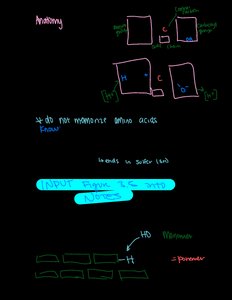
Polypeptide Formation
Polypeptides are chains of amino acids linked by peptide bonds. The sequence and chemical nature of the R groups determine the protein's structure and function. - N-terminus: Start of the polypeptide (amino group). - C-terminus: End of the polypeptide (carboxyl group).
Protein Structure and Function
Levels of Protein Structure
Proteins have four levels of structure: primary, secondary, tertiary, and quaternary. - Primary Structure: Sequence of amino acids. - Secondary Structure: Local folding into α-helices and β-sheets, stabilized by hydrogen bonds. - Tertiary Structure: 3D shape formed by interactions among R groups. - Quaternary Structure: Association of multiple polypeptide chains. 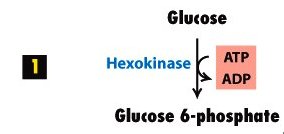 - Hydrogen Bonds: Important for secondary structure. - Disulfide Bonds: Covalent bonds between cysteine residues, stabilizing tertiary structure. - Function: Enzymes, structural proteins, signaling molecules, etc.
Nucleic Acids: Structure and Function
Nucleotides and Nucleic Acid Polymers
Nucleic acids (DNA and RNA) are polymers of nucleotides. Each nucleotide consists of a phosphate group, a five-carbon sugar (ribose or deoxyribose), and a nitrogenous base. - Phosphodiester Bond: Links the 5' phosphate of one nucleotide to the 3' hydroxyl of another. - Directionality: Nucleic acids have a 5' to 3' direction. - DNA: Contains deoxyribose; bases are adenine, thymine, cytosine, guanine. - RNA: Contains ribose; bases are adenine, uracil, cytosine, guanine.
Carbohydrates: Structure and Function
Types of Carbohydrates
Carbohydrates are classified as simple (monosaccharides) or complex (disaccharides, polysaccharides). - Monosaccharides: Single sugar units (e.g., glucose). - Disaccharides: Two monosaccharides linked (e.g., sucrose). - Polysaccharides: Long chains (e.g., starch, cellulose, glycogen). - Functions: Energy storage, structural support, cell recognition.
Cellular Structure
Eukaryotic Cell Structure
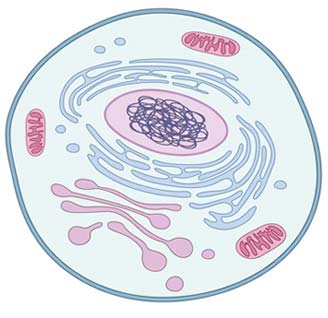
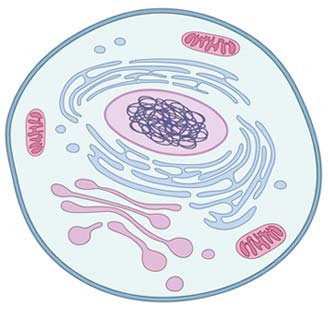
Eukaryotic cells contain membrane-bound organelles, including the nucleus, mitochondria, endoplasmic reticulum, and Golgi apparatus. - Nucleus: Contains DNA. - Mitochondria: Site of cellular respiration. - Endoplasmic Reticulum (ER): Rough ER (protein synthesis), Smooth ER (lipid synthesis). - Golgi Apparatus: Protein processing and sorting. 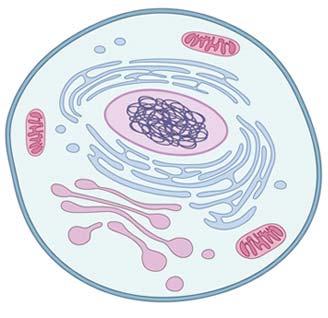
Cellular Respiration
Overview of Glucose Oxidation
Cellular respiration is the process by which cells extract energy from glucose. It consists of glycolysis, pyruvate processing, the citric acid cycle, and the electron transport chain. - Glycolysis: Occurs in the cytosol; glucose is converted to pyruvate, producing ATP and NADH. - Pyruvate Processing: Pyruvate is converted to acetyl CoA in the mitochondria. - Citric Acid Cycle: Acetyl CoA enters the cycle, producing NADH, FADH2, ATP, and CO2. - Electron Transport Chain (ETC): NADH and FADH2 donate electrons, creating a proton gradient used to synthesize ATP. 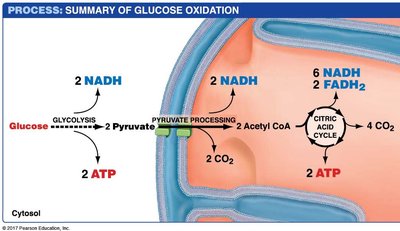
Key Steps in Glycolysis
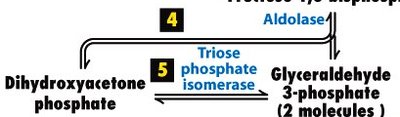
Glycolysis involves ten enzyme-catalyzed steps. - Step 1: Hexokinase phosphorylates glucose, using ATP. 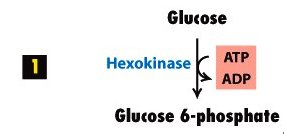 - Step 4/5: Aldolase and triose phosphate isomerase convert fructose-1,6-bisphosphate to two three-carbon sugars.
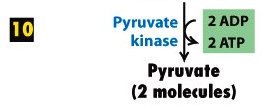
 - Step 10: Pyruvate kinase catalyzes the final step, producing pyruvate and ATP.
Citric Acid Cycle (Krebs Cycle)
The citric acid cycle completes the oxidation of glucose derivatives, generating high-energy electron carriers. - Acetyl CoA enters the cycle, combining with oxaloacetate to form citrate. - Key Products: NADH, FADH2, ATP (or GTP), CO2. 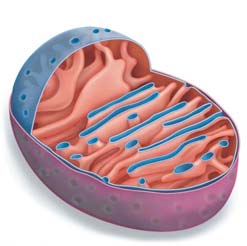
Electron Transport Chain and Chemiosmosis
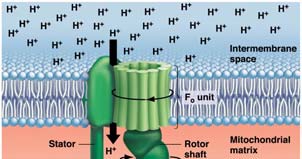
The ETC is located in the inner mitochondrial membrane. Electrons from NADH and FADH2 are transferred through protein complexes, pumping protons to create a gradient. - Complexes I-IV: Sequential electron transfer and proton pumping. - ATP Synthase: Uses the proton gradient to synthesize ATP from ADP and Pi. 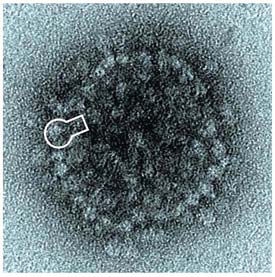
Summary of Cellular Respiration
The complete oxidation of one glucose molecule yields: - 2 ATP (glycolysis) - 2 ATP (citric acid cycle) - ~25 ATP (electron transport chain and chemiosmosis) - Electron carriers: 10 NADH, 2 FADH2 
Experimental Evidence for Chemiosmosis
Linkage of ETC and ATP Production
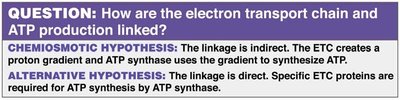
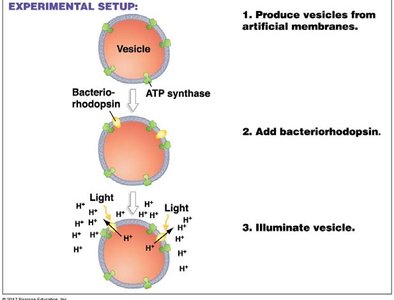
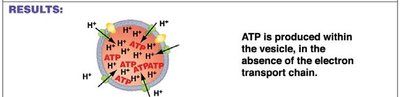
The chemiosmotic hypothesis states that the ETC creates a proton gradient, which ATP synthase uses to produce ATP. Experimental setups using artificial vesicles and bacteriorhodopsin demonstrate ATP synthesis in the absence of the ETC, supporting the hypothesis. 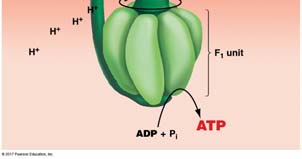
Additional info:
- The notes cover foundational topics from General Biology chapters: protein structure and function, nucleic acids, carbohydrates, cell structure, and cellular respiration. - Diagrams and images are included only when directly relevant to the explanation. - Equations are provided in LaTeX format for clarity.
