 Indietro
General Biology Study Notes: Chemistry of Life, Water, and Macromolecules
Guida di studio - Note intelligenti
 Appunti personalizzati basati sui tuoi materiali, ampliati con definizioni chiave, esempi e contesto.
Chemistry and Biology: The Foundation of Life
Relationship Between Biology and Chemistry
Biology and chemistry are closely linked because all living things are composed of matter, which is governed by chemical principles. Understanding the chemical basis of life is essential for studying biological processes.
Matter: Anything that has mass and occupies space. All living and non-living things are made of matter.
Law of Conservation of Matter: Matter cannot be created or destroyed, only transformed.
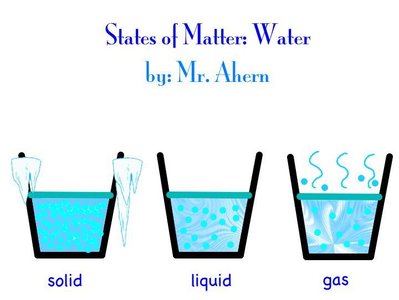
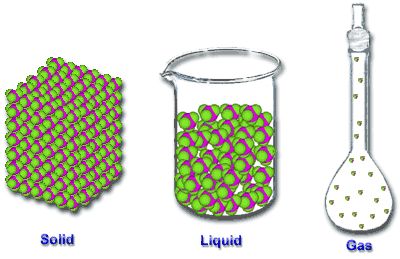
States of Matter
Phases of Matter
Matter exists in three main phases relevant to biology: solid, liquid, and gas. Plasma is a fourth phase but is not found in living organisms.
Solid: Particles are tightly packed and vibrate in place.
Liquid: Particles are less tightly packed and can move past each other.
Gas: Particles are far apart and move freely.
Atoms and Elements
Structure of the Atom
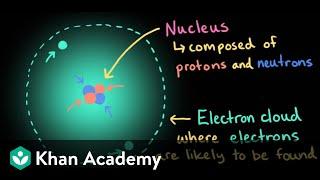
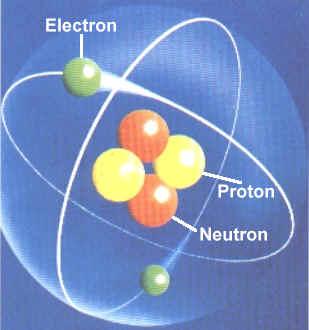
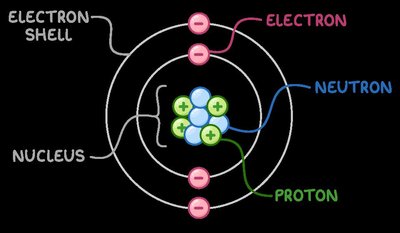
The atom is the smallest unit of an element that retains its chemical properties. The arrangement of subatomic particles determines the atom's behavior and the state of matter.
Nucleus: Contains protons (positive charge) and neutrons (no charge).
Electron Cloud: Region where electrons (negative charge) are likely to be found, orbiting the nucleus.
Elements
An element is a pure substance that cannot be broken down into other substances by chemical means. Each element is defined by its number of protons.
Examples: Oxygen (O), Silver (Ag), Copper (Cu)
Four elements make up 96% of living matter: Carbon (C), Hydrogen (H), Oxygen (O), Nitrogen (N)
Other important elements: Phosphorus (P), Sulfur (S)
Trace elements are required in small amounts (e.g., Iodine, Fluoride)
Classification of Elements
Metals, Nonmetals, and Metalloids
Subatomic Particles
Proton: Positively charged, found in the nucleus
Neutron: No charge, found in the nucleus
Electron: Negatively charged, orbits the nucleus
Atomic Number and Mass
Atomic Number: Number of protons in an atom
Atomic Mass: Number of protons plus neutrons
Electron Shells and Valence Electrons
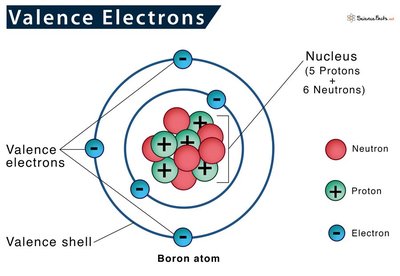
Electrons occupy energy levels or shells around the nucleus. The outermost shell contains valence electrons, which determine chemical reactivity.
1st shell: up to 2 electrons
2nd shell: up to 8 electrons
3rd shell: up to 18 electrons
Octet Rule: Atoms are most stable with 8 electrons in their outer shell (except H and He, which are stable with 2)
Isotopes and Ions
Isotopes
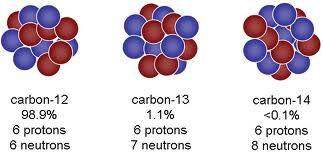
Isotopes are atoms of the same element with different numbers of neutrons. Some isotopes are stable, while others are radioactive.
Example: Carbon-12, Carbon-13, Carbon-14
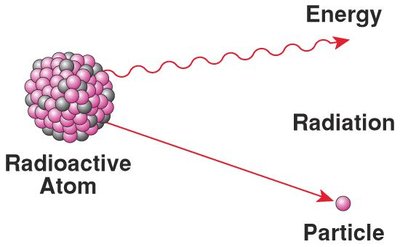
Radioactive isotopes can decay, emitting radiation (used in medicine, but can be dangerous in large amounts)
Ions
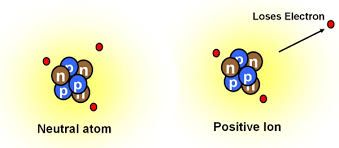
Ions are atoms that have gained or lost electrons, resulting in a net charge.
Cation: Positive ion (lost electrons)
Anion: Negative ion (gained electrons)
Chemical Bonds
Ionic Bonds
Ionic bonds form when electrons are transferred from one atom to another, creating oppositely charged ions that attract each other. Usually occurs between metals and nonmetals.
Example: Sodium chloride (NaCl)

Covalent Bonds
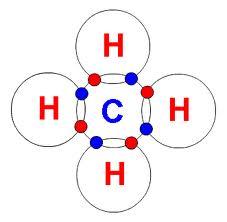
Covalent bonds form when two atoms share electrons. These are strong bonds, typically between nonmetals.
Polar Covalent Bond: Electrons are shared unequally, creating partial charges (e.g., water)
Nonpolar Covalent Bond: Electrons are shared equally
Hydrogen Bonds
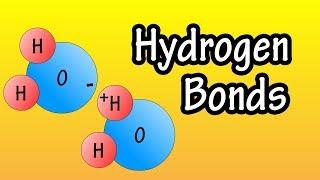
Hydrogen bonds are weak attractions between a hydrogen atom in one molecule and an electronegative atom (like oxygen or nitrogen) in another molecule. Many hydrogen bonds together can be strong.
Water: Structure and Properties
Structure of Water
Water (H2O) is a polar molecule, with oxygen having a partial negative charge and hydrogen having a partial positive charge. This polarity allows water molecules to form hydrogen bonds with each other.
Properties of Water
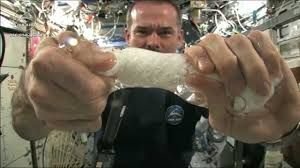
Cohesion: Water molecules stick to each other due to hydrogen bonding (e.g., water droplets)
Adhesion: Water molecules stick to other substances (e.g., water climbing up plant vessels)
Capillary Action: Combination of cohesion and adhesion allows water to move up thin tubes, essential for plant transport
Surface Tension: Water has a strong surface tension, allowing small objects to float
High Specific Heat: Water can absorb a lot of heat before changing temperature, helping regulate climate and body temperature
High Heat of Vaporization: It takes a lot of energy to convert water from liquid to gas, important for cooling mechanisms like sweating
Density of Ice: Ice is less dense than liquid water, so it floats, insulating aquatic life in winter
Solvent Properties: Water dissolves many ionic and polar substances, making it an excellent medium for biological reactions
Macromolecules: The Molecules of Life
The Chemistry of Carbon
Carbon is the backbone of organic molecules due to its ability to form four covalent bonds, allowing for a variety of structures (chains, rings, branching).
Organic Compounds: Contain carbon and are found in living things
Inorganic Compounds: Do not contain carbon-hydrogen bonds
Types of Biological Macromolecules
Carbohydrates: Sugars and starches, provide energy and structural support
Lipids: Fats, oils, and waxes, store energy, make up membranes, and act as signaling molecules
Proteins: Made of amino acids, perform most cellular functions
Nucleic Acids: DNA and RNA, store and transmit genetic information
Monomers and Polymers
Monomer: Small building block molecule
Polymer: Large molecule made of repeating monomers
Dehydration Synthesis: Joins monomers by removing water
Hydrolysis: Breaks polymers into monomers by adding water
Carbohydrates
Monomer: Monosaccharide (e.g., glucose, fructose)
Polymer: Polysaccharide (e.g., starch, glycogen, cellulose)
Functions: Quick energy, energy storage, structural support (cell walls in plants)
Lipids
Monomer: Fatty acids and glycerol
Polymer: Triglycerides, phospholipids, steroids
Functions: Energy storage, cell membrane structure, insulation, signaling
Saturated Fats: No double bonds, solid at room temperature
Unsaturated Fats: One or more double bonds, liquid at room temperature
Proteins
Monomer: Amino acid (20 types)
Polymer: Polypeptide chain
Functions: Enzymes, structural support, transport, signaling
Shape Determines Function: Protein function depends on its three-dimensional shape
Nucleic Acids
Monomer: Nucleotide (phosphate, sugar, base)
Polymer: DNA (double helix), RNA (single strand)
Functions: Store and transmit genetic information
Enzymes and Chemical Reactions
Chemical Reactions
Chemical reactions involve the transformation of reactants into products, often with changes in energy.
Activation Energy: The energy required to start a reaction
Enzymes: Proteins that act as catalysts, lowering activation energy and speeding up reactions
How Enzymes Work
Substrate: The molecule acted upon by the enzyme
Active Site: The region on the enzyme where the substrate binds
Specificity: Each enzyme only works with specific substrates (lock and key model)
Denaturation: Loss of enzyme shape (and function) due to heat, pH, or toxins
Nutrition and Macromolecules in Food
Carbohydrates in Nutrition
Monosaccharides: Simple sugars, quick energy (e.g., glucose in fruits, candy)
Polysaccharides: Complex sugars, long-term energy (e.g., starch in bread, pasta)
Cellulose: Dietary fiber, not digestible by humans but important for digestive health
Lactose Intolerance: Inability to digest lactose due to lack of lactase enzyme
Lipids in Nutrition
Unsaturated Fats: Healthier, found in fish, nuts, plant oils
Saturated Fats: Less healthy, found in meats, butter, dairy
Trans Fats: Unhealthy, artificially produced
Essential Fatty Acids: Must be obtained from diet (e.g., omega-3, omega-6)
Cholesterol: LDL (bad), HDL (good)
Proteins in Nutrition
Essential Amino Acids: Must be obtained from diet (animal proteins are complete, some plant combinations are complete)
Protein Allergies: Immune response to specific proteins in food
Nucleic Acids in Nutrition
Present in all foods of biological origin, but not a significant energy source
Summary Table: Macromolecules
Macromolecule | Monomer | Polymer | Main Functions |
|---|---|---|---|
Carbohydrates | Monosaccharide | Polysaccharide | Energy, structure |
Lipids | Fatty acid + Glycerol | Triglyceride, Phospholipid, Steroid | Energy storage, membranes, signaling |
Proteins | Amino acid | Polypeptide | Enzymes, structure, transport |
Nucleic Acids | Nucleotide | DNA, RNA | Genetic information |
Key Equations and Concepts
Atomic Mass:
Chemical Equation Example:
Dehydration Synthesis:
Hydrolysis:
