 Indietro
General Biology Study Notes: Foundations, Chemistry, Water, Carbon, and Cells
Guida di studio - Note intelligenti
 Appunti personalizzati basati sui tuoi materiali, ampliati con definizioni chiave, esempi e contesto.
Biology: Exploring Life
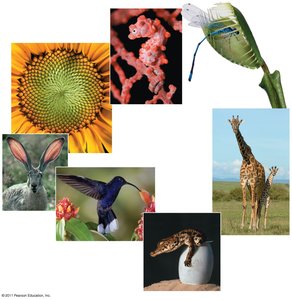
The Characteristics of Life
Biology is the scientific study of life, focusing on the processes and organization of living matter. Life is recognized by a set of characteristics that distinguish living organisms from non-living matter.
Order: Living things exhibit complex organization.
Evolutionary adaptation: Organisms adapt to their environment over generations.
Response to the environment: Living things respond to stimuli.
Reproduction: Organisms reproduce to ensure species continuity.
Growth and development: Organisms grow and develop according to genetic instructions.
Energy processing: Living things obtain and use energy.
Regulation: Homeostasis maintains internal stability.
The Hierarchical Organization of Life
Life is organized into a hierarchy, from atoms to the biosphere. Each level exhibits emergent properties not found at lower levels.
Emergent properties: New characteristics arise from the arrangement and interaction of parts within a system.
Levels: Atoms → Molecules → Organelles → Cells → Tissues → Organs → Organ systems → Organisms → Populations → Communities → Ecosystems → Biosphere.
The Cell: Basic Unit of Structure and Function
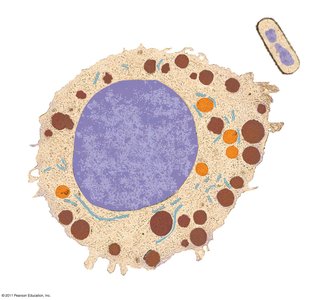
The cell is the smallest unit capable of all life functions. Cells are classified as prokaryotic or eukaryotic based on their structure.
Prokaryotic cells: Lack a nucleus and membrane-bound organelles.
Eukaryotic cells: Have a nucleus and membrane-bound organelles.
Interactions with the Environment
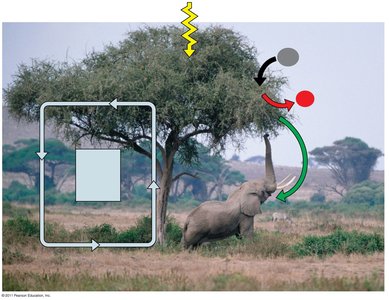
Organisms interact with each other and their environment, playing roles as producers, consumers, or decomposers. These interactions drive the cycling of nutrients and energy flow.
Producers: Create organic molecules from sunlight (e.g., plants).
Consumers: Obtain energy by eating other organisms.
Decomposers: Break down dead matter, recycling nutrients.
Energy Transfer and Transformation
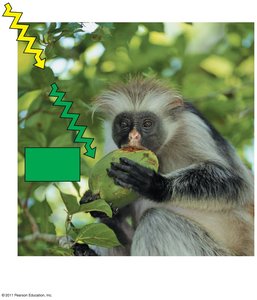
Energy flows through ecosystems, entering as light and exiting as heat. Organisms transform energy to carry out life processes.
Photosynthesis: Plants convert sunlight to chemical energy.
Cellular respiration: Organisms convert chemical energy to kinetic and thermal energy.
Structure and Function
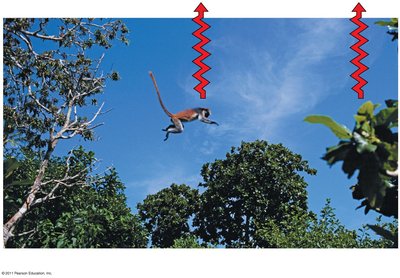
Biological structure and function are closely related at all levels. For example, the shape of plant leaves is optimized for photosynthesis.
Heritable Information and DNA
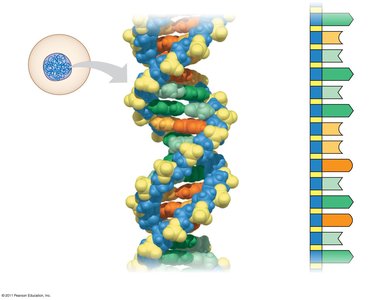
DNA is the molecule of inheritance, containing instructions for development and maintenance. Genes are segments of DNA encoding proteins, and the genome is the complete set of genetic instructions.
DNA: Double helix structure, composed of nucleotides (A, T, C, G).
Genes: Functional units of inheritance.
Genome: Entire genetic content of an organism.
Classifying the Diversity of Life
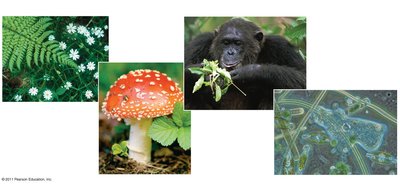
Organisms are classified into three domains: Bacteria, Archaea, and Eukarya. Domains are subdivided into kingdoms and further into more specific groups.
Bacteria and Archaea: Prokaryotic, unicellular, cell wall present.
Eukarya: Eukaryotic, includes Protista, Fungi, Plants, and Animals.
Binomial Nomenclature
Scientific naming uses two parts: genus (capitalized) and species (lowercase). Example: Canis lupus (wolf).
Evolution: The Overarching Theme
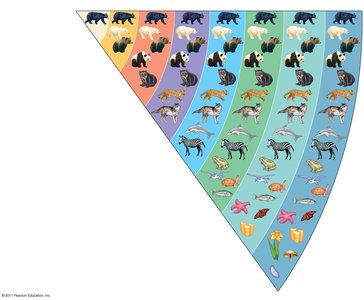
Evolution is the change in organisms over time, driven by mutation, adaptation, and natural selection. All living organisms share common ancestry.
Natural selection: Favors individuals with advantageous traits, leading to evolution.

The Scientific Method
The scientific method is a systematic process for analysis and problem solving in biology.
Observation: Identifying a phenomenon.
Question: Formulating a specific problem.
Hypothesis: Tentative answer, testable and falsifiable.
Experiment: Testing predictions, using controls and variables.
Results: Data collection and analysis.
Conclusion: Interpretation of results, relating to hypothesis.
The Chemical Context of Life
Elements and Atoms
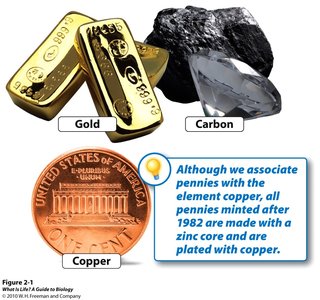
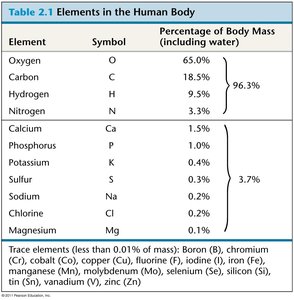
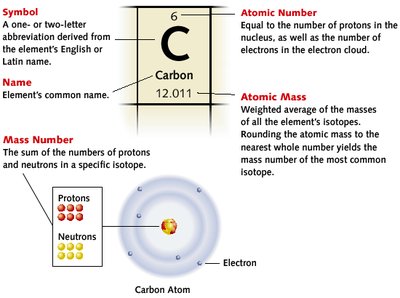
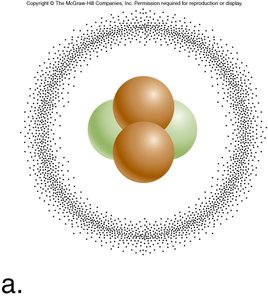
All matter is composed of elements, which are substances that cannot be broken down chemically. Atoms are the smallest units of elements, consisting of protons, neutrons, and electrons.
Protons: Positive charge, determine element identity.
Neutrons: No charge, determine isotope.
Electrons: Negative charge, determine chemical behavior.
Isotopes and Ions
Isotopes are atoms of the same element with different numbers of neutrons. Ions are atoms with differing numbers of electrons, resulting in a charge.
Radioactive isotopes: Used as tracers in medicine.
Electron Distribution and Chemical Bonds
Electrons occupy energy levels (shells) around the nucleus. The distribution of electrons determines an atom's chemical properties and bonding behavior.
Valence shell: Outermost shell, determines bonding capacity.
Types of bonds: Ionic, covalent (polar and nonpolar), hydrogen.
Ionic Bonds
Ionic bonds involve the transfer of electrons, resulting in oppositely charged ions (cations and anions) that attract each other.
Example: Sodium (Na) transfers an electron to chlorine (Cl), forming Na+ and Cl-.
Covalent Bonds
Covalent bonds involve the sharing of electrons between atoms. They can be single, double, or triple bonds.
Nonpolar covalent: Equal sharing of electrons.
Polar covalent: Unequal sharing, resulting in partial charges.
Hydrogen Bonds
Hydrogen bonds are weak attractions between a hydrogen atom in a polar covalent bond and an electronegative atom in another molecule.
Chemical Reactions
Chemical reactions make and break chemical bonds, converting reactants into products. The equation must balance the number and type of atoms.
Example:
Water and Life
Properties of Water
Water is essential for life, exhibiting unique properties due to its polar covalent bonds and hydrogen bonding.
Cohesion: Water molecules stick together.
Adhesion: Water molecules stick to other substances.
High specific heat: Water resists temperature changes.
Expansion upon freezing: Ice is less dense than liquid water.
Versatility as a solvent: Water dissolves many substances.
Acids, Bases, and pH
Acids increase H+ concentration; bases decrease it. The pH scale measures acidity, with buffers maintaining stable pH in living systems.
pH scale: Logarithmic, each unit represents a tenfold change in H+ concentration.
Buffer: Substance that resists changes in pH.
Carbon and the Molecular Diversity of Life
Carbon's Versatility
Carbon forms the backbone of organic molecules, capable of creating diverse structures due to its four bonding sites.
Isomers: Molecules with the same formula but different structures.
Functional groups: Specific groups of atoms that confer unique properties.
Organic Biological Macromolecules
Macromolecules are large organic molecules made from smaller monomers. The four main classes are carbohydrates, lipids, proteins, and nucleic acids.
Dehydration synthesis: Joins monomers by removing water.
Hydrolysis: Breaks polymers by adding water.
The Structure and Function of Large Biological Molecules
Carbohydrates
Carbohydrates serve as fuel and building materials. Monosaccharides (simple sugars) form polysaccharides (complex carbohydrates).
Starch: Storage in plants.
Glycogen: Storage in animals.
Cellulose and chitin: Structural molecules.
Proteins
Proteins are diverse in structure and function, composed of amino acids linked by peptide bonds. Their function depends on their three-dimensional shape.
Functions: Structural support, storage, enzymes, transport, communication, movement, defense.
Levels of structure: Primary, secondary, tertiary, quaternary.
Denaturation: Loss of structure and function due to environmental changes.
Lipids
Lipids are hydrophobic molecules, including fats, oils, phospholipids, and steroids. They do not form polymers.
Fats: Glycerol and fatty acids, energy storage.
Saturated vs. unsaturated: Saturated have no double bonds; unsaturated have one or more.
Phospholipids: Major component of cell membranes.
Steroids: Hormones and structural molecules.
Nucleic Acids
Nucleic acids (DNA and RNA) store and transmit hereditary information. Monomers are nucleotides, composed of a sugar, phosphate, and nitrogenous base.
ATP: Adenosine triphosphate, primary energy carrier in cells.
A Tour of the Cell
Cell Theory and Types
Cells are the fundamental units of life. The cell theory states that all living things are composed of cells, and all cells arise from pre-existing cells.
Prokaryotes: Bacteria and Archaea, lack nucleus.
Eukaryotes: Plants, animals, fungi, protists, have nucleus and organelles.
Microscopy and Cell Structure
Microscopes are essential for studying cells. Light microscopes magnify up to 1,000x, while electron microscopes provide greater detail.
Magnification: Increase in apparent size.
Resolution: Ability to distinguish details.
Contrast: Difference in light intensity.
Cell Size and Surface Area
Cells are small to maximize surface area for exchange of materials. Larger organisms are composed of many small cells.
Cellular Components
Eukaryotic cells contain organelles with specialized functions:
Nucleus: Genetic control center.
Ribosomes: Protein synthesis.
Endoplasmic reticulum: Manufacturing and processing.
Golgi apparatus: Shipping and processing.
Lysosomes: Digestion and recycling.
Vacuoles: Storage.
Peroxisomes: Metabolism.
Mitochondria: Energy production (ATP).
Chloroplasts: Photosynthesis (plants).
Cytoskeleton: Structure and movement.
Cell Surfaces and Communication
Cells have extracellular structures (cell wall, extracellular matrix) and junctions for communication and coordination.
Membrane Structure and Function
Plasma Membrane
The plasma membrane is a selectively permeable barrier composed of a fluid mosaic of phospholipids and proteins.
Phospholipid bilayer: Hydrophilic heads, hydrophobic tails.
Proteins: Integral and peripheral, perform various functions.
Cholesterol: Modulates fluidity.
Transport Across Membranes
Membranes regulate the movement of substances:
Passive transport: Diffusion, facilitated diffusion, osmosis.
Active transport: Uses energy (ATP) to move substances against gradients.
Bulk transport: Endocytosis and exocytosis for large particles.
Osmosis and Tonicity
Osmosis is the diffusion of water across membranes. Tonicity describes the effect of solute concentration on cell volume (hypotonic, isotonic, hypertonic).
Sodium-Potassium Pump
The sodium-potassium pump is an example of active transport, maintaining ion gradients essential for cell function.
Equation: per ATP hydrolyzed.
Endocytosis and Exocytosis
Cells use endocytosis to take in large particles and exocytosis to expel them.
Additional info: Academic context and explanations were expanded for completeness and clarity. Only images directly relevant to the adjacent content were included.
