 Indietro
Bio Lab Midterm
Guida di studio - Note intelligenti
 Appunti personalizzati basati sui tuoi materiali, ampliati con definizioni chiave, esempi e contesto.
Scientific Method and Laboratory Safety
Scientific Method
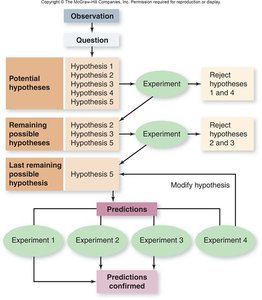
The scientific method is a systematic approach used by scientists to investigate natural phenomena, develop hypotheses, and test predictions through experimentation. It is foundational to biological inquiry and ensures that conclusions are based on evidence.
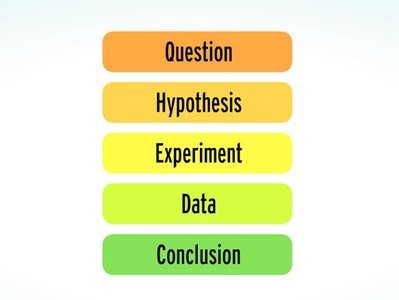
Observation: Noticing and describing phenomena.
Question: Formulating a question based on observations.
Hypothesis: Proposing a testable explanation.
Experiment: Designing and conducting tests to evaluate the hypothesis.
Data: Collecting and analyzing results.
Conclusion: Drawing conclusions based on data; hypotheses may be accepted, rejected, or modified.
Laboratory Safety and PPE
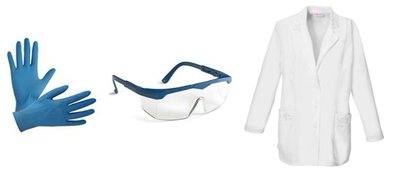
Personal Protective Equipment (PPE) is essential for laboratory safety. Proper attire includes lab coats, safety goggles, and gloves. PPE protects against chemical spills, biological samples, and sharp objects, and is mandatory for lab participation.
Lab coat: Protects skin and clothing.
Safety goggles: Shields eyes from hazardous substances.
Gloves: Prevents direct contact with chemicals and samples.
Laboratory Notebook
A laboratory notebook is used to record experiment titles, objectives, hypotheses, procedures, results, and discussions. Accurate record-keeping is critical for scientific integrity and reproducibility.
Measurement and Metric System
Metric Units
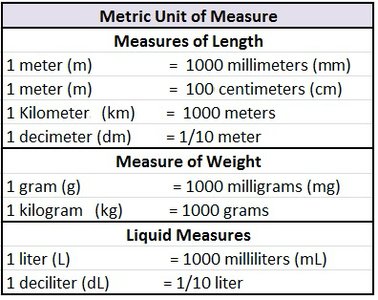
The metric system is the universal standard for scientific measurement. It includes units for length, mass, and volume, and allows easy conversion between units.
Length: Meter (m), millimeter (mm), centimeter (cm), kilometer (km), decimeter (dm)
Mass: Gram (g), milligram (mg), kilogram (kg)
Volume: Liter (L), milliliter (mL), deciliter (dL)
The Chemical Context of Life: pH, Acids, Bases, and Buffers
pH Scale and Biological Importance
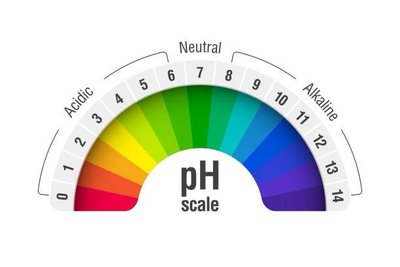
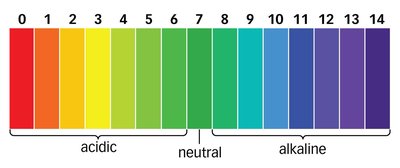
The pH scale measures the concentration of hydrogen ions in a solution, ranging from 0 (very acidic) to 14 (very basic), with 7 being neutral. Most biological processes occur near neutral pH, but some organisms are adapted to extreme pH environments.
Acidophiles: Thrive in low pH (acidic) environments.
Alkalinophiles: Thrive in high pH (basic) environments.
Human blood: pH ~7.4 (slightly basic, tightly regulated).
Stomach: pH ~2 (very acidic, kills most microbes).
Acids, Bases, and Buffers
Acids are proton donors, bases are proton acceptors, and buffers are systems that resist changes in pH. Buffers are crucial for maintaining homeostasis in biological systems.
Acid: Releases hydrogen ions (H+), lowering pH.
Base: Accepts hydrogen ions, raising pH.
Buffer: Made of weak acids or bases; stabilizes pH by accepting or releasing H+.
Bicarbonate buffer system: Maintains blood and intestinal pH.
Buffer System Equation
The bicarbonate buffer system is represented as:
pH Table for Common Substances
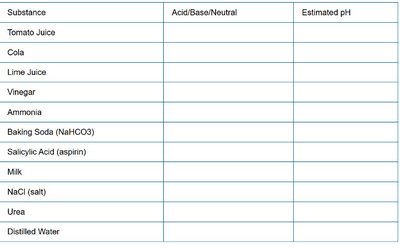
Substances can be classified as acidic, basic, or neutral based on their estimated pH values.
Substance | Acid/Base/Neutral | Estimated pH |
|---|---|---|
Tomato Juice | Acidic | ~4 |
Cola | Acidic | ~3 |
Lime Juice | Acidic | ~2 |
Vinegar | Acidic | ~3 |
Ammonia | Basic | ~11 |
Baking Soda (NaHCO3) | Basic | ~9 |
Salicylic Acid (aspirin) | Acidic | ~3 |
Milk | Neutral/Acidic | ~6.5 |
NaCl (salt) | Neutral | ~7 |
Urea | Neutral | ~7 |
Distilled Water | Neutral | 7 |
Macromolecules: Structure and Function
Types of Macromolecules
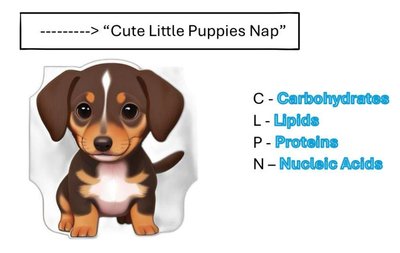
Macromolecules are large biological molecules essential for life. They are classified into four major groups based on their chemical composition, physical properties, and biological function.
Carbohydrates: Main energy source, structural support (e.g., cellulose, chitin).
Lipids: Long-term energy storage, cell membrane structure, hormones.
Proteins: Structure, enzymes, transport, signaling.
Nucleic Acids: Store and transmit genetic information (DNA, RNA).
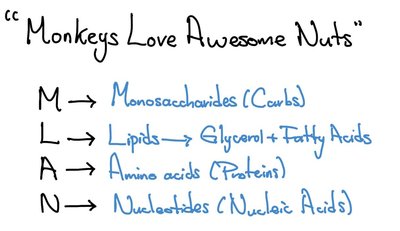
Monomers of Macromolecules
Each macromolecule group is composed of specific monomers:
Carbohydrates: Monosaccharides
Lipids: Glycerol + Fatty acids
Proteins: Amino acids
Nucleic Acids: Nucleotides
Carbohydrates
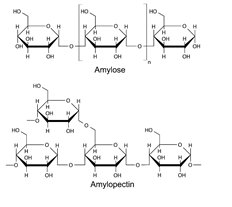
Carbohydrates are polymers of monosaccharides and serve as energy sources and structural components. Polysaccharides include starches, glycogen, cellulose, and chitin.
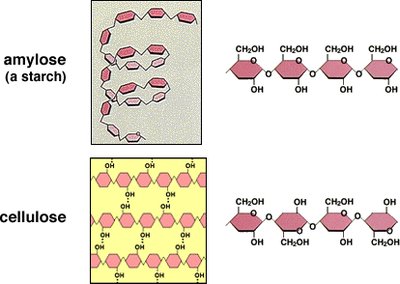
Starch: Energy storage in plants; can be amylose (straight-chain) or amylopectin (branched).
Glycogen: Energy storage in animals; highly branched.
Cellulose: Structural component in plant cell walls; composed of beta-D-glucose.
Chitin: Structural polysaccharide in arthropod exoskeletons and fungal cell walls.
Proteins
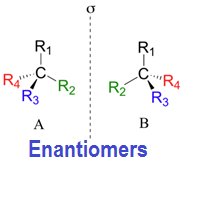
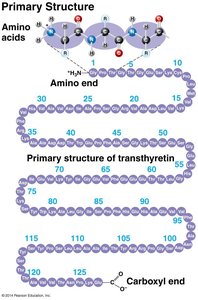
Proteins are polymers of amino acids and perform diverse functions, including catalysis, structure, transport, and signaling. Amino acids have a central α-carbon, a carboxyl group, an amino group, a hydrogen, and an R group.
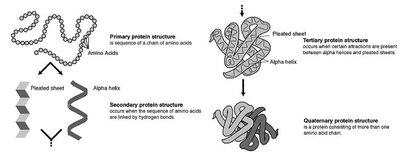
Primary structure: Sequence of amino acids.
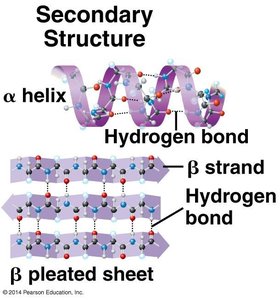
Secondary structure: α-helix and β-pleated sheet, stabilized by hydrogen bonds.
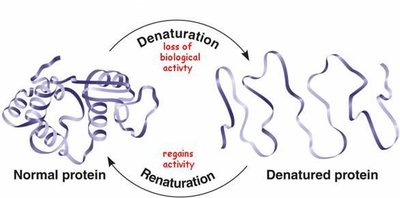
Tertiary structure: Three-dimensional folding due to interactions among side chains (hydrogen bonds, ionic bonds, hydrophobic interactions, disulfide bridges).
Quaternary structure: Association of two or more polypeptide chains.

Lipids
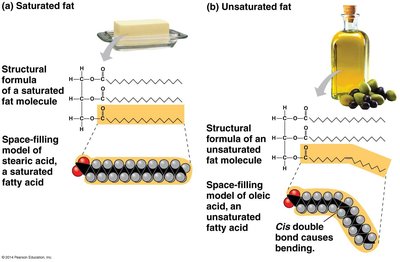
Lipids are hydrophobic molecules classified by their insolubility in water. They include fats, oils, phospholipids, waxes, sterols, and steroids. Lipids are important for energy storage, membrane structure, and signaling.
Triglycerides: Glycerol + 3 fatty acids; saturated (solid) or unsaturated (liquid).
Phospholipids: Glycerol + 2 fatty acids + phosphate; amphipathic, form cell membranes.
Steroids: Four-ring structure; includes cholesterol, hormones (estrogen, testosterone).
Cellular Structure and Microscopy
Cell Theory and Types of Cells
The cell is the fundamental unit of life. Cell theory states that all living organisms are composed of cells, and all cells arise from pre-existing cells. Cells can be unicellular or multicellular.
Prokaryotic cells: Lack internal organelles; DNA in nucleoid; domains Bacteria and Archaea.
Eukaryotic cells: Have membrane-bound organelles; DNA in nucleus; include plants, animals, fungi, protists.
Microscopy
Microscopes are essential tools for studying cells and their structures. Types include compound light microscopes, dissection microscopes, confocal microscopes, scanning electron microscopes (SEM), and transmission electron microscopes (TEM).
Compound light microscope: Uses visible light; magnifies up to 1000x; suitable for viewing cells.
SEM: Uses electrons; provides 3D images of cell surfaces.
TEM: Uses electrons; provides 2D images of thin cell sections.
Cellular Organelles
Eukaryotic cells contain specialized organelles:
Nucleus: Houses DNA; site of replication and transcription.
Endoplasmic reticulum (ER): Rough ER synthesizes proteins; smooth ER synthesizes lipids and detoxifies.
Golgi apparatus: Processes and packages proteins and lipids.
Lysosomes: Contain hydrolytic enzymes for digestion.
Vacuoles: Storage and maintenance of cell turgor (central vacuole in plants).
Mitochondria: Site of cellular respiration; double membrane; own DNA.
Chloroplasts: Site of photosynthesis in plants; double membrane; own DNA.
Membrane Structure and Function
Fluid Mosaic Model
The cell membrane is composed of a phospholipid bilayer with embedded proteins and cholesterol. The fluid mosaic model describes the dynamic nature of the membrane, allowing movement of components and selective permeability.
Phospholipids: Amphipathic; hydrophilic heads face water, hydrophobic tails face inward.
Cholesterol: Maintains membrane fluidity.
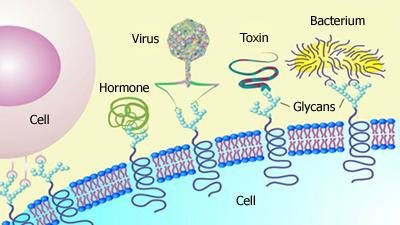
Proteins: Integral and peripheral; responsible for transport, signaling, and cell recognition.
Membrane Transport
Substances move across membranes by passive and active transport:
Diffusion: Movement from high to low concentration; passive.
Osmosis: Diffusion of water across a semipermeable membrane.
Facilitated diffusion: Passive transport via protein carriers.
Active transport: Requires energy (ATP) to move substances against concentration gradients (e.g., sodium-potassium pump).
Endocytosis/Exocytosis: Bulk transport via vesicles.
Enzymes and Metabolism
Enzyme Function
Enzymes are protein catalysts that speed up biochemical reactions by lowering activation energy. Each enzyme is substrate-specific and has an active site where the substrate binds.
Activation energy: Energy required to initiate a reaction.
Exergonic reactions: Release energy; products have lower energy than reactants.
Endergonic reactions: Absorb energy; products have higher energy than reactants.
Factors Affecting Enzyme Activity
Substrate concentration: Increases reaction rate until saturation.
Temperature: Each enzyme has an optimal temperature; high temperatures can denature enzymes.
pH: Each enzyme has an optimal pH; extreme pH can denature enzymes.
Inhibitors: Competitive (bind active site) and noncompetitive (allosteric site).
Cofactors: Organic (coenzymes, vitamins) and inorganic (metal ions).
Beer-Lambert Law
The Beer-Lambert Law relates the concentration of a solute to its absorbance of light:
A: Absorbance
ε: Molar extinction coefficient
c: Concentration
l: Path length (usually 1 cm)
Absorbance is directly proportional to concentration, allowing quantification of reaction rates in enzyme assays.
----------------------------------------
