 Indietro
General Biology: The Chemical Context of Life, Water, and Carbon
Guida di studio - Note intelligenti
 Appunti personalizzati basati sui tuoi materiali, ampliati con definizioni chiave, esempi e contesto.
Introduction to Biology
Unifying Themes of Biology
Biology is the scientific study of life, characterized by several unifying themes that help organize and explain the diversity of living organisms. These themes include organization, information, energy and matter, interactions, and evolution.
Organization: Life is structured in a hierarchy from molecules to the biosphere.
Emergent Properties: New properties arise at each level due to the arrangement and interaction of parts.
Structure and Function: The structure of biological components is closely related to their function.
The Cell: The cell is the basic unit of life, with prokaryotic and eukaryotic forms.
Energy and Matter: Life requires the transfer and transformation of energy and matter.
Interactions: Biological systems depend on interactions between their components.
Evolution: Evolution explains the unity and diversity of life.
Chemistry
The Chemical Context of Life
All organisms are composed of matter, which is anything that takes up space and has mass. Matter is made up of elements, substances that cannot be broken down by chemical reactions. Compounds are substances consisting of two or more elements in a fixed ratio, often exhibiting emergent properties distinct from their constituent elements.
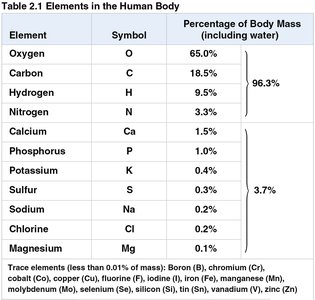
Elements of Life: About 20–25% of the 92 natural elements are essential for life. The four most abundant are carbon, hydrogen, oxygen, and nitrogen, making up about 96% of living matter. Other important elements include calcium, phosphorus, potassium, and sulfur.
Atoms and Subatomic Particles
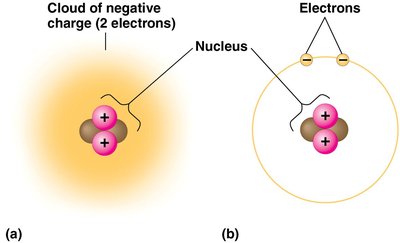
An atom is the smallest unit of matter that retains the properties of an element. Atoms are composed of subatomic particles: protons (positive charge), neutrons (no charge), and electrons (negative charge). Protons and neutrons form the atomic nucleus, while electrons form a cloud around the nucleus.
Atomic Number: Number of protons in the nucleus.
Mass Number: Sum of protons and neutrons.
Atomic Mass: Approximate total mass of an atom, measured in daltons.
Isotopes and Radioactivity
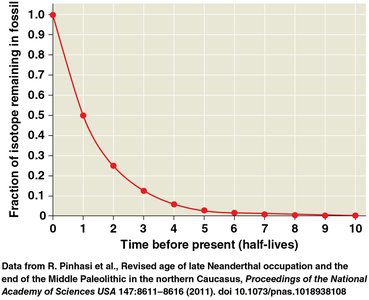
Isotopes are atoms of the same element with different numbers of neutrons. Some isotopes are radioactive, decaying spontaneously and emitting energy. Radioactive isotopes are used as tracers in medicine and for radiometric dating of fossils.
Half-life: The time required for half of the radioactive atoms in a sample to decay.
Electron Energy Levels and Orbitals
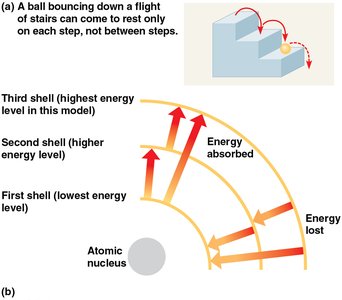
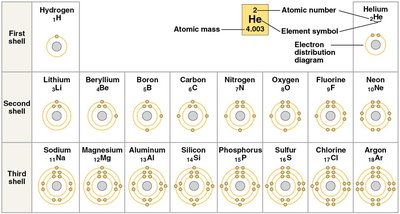
Electrons occupy energy levels or shells around the nucleus. The chemical behavior of an atom is largely determined by the distribution of electrons, especially those in the outermost shell (valence electrons). Atoms interact to complete their valence shells, often forming chemical bonds.
Chemical Bonds
Covalent Bonds
Covalent bonds involve the sharing of pairs of valence electrons between atoms. Molecules are formed when two or more atoms are held together by covalent bonds. The number of covalent bonds an atom can form is called its valence.
Single Bond: Sharing of one pair of electrons.
Double Bond: Sharing of two pairs of electrons.
Electronegativity: The attraction of an atom for electrons in a covalent bond. If electrons are shared equally, the bond is nonpolar; if unequally, the bond is polar.
Ionic Bonds
Ionic bonds form when electrons are transferred from one atom to another, resulting in oppositely charged ions (cations and anions) that attract each other. Ionic compounds, such as sodium chloride (NaCl), are often found as crystals.
Weak Chemical Interactions
Weak bonds, such as hydrogen bonds and van der Waals interactions, play crucial roles in the structure and function of biological molecules. Hydrogen bonds form when a hydrogen atom covalently bonded to one electronegative atom is attracted to another electronegative atom. Van der Waals interactions occur due to transient local partial charges.
Molecular Shape and Function
The shape of a molecule is determined by the positions of its atoms’ orbitals and is critical to its function. Molecular shape determines how biological molecules recognize and respond to each other.
Water
Properties of Water
Water is essential for life due to its unique chemical properties, which arise from its polar covalent bonds and ability to form hydrogen bonds. Four emergent properties of water contribute to Earth's suitability for life:
Cohesive Behavior: Water molecules stick together (cohesion), resulting in high surface tension and aiding water transport in plants.
Ability to Moderate Temperature: Water has a high specific heat, allowing it to absorb or release large amounts of heat with little temperature change.
Expansion upon Freezing: Ice is less dense than liquid water, so it floats, insulating bodies of water.
Versatility as a Solvent: Water dissolves many substances due to its polarity, forming hydration shells around ions and polar molecules.
Acids, Bases, and pH
Acids increase the concentration of hydrogen ions (H+) in a solution, while bases decrease it. The pH scale measures the concentration of H+ ions, with lower values being more acidic and higher values more basic. Buffers help maintain stable pH in biological systems by minimizing changes in H+ and OH- concentrations.
pH Equation:
Neutral Solution: , so pH = 7
Carbon and Molecular Diversity
Organic Chemistry and the Origin of Life
Organic chemistry is the study of carbon-containing compounds. Carbon's ability to form four covalent bonds allows for a vast diversity of organic molecules, which are the basis of life. Experiments have shown that organic molecules can form under conditions similar to those on early Earth.
Bonding and Structure of Carbon Compounds
Carbon atoms can form single, double, or triple bonds, resulting in molecules with various shapes and properties. The versatility of carbon bonding leads to the formation of chains, rings, and complex structures.
Hydrocarbons: Molecules consisting only of carbon and hydrogen, important as energy sources.
Isomers: Compounds with the same molecular formula but different structures and properties. Types include structural isomers, cis-trans isomers, and enantiomers.
Functional Groups
Functional groups are specific groups of atoms attached to carbon skeletons that determine the chemical behavior of organic molecules. The seven most important functional groups in biology are:
Hydroxyl (–OH)
Carbonyl (C=O)
Carboxyl (–COOH)
Amino (–NH2)
Sulfhydryl (–SH)
Phosphate (–OPO32–)
Methyl (–CH3)
Table: Elements in the Human Body
Element | Symbol | Percentage of Body Mass (including water) |
|---|---|---|
Oxygen | O | 65.0% |
Carbon | C | 18.5% |
Hydrogen | H | 9.5% |
Nitrogen | N | 3.3% |
Calcium | Ca | 1.5% |
Phosphorus | P | 1.0% |
Potassium | K | 0.4% |
Sulfur | S | 0.3% |
Sodium | Na | 0.2% |
Chlorine | Cl | 0.2% |
Magnesium | Mg | 0.1% |
Additional info: Trace elements (less than 0.01% of mass) include boron, chromium, cobalt, copper, fluorine, iodine, iron, manganese, molybdenum, selenium, silicon, tin, vanadium, and zinc.
