 Indietro
lecuture 24: Genetic Engineering: Tools, Techniques, and Applications
Guida di studio - Note intelligenti
 Appunti personalizzati basati sui tuoi materiali, ampliati con definizioni chiave, esempi e contesto.
Genetic Engineering: An Overview
Definition and Scope
Genetic engineering is the direct manipulation of an organism's genes using biotechnology for practical purposes. This field enables scientists to modify genetic material to achieve desired traits or produce useful products. Common applications include medicine, agriculture, and environmental management.
Genetic Engineering: The process of altering the genetic makeup of an organism.
Cloning: Making identical copies of DNA or entire organisms.
Recombinant DNA: DNA formed by combining genetic material from different sources.
Plasmid: Small, circular DNA molecule found in bacteria, often used as a vector in genetic engineering.
Example: Inserting a gene for pest resistance into plants to improve crop yields.
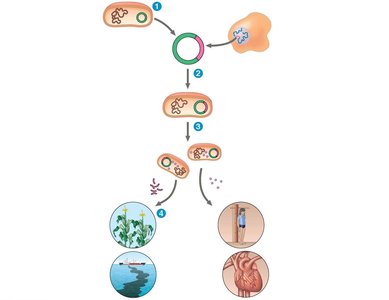
Cloning and Recombinant DNA Technology
Steps in Cloning Genes
Cloning genes involves isolating a gene of interest and inserting it into a plasmid vector, which is then introduced into a bacterial cell. The bacteria replicate, producing many copies of the gene.
Step 1: Obtain a plasmid and isolate the gene of interest.
Step 2: Insert the gene into the plasmid to create recombinant DNA.
Step 3: Introduce the recombinant plasmid into a bacterial cell.
Step 4: Grow the host cell in culture to produce clones containing the gene.
Applications: Production of human growth hormone, pest-resistant plants, and bacteria for environmental cleanup.
Restriction Enzymes and DNA Insertion
Role of Restriction Enzymes
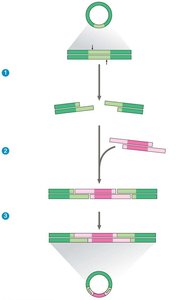
Restriction enzymes are proteins that cut DNA at specific sequences called restriction sites. This allows scientists to create fragments with 'sticky ends' that can be joined with DNA from other sources, forming recombinant DNA.
Restriction Enzyme: Protein that cuts DNA at specific sites.
Restriction Site: Specific DNA sequence recognized by the enzyme.
Sticky Ends: Overhanging sequences that facilitate joining DNA fragments.
DNA Ligase: Enzyme that seals the joined DNA fragments.
Polymerase Chain Reaction (PCR)
Amplifying DNA
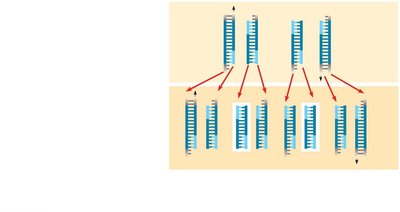
The polymerase chain reaction (PCR) is a technique used to amplify specific DNA sequences. It involves repeated cycles of denaturation, annealing, and extension, resulting in exponential growth of the target DNA.
Denaturation: Heating DNA to separate strands.
Annealing: Cooling to allow primers to bind to target sequences.
Extension: DNA polymerase synthesizes new DNA strands.
Taq Polymerase: Heat-stable enzyme used in PCR.
Equation: After n cycles, the number of DNA molecules is .
Example: After 30 cycles, over 1 billion copies of the target sequence are produced.
Gel Electrophoresis
Separating DNA Fragments
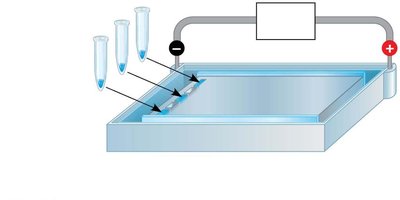
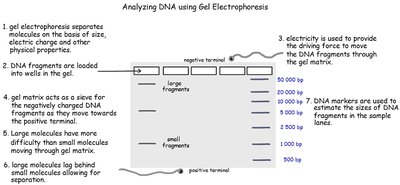
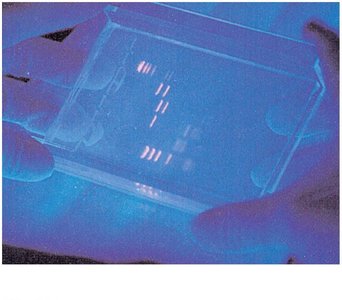
Gel electrophoresis is a technique used to separate DNA fragments by size. DNA samples are loaded into wells in a gel, and an electric current is applied. Negatively charged DNA moves toward the positive electrode, with smaller fragments moving faster.
Principle: Separation based on fragment length.
Gel Matrix: Acts as a sieve for DNA movement.
DNA Markers: Used to estimate fragment sizes.
Application: Identifying successful genetic engineering by analyzing fragment patterns.
DNA Sequencing
Determining Nucleotide Sequences
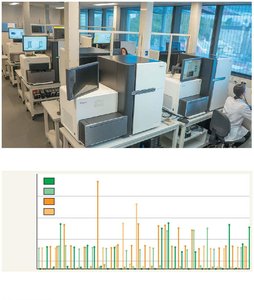
DNA sequencing is the process of determining the exact order of nucleotides in a DNA molecule. Next-generation sequencing techniques allow rapid and inexpensive sequencing by synthesizing complementary strands and electronically monitoring nucleotide addition.
Complementary Base Pairing: Used to identify nucleotide sequences.
Next-Generation Sequencing: High-throughput, automated sequencing methods.
Application: Confirming the accuracy of engineered DNA.
Gene Editing: CRISPR-Cas9 System
Precision Modification of Genes
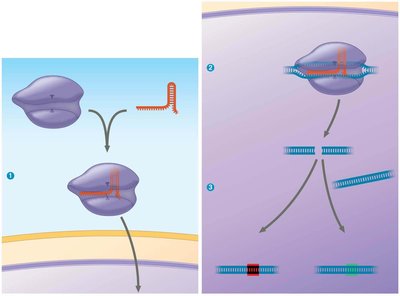
The CRISPR-Cas9 system is a revolutionary gene-editing tool. Cas9 is a nuclease guided by RNA to a specific DNA sequence, where it makes a cut. This allows researchers to disable or repair genes, enabling functional studies and potential therapies.
CRISPR-Cas9: System for targeted gene editing.
Guide RNA: Directs Cas9 to the target gene.
Applications: Gene knockout, gene repair, and studying gene function.
Applications and Future Directions
Impact and Ethical Considerations
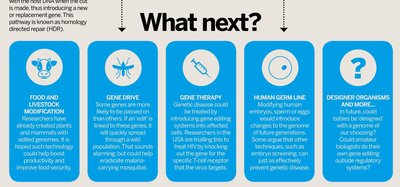
Genetic engineering has broad applications in medicine, agriculture, and environmental science. It enables production of therapeutic proteins, development of disease-resistant crops, and bioremediation. Ethical considerations include potential risks, societal impacts, and regulation of gene editing technologies.
Medical Applications: Production of insulin, growth hormones, and gene therapy.
Agricultural Applications: Pest-resistant and high-yield crops.
Environmental Applications: Bacteria engineered for pollution cleanup.
Ethical Issues: Safety, consent, and potential misuse.
Summary Table: Key Techniques in Genetic Engineering
Technique | Purpose | Key Enzyme/Component | Application Example |
|---|---|---|---|
Cloning | Copying DNA | Plasmid, Host Cell | Human growth hormone production |
Restriction Enzymes | Cutting DNA | Restriction Enzyme | Creating recombinant DNA |
PCR | Amplifying DNA | Taq Polymerase | Forensic analysis |
Gel Electrophoresis | Separating DNA fragments | Gel Matrix, Electric Current | DNA fingerprinting |
DNA Sequencing | Determining sequence | Sequencing Machine | Genetic disease diagnosis |
CRISPR-Cas9 | Editing genes | Cas9, Guide RNA | Gene therapy |
