 Indietro
Genetic Inheritance: Patterns, Probability, and Pedigree Analysis
Guida di studio - Note intelligenti
 Appunti personalizzati basati sui tuoi materiali, ampliati con definizioni chiave, esempi e contesto.
Genetic Inheritance
Importance of Understanding Inheritance
Understanding how traits are inherited is crucial for predicting the likelihood of inheriting specific genetic traits or disorders. This knowledge is applied in genetic testing, conservation genetics, and medical counseling.
Genetic Testing: Used to assess risk for inheriting diseases or traits (e.g., 23andMe).
Conservation Genetics: Helps determine optimal breeding pairs to sustain small populations.
Medical Counseling: Answers questions like "What is the chance I will get a certain trait?"
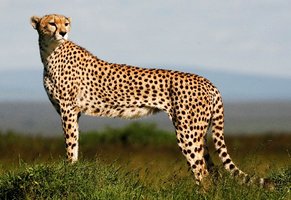
Key Factors in Predicting Inheritance
To predict the probability of inheriting a trait, it is necessary to know:
Traits of Relatives: Family history provides context for inheritance patterns.
Inheritance Pattern of the Gene: Whether the gene is autosomal, sex-linked, dominant, or recessive.
Probability of Transmission: The chance that a gene or trait will be passed on to offspring.
Autosomal Recessive Inheritance
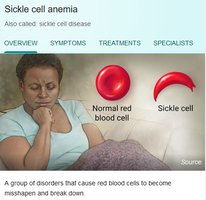
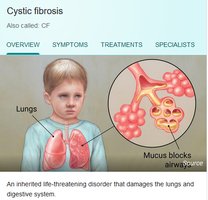
Sickle Cell Anemia and Cystic Fibrosis
Both sickle cell anemia and cystic fibrosis are inherited in an autosomal recessive manner. This means two copies of the recessive allele are required for the trait to be expressed.
Sickle Cell Anemia: Caused by a mutation in the hemoglobin gene. Normal allele (R) is dominant; sickle cell allele (r) is recessive.
Cystic Fibrosis: Caused by a mutation in the CFTR gene. Normal allele (C) is dominant; CF allele (c) is recessive.
Carrier Probability: If both parents are carriers (heterozygous), the probability their child will have the disease is 25%.
Rules of Probability in Genetics
Multiplication and Addition Rules
Probability calculations are essential for predicting genetic outcomes:
Rule of Multiplication: Probability of two independent events occurring together is the product of their individual probabilities multiplied.
Rule of Addition: Probability of an event occurring in multiple ways is the sum of the probabilities of each way added.
Range: Probabilities range from 0 (impossible) to 1 (certain).
Mendelian Genetics: Dihybrid Crosses
Genotype and Phenotype Probabilities
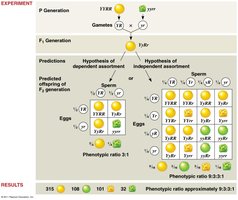
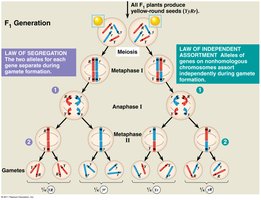
Traits such as seed color and shape in peas are often used to illustrate Mendelian inheritance. Genes can be autosomal and unlinked, allowing independent assortment.
Genotypes: Y = yellow (dominant), y = green (recessive); R = round (dominant), r = wrinkled (recessive).
Dihybrid Cross: Crossing YyRr x YyRr produces a 9:3:3:1 phenotypic ratio.
Probability Calculation: Use Punnett squares to determine genotype and phenotype probabilities.
Law of Segregation and Law of Independent Assortment
Mendel's laws explain how alleles are distributed during gamete formation:
Law of Segregation: Each individual has two alleles for each gene, which segregate during gamete formation.
Law of Independent Assortment: Genes on different chromosomes assort independently during meiosis.
Pedigree Analysis
Features and Tools
Pedigrees are diagrams that depict the inheritance of traits across generations. They are used to determine genotypes and predict outcomes of breeding.
Generations: Labeled as I (P), II (F1), III (F2).
Punnett Square: Tool for predicting offspring genotypes.
Pedigree Symbols: Squares represent males, circles represent females, shaded symbols indicate trait presence.
Autosomal Dominant Inheritance: Achondroplasia
Genotype and Family Analysis
Achondroplasia is a form of dwarfism caused by a dominant allele (D). Individuals with DD or Dd exhibit the trait, while dd individuals have average height.
Genotypes: D = dwarfism (dominant), d = average height (recessive).
Pedigree Analysis: Used to determine the genotypes of family members based on trait expression.

Conditional Probability in Pedigree Analysis
Complex Pedigree Questions
Conditional probability is used when additional information is available, such as the outcome of previous offspring. This is important for predicting the likelihood of traits in subsequent children.
Example: If the first child does not have a trait, what is the probability the second child will?
Application: Used in genetic counseling and risk assessment.
Autosomal Recessive Disorders: Tay-Sachs Disease
Genetic Basis and Pedigree Analysis
Tay-Sachs disease is caused by a recessive allele (t) on chromosome 15, leading to a dysfunctional enzyme and progressive neurological decline.
Inheritance: Both parents must be carriers for a child to be affected.
Pedigree: Shaded symbols indicate individuals with Tay-Sachs.
Probability Calculation: If both parents have a sibling with Tay-Sachs but are unaffected, the probability their child will have Tay-Sachs is 1/9.

Sex-Linked Inheritance: Hemophilia
X-Linked Recessive Disorders
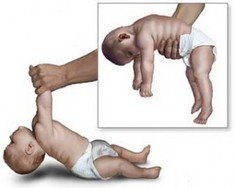
Hemophilia is caused by a recessive allele (h) on the X chromosome. Males are more frequently affected because they have only one X chromosome.
Genotypes: H = no hemophilia (dominant), h = hemophilia (recessive).
Pedigree Analysis: Used to determine carrier status and predict offspring probabilities.
Probability: If a carrier female mates with a hemophilic male, the probability their child will not have hemophilia is 50%.

Pedigree Example
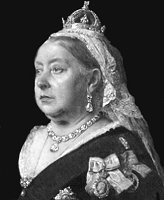
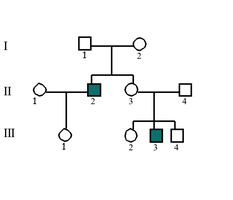
Pedigrees for hemophilia use shaded symbols to indicate affected individuals. Genotypes can be inferred based on trait expression and family history.
Unknown Genotypes: Use "___" or "?" to represent unknown alleles.
Probability Calculations: For a carrier female and hemophilic male, the probability of a girl with hemophilia is 25%.
Summary Table: Inheritance Patterns
Trait | Inheritance Pattern | Alleles | Probability (Carrier Parents) |
|---|---|---|---|
Sickle Cell Anemia | Autosomal Recessive | R/r | 25% affected, 50% carrier, 25% unaffected |
Cystic Fibrosis | Autosomal Recessive | C/c | 25% affected, 50% carrier, 25% unaffected |
Achondroplasia | Autosomal Dominant | D/d | 75% affected, 25% unaffected |
Tay-Sachs | Autosomal Recessive | T/t | 25% affected, 50% carrier, 25% unaffected |
Hemophilia | X-linked Recessive | H/h | Varies by parental genotype |
Key Equations
Rule of Multiplication:
Rule of Addition: (if mutually exclusive)
Carrier Probability (Autosomal Recessive): for two heterozygous parents
