 Indietro
Genetics and Patterns of Inheritance: Study Notes for General Biology
Guida di studio - Note intelligenti
 Appunti personalizzati basati sui tuoi materiali, ampliati con definizioni chiave, esempi e contesto.
Genetics and Patterns of Inheritance
Basic Concepts in Genetics
Genetics is the study of heredity and variation in organisms. It explores how traits are passed from parents to offspring and the molecular mechanisms underlying these processes.
Character: An observable, heritable feature (e.g., flower color).
Trait: A specific version of a character (e.g., red, pink, blue flowers).
Allele: An alternate version of a gene (e.g., P and p).
Genotype: The allele combination in an organism (e.g., PP, Pp, or pp).
Phenotype: The observable result of the genotype (e.g., purple or white flowers).
Mendelian Inheritance
Mendelian inheritance describes how traits are transmitted according to the laws discovered by Gregor Mendel. These include the Law of Segregation and the Law of Independent Assortment.
Law of Segregation: Each parent contributes one allele for each gene; alleles separate during gamete formation.
Law of Independent Assortment: Alleles of different genes assort independently when genes are unlinked.
Punnett Squares
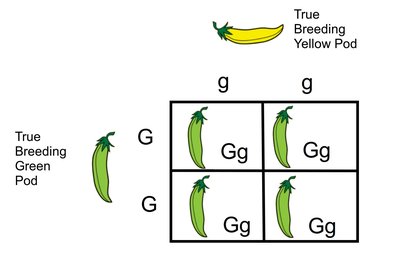
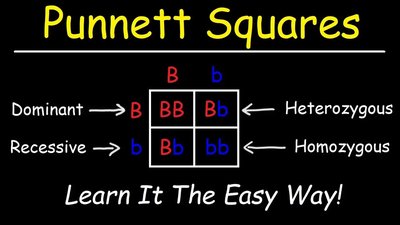
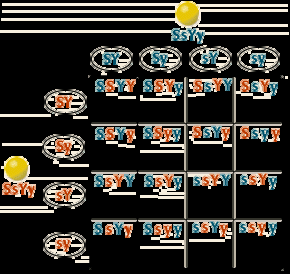
Punnett squares are diagrams used to predict the possible genotypes and phenotypes of offspring from a genetic cross.
Monohybrid Cross: Follows one gene at a time.
Dihybrid Cross: Follows two genes at once.
Genotypic Ratio: 1:2:1 (for heterozygous cross).
Phenotypic Ratio: 3:1 (dominant:recessive).
Complications to Mendelian Inheritance
Some inheritance patterns do not follow simple Mendelian rules. These include incomplete dominance, codominance, pleiotropy, and polygenic inheritance.
Incomplete Dominance
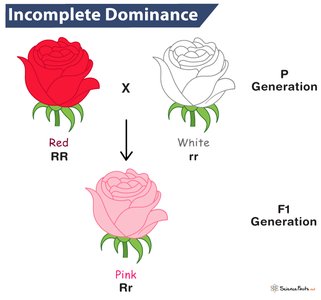
Neither allele is completely dominant, resulting in an intermediate phenotype.
Example: Crossing red (RR) and white (rr) flowers produces pink (Rr) offspring.
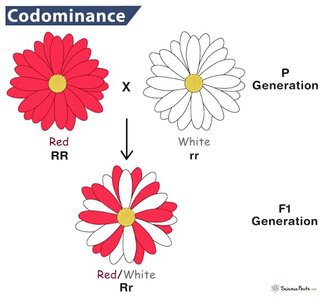
Codominance
Both alleles are fully expressed in the heterozygote, resulting in a phenotype that shows both traits.
Example: Crossing red (RR) and white (rr) flowers produces red/white (Rr) offspring.
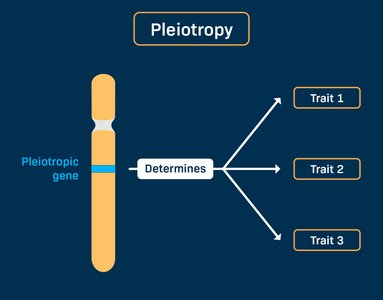
Pleiotropy
A single gene affects multiple traits. Mutations in pleiotropic genes can change several characteristics simultaneously.
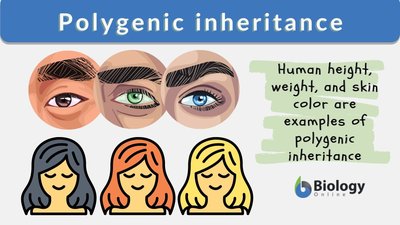
Polygenic Inheritance
Multiple genes contribute to a single trait, resulting in continuous variation. Examples include human height, skin color, and weight.
Genetic Linkage and Recombination
Genes located close together on the same chromosome tend to be inherited together, a phenomenon known as genetic linkage. Recombination frequency estimates the distance between genes based on how often crossing over occurs during meiosis.
Genetic Distance: Genes farther apart have more opportunities for crossing over.
Recombination Frequency: Percentage of offspring with new combinations of alleles compared to parental combinations.
Sex-Linked Genes
Genes located on sex chromosomes (X or Y) show unique inheritance patterns. X-linked recessive alleles are more likely to express their effects in males, who have only one X chromosome.
Females: XX chromosomes
Males: XY chromosomes
Additional info: The study notes above expand on brief points from the original material, providing definitions, examples, and context for each concept. Images included are directly relevant to the explanation of Mendelian and non-Mendelian inheritance patterns, as well as Punnett squares and genetic complications.
